Digital Journaling vs. Paper Journaling — An Honest Side-by-Side
This is the debate that every journaling beginner eventually encounters, and it deserves a fair, nuanced answer — not a sales pitch. Because paper journaling is genuinely beautiful. It has real advantages. And dismissing it would be both dishonest and unhelpful.
So let’s look at both clearly.
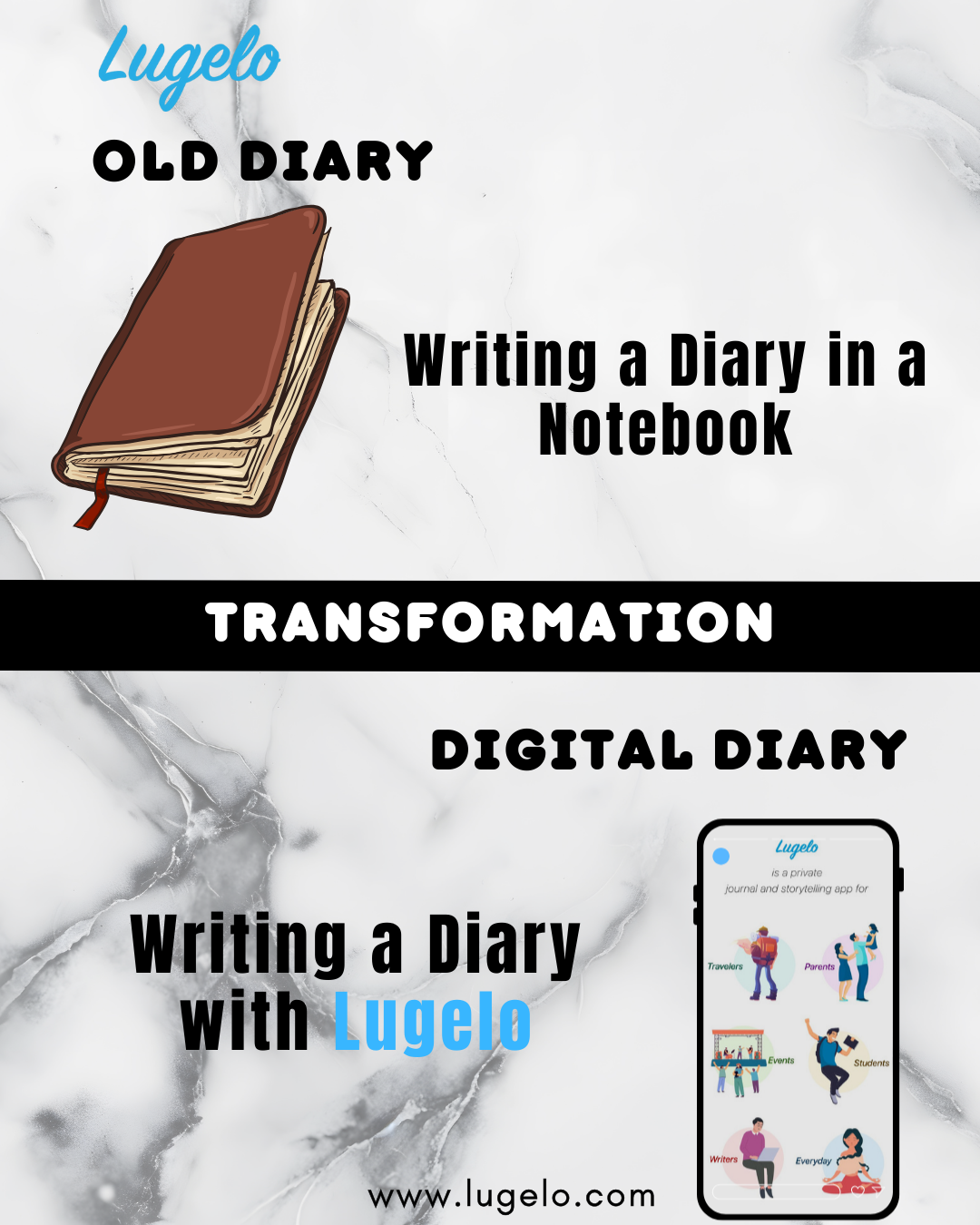
Where paper journaling genuinely wins:
Paper offers something digital can’t fully replicate: the sensory experience of writing by hand. The scratch of a pen on a page, the physical act of forming letters, the smell of a worn notebook — these tactile elements engage the brain differently. Research consistently suggests that handwriting can produce a slower, more deliberate mode of thinking. There are no notifications on a paper journal. No battery warnings. No temptation to check your messages mid-sentence.
Paper also offers absolute creative freedom. You can sketch in the margins, press a flower between the pages, write in three different colors, or let your handwriting itself carry your mood. A paper journal has personality in ways a digital font cannot always match.
Where digital journaling pulls decisively ahead:
The moment you need to find something, paper breaks down completely. There’s no search function in a handwritten journal from 2019. There’s no way to attach the photo you took that day, the song you were listening to, or the voice message your mother sent. Paper journals can’t be backed up. They can be lost in a move, damaged by water, or simply sit in a box for decades, unread and unfound.
Here’s what digital journaling offers that paper fundamentally cannot:
- Searchability — find any entry, any memory, from any year, in seconds
- Multimedia richness — photos, video, audio, and links woven directly into your story
- Cross-device access — your journal is always with you, on any screen
- Cloud backup and encryption — your memories are protected from loss, damage, or theft
- Collaboration — invite family members, friends, or partners to contribute their own perspective to a shared journal
- Templates and AI prompts — no more blank-page paralysis
- Output formats — transform entries into ebooks, storybooks, timelines, and VR galleries
The real-world problem with paper isn’t just convenience — it’s completeness. A handwritten journal entry about a birthday party exists separately from the photos on your phone, the video on your partner’s camera, and the note your child drew. Digital journaling brings all of these threads together into one coherent, searchable, shareable memory.
Harvard Health’s research on expressive writing confirms that the act of writing about emotions produces real mental health benefits — and those benefits apply whether you’re writing by hand or typing. The format matters far less than the habit.
The wisest approach for many journalers is a hybrid model: paper for daily quiet reflection, digital for milestone events, collaborative memories, and anything you want to preserve for decades. These two practices don’t compete — they complement each other.
But if you’re choosing where to build your primary memory archive — the one you want to search, share, and transform into something lasting — digital journaling isn’t just better. It’s in a different category entirely. As Lugelo puts it: “Your memories deserve better than scattered apps.”
Beyond the format debate, the science behind journaling itself is remarkably powerful — and that’s where digital journaling truly earns its place in a modern life.