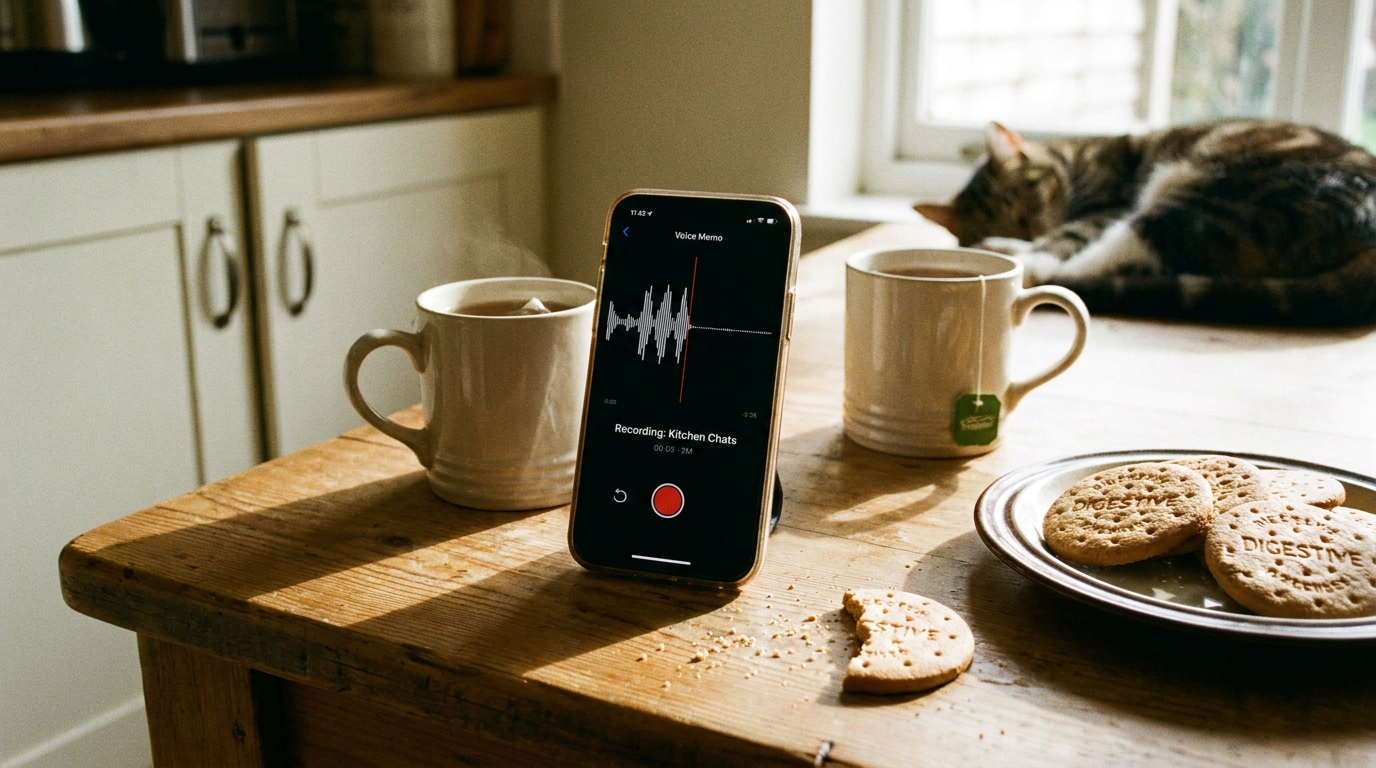
Four recaps arrived in a single week. You learned your most-played song, which you’d have guessed. You learned your step count, which was lower than you’d hoped. You learned how many hours you spent on something you would honestly rather not have totalled up. They were fun. You sent one to a friend, who sent one back, and you both agreed that the algorithm had read you for filth.
Then, a few days later, somebody asked what you did in April.
And April was a blank. Not a hazy blank. A complete one.
These are recaps of your consumption, not your life.The most reviewed year in history is also one of the least recorded.
An algorithm can only review the parts of your year that happened through a screen. It cannot know that you moved house. It cannot know that you changed your mind about something that actually mattered to you. It doesn’t know you made a new friend in March, or that you sat with someone through the worst week they’d had in years.
So this is a year in review template for the other kind of review — the one no app can generate for you, because it doesn’t have the data. What’s below is about forty questions, three realistic ways to actually get it done, and a full guide to writing the year in review card if you’re someone who sends one.
None of this says the recaps are bad. They’re great. This is an addition, not a correction.
“Year in review” is one of those phrases everybody uses and almost nobody defines. Let’s start there.
What Is a Year in Review, Exactly?
Nobody is grading this. There is no score at the end.
It’s worth saying what it isn’t, because the phrase has picked up some unhelpful baggage. It is not a performance review. It is not a productivity audit. It is not a list of goals hit and missed, colour-coded by whether you disappointed yourself.
That’s it. That’s the whole definition.
A year in review is a deliberate look back over twelve months — what happened, what changed, what you learned, and what you want to carry forward.
How the recap differs from the review
The difference is easiest to see side by side.
What the recap your apps make knows: what you watched, played and streamed. It’s measured in hours and counts. It generates itself automatically. It can tell you what you were listening to on a Tuesday afternoon in March. And it ends when the year ends.
What the review you make knows:One of those is a mirror. The other is a record.
what you did, and who you did it with. It’s measured in what changed rather than what accumulated. It takes about an hour. It knows you moved house. And — this is the part that matters most — it gets better every single year you repeat it.
Why April disappears
Here’s the thing about April. You haven’t forgotten the year. You’ve forgotten the textureYou remember that a summer happened. You probably remember roughly where you went and roughly who was there. What’s gone is the meal you’d order again, the walk you kept taking without deciding to, the joke that ran for three months — and those are exactly the parts you’d want back.
of it.
There’s some research that lines up with this. A small study of healthy young adults found that — the peripheral, sensory specifics fell away noticeably faster than the central thread of what happened. It’s one modest study from a single university subject pool, so hold it loosely. But it matches what everyone already knows from experience: the headline survives, the detail evaporates.
different kinds of detail are forgotten at different rates
Which is why a good annual review template asks small questions rather than big ones. “How was your year?” produces nothing. “What did you eat this year that you’d happily eat again tomorrow?” produces an actual memory, with a room and a person attached to it.
That principle isn’t guesswork either. Cornell’s John S. Knight Institute, in its Here’s the template. Copy it, print it, or just read down it and answer the ones that catch you.
guidance on reflective writing
People do this for all sorts of reasons. Some want to remember. Some want to notice change they can’t see from inside it. Some want something to hand their children in thirty years. Any of those is reason enough, and you don’t need to pick one.
, makes the case that closely observed specifics carry far more than broad summary does. Specific beats general. Every question in the template below is built on that one idea.
The Year in Review Template: 40 Questions to Look Back On
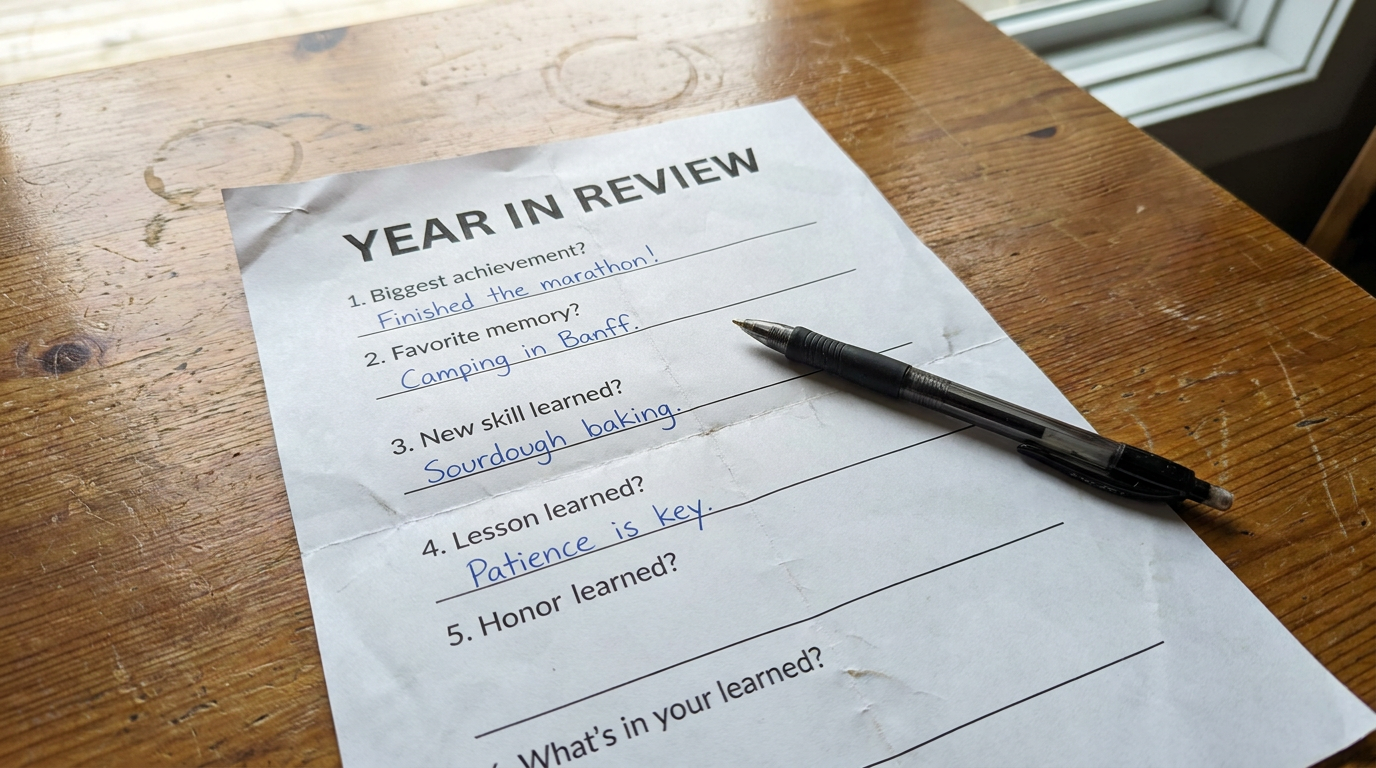
You are not answering all of these. Pick ten.Read down the list, notice which ones snag on something, and answer those. Ten good answers beat forty rushed ones, and the ones you skip will still be here next year.
The facts — what actually happened
Anything with a date attached. Start here because it’s the easiest, and it warms you up.
- Where did you live this year, and did that change?
- What did you do for work, and did that change?
- Where did you go that you’d never been before?
- What happened with your health?
- What was the biggest thing you spent money on?
- What changed in your home?
- What’s one date from this year you’d mark on a calendar?
The people
Who was around, who wasn’t, and who mattered.
- Who came into your life this year?
- Who did you see most?
- Who did you lose touch with?
- Did you mean to?
- Who helped you when you needed it?
- Who did you help?
The changes
The stuff that shifted quietly, usually without an announcement.
- What did you change your mind about?
- What did you stop doing?
- What did you start doing?
- What would have surprised you a year ago?
- What got easier?
- What got harder?
The hard parts
Four questions, plainly put.
- What was the worst week?
- What did you lose?
- What worried you most often?
- What are you still carrying?
Skipping this section entirely is a completely fine choice. A year that was mostly hard is still worth recording honestly, and it doesn’t need to be made into anything else.
The small things
The ordinary texture nobody thinks to write down. This block is the one people end up treasuring.
- What did you eat that you’d eat again?
- What walk or route did you keep taking?
- What was the running joke?
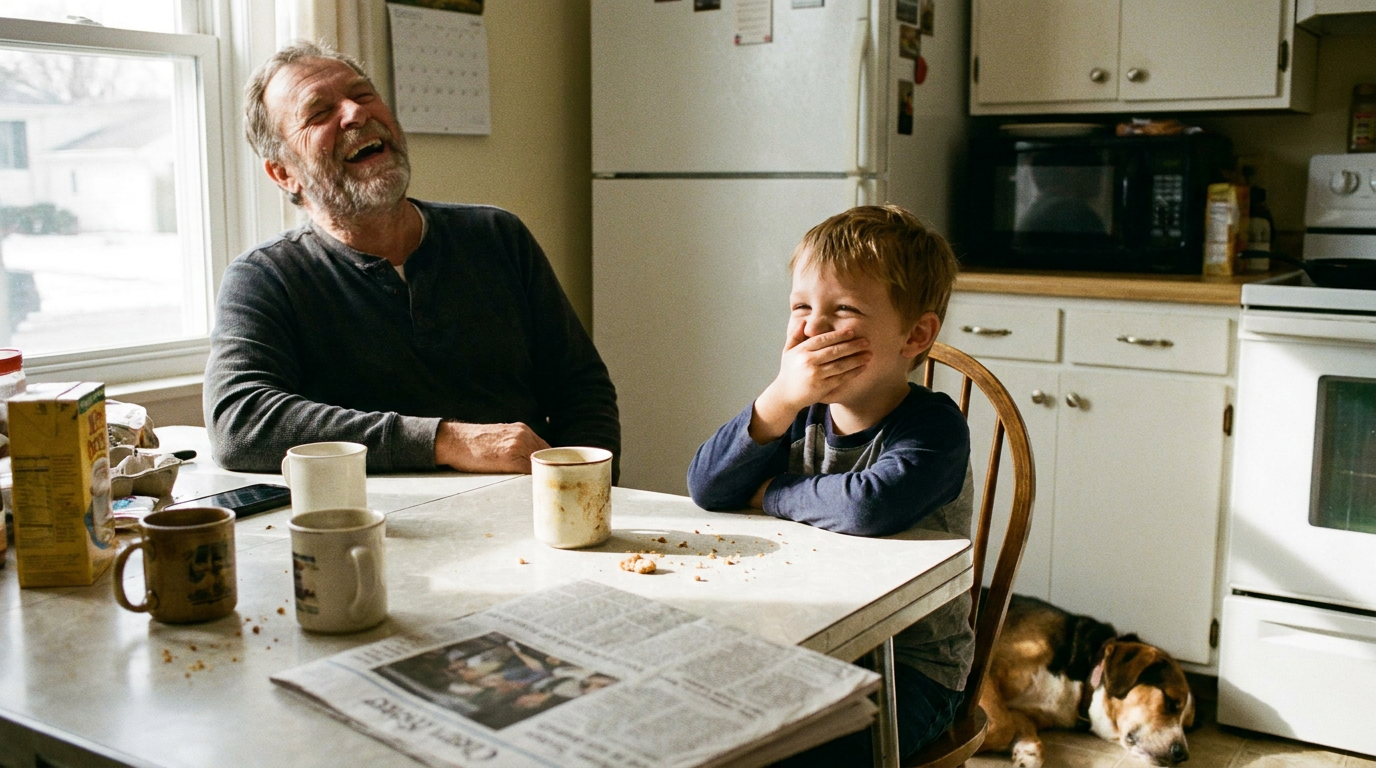
- What made you laugh until you couldn’t speak?
- What song got overplayed in your own house?
- What did you wear constantly?
- What did a normal Tuesday actually look like?
What you made or finished
Not achievements. Things that now exist because you did them.
- What did you fix or repair?
- What did you grow, build or make?
- What did you finally finish?
- What recipe did you get right?
- What difficult conversation did you actually have?
What you want more and less of
Forward-facing and low-pressure. These are not resolutions, and none of them should have a number in the answer.
- What do you want more of?
- What do you want less of?
- Who do you want to see more often?
- What would you like next year to feel like?
- What’s one small thing you could do in January?
Reminder: you were only ever picking ten. If you answered more, good. If you answered six, that’s a finished review.
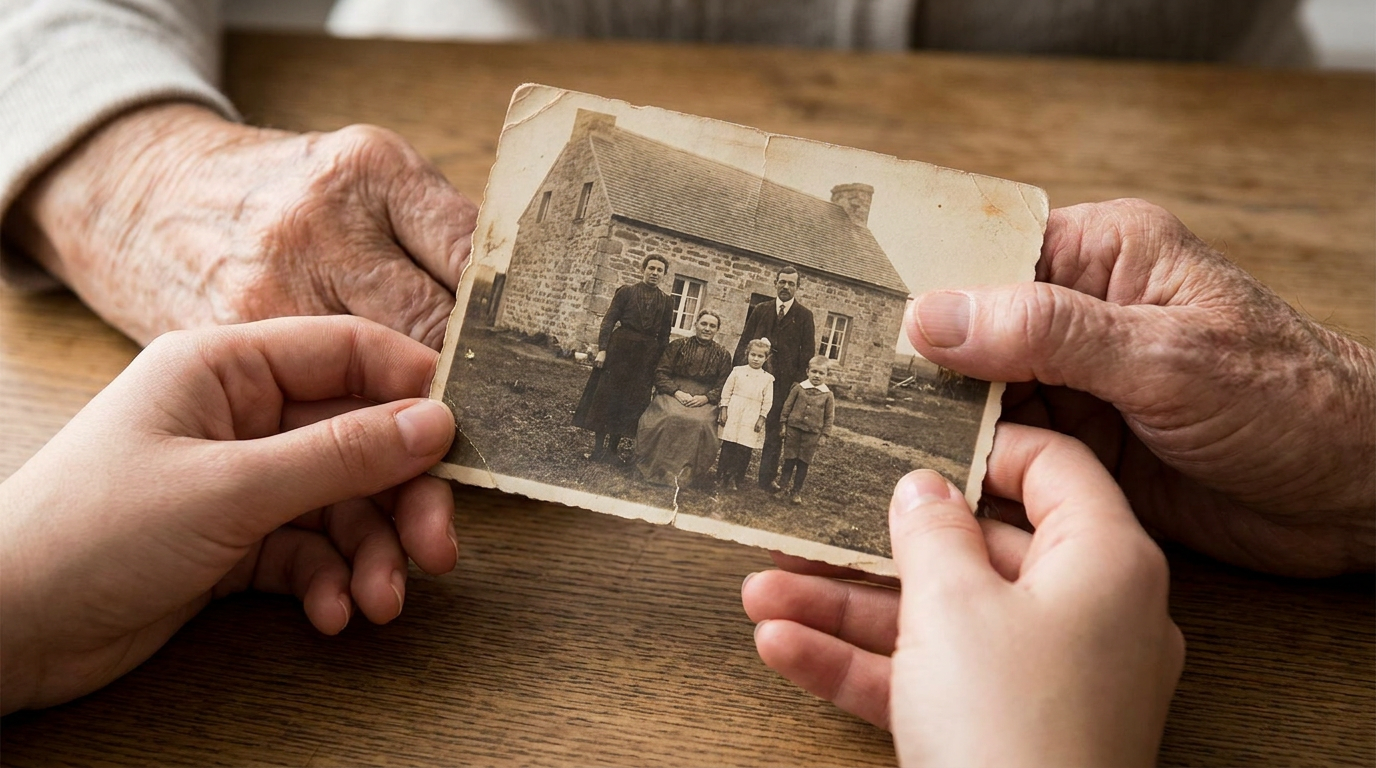
One more thing worth knowing — this same set of questions works just as well pointed at somebody else. Asking an older relative what their ordinary Tuesday looked like tends to produce far better material than asking them about their life. If that’s a direction you want to go, our Now, the obvious problem. A template on its own gets bookmarked and forgotten. So here are three ways to actually do the thing.
50 questions to ask your grandparents
runs on exactly the same principle: pick a few, don’t march through all of them.
Three Ways to Actually Do Your Year in Review
People don’t skip their year in review because they don’t care. They skip it because December is the single busiest month of the year, and “sit down and reflect on twelve months” sounds a lot like homework.
So pick a method that fits the month you’re actually in.
- The one-hour version — about an hour, best for people who like a clean sweep, medium difficulty.
- The twelve-photo version — twenty to thirty minutes, best for almost everyone, easy. Start here.
- The conversation version — an evening, best for couples, friends and families, easy but needs two people.
The one-hour version
It works best with a drink, a pen, and your phone in another room. The hour limit isn’t arbitrary discipline; it’s what stops the whole thing turning into an essay you abandon at question four.
Stop at the hour whether or not you’re finished.
Sit down once. Pick ten questions from the template. Answer each one in two sentences — genuinely two, not two paragraphs wearing a disguise.
The twelve-photo version

This is the one to start with, and it’s the one to recommend to anyone who’s never done this before.
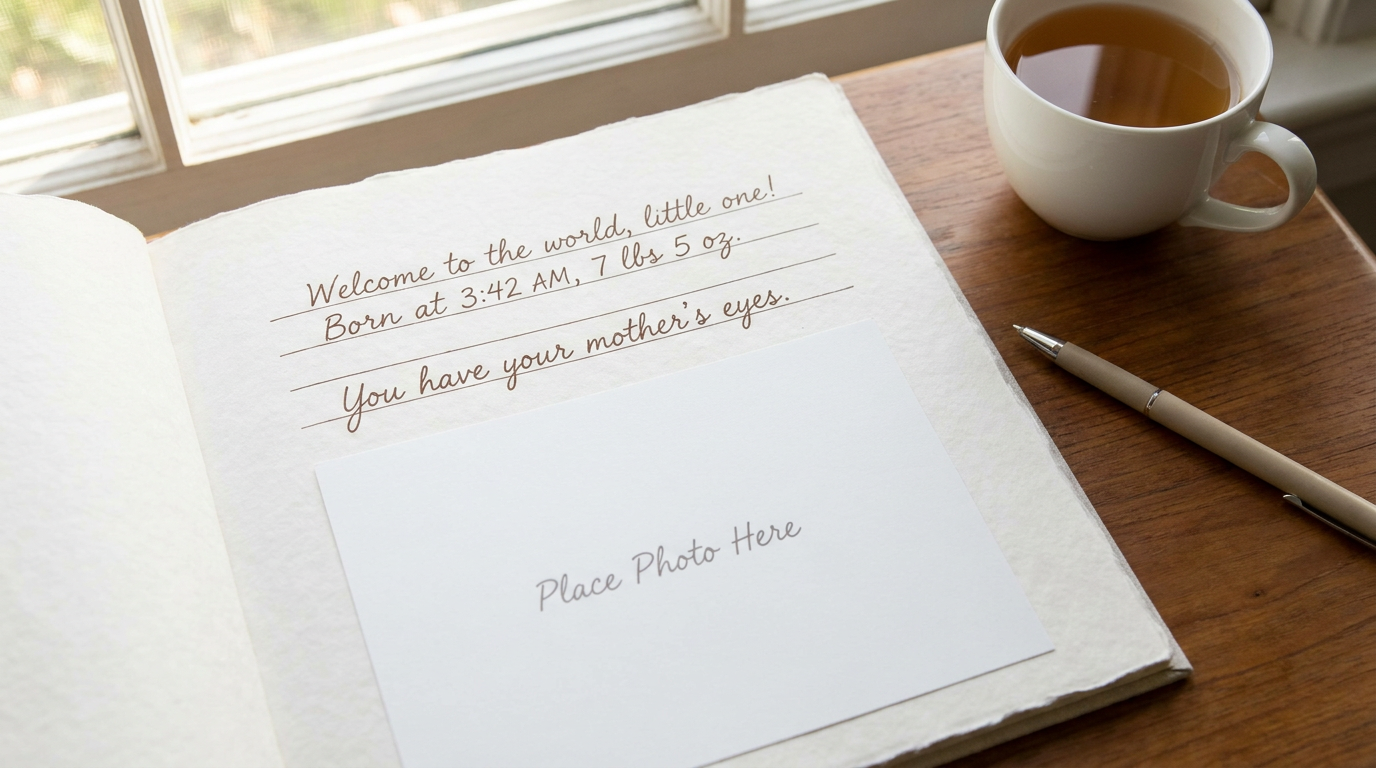
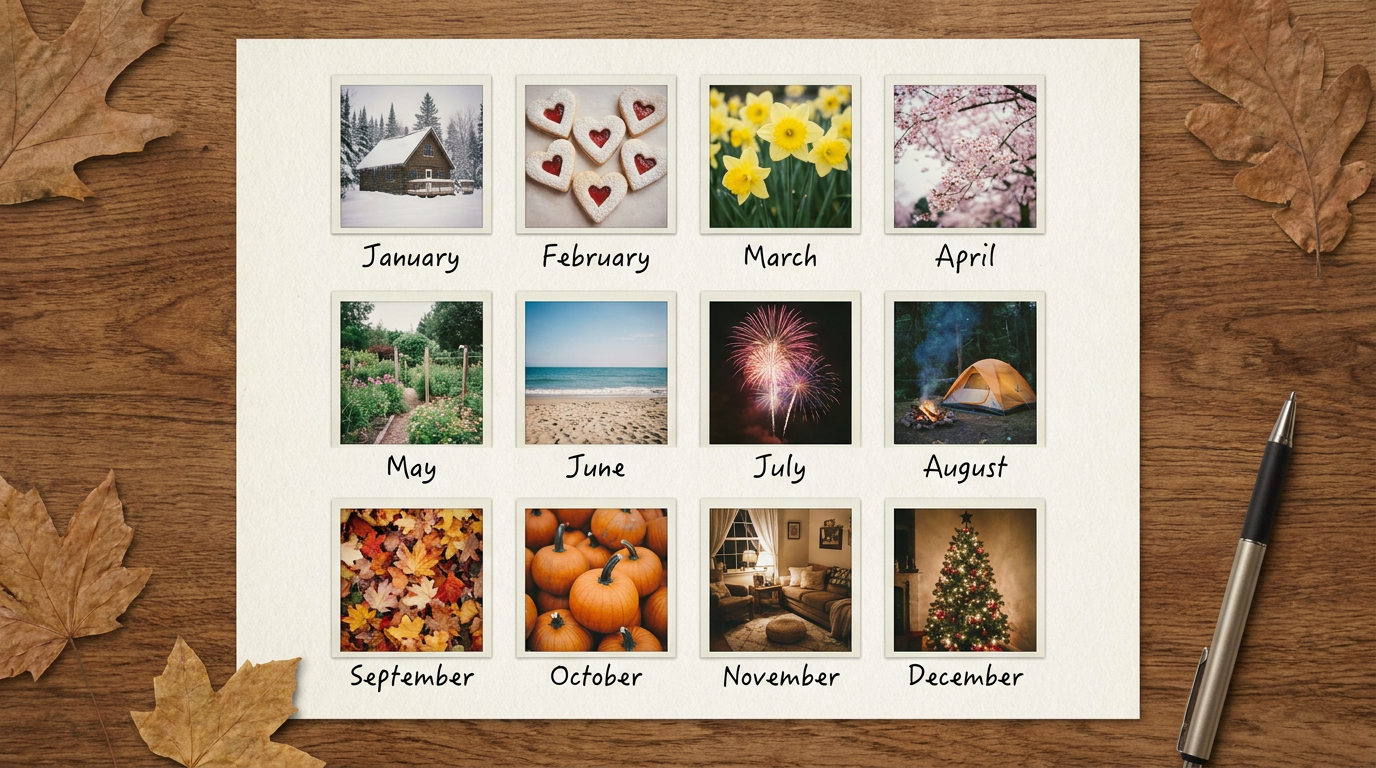
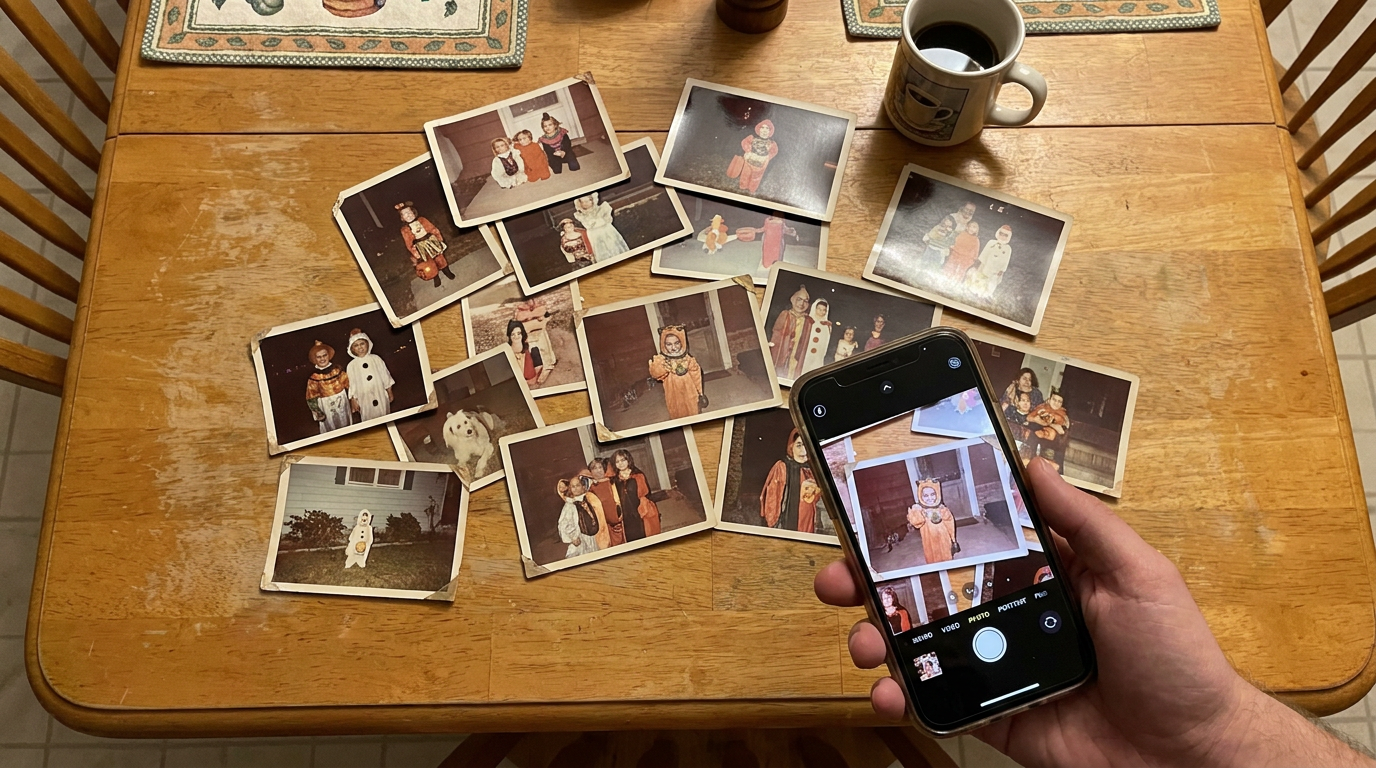
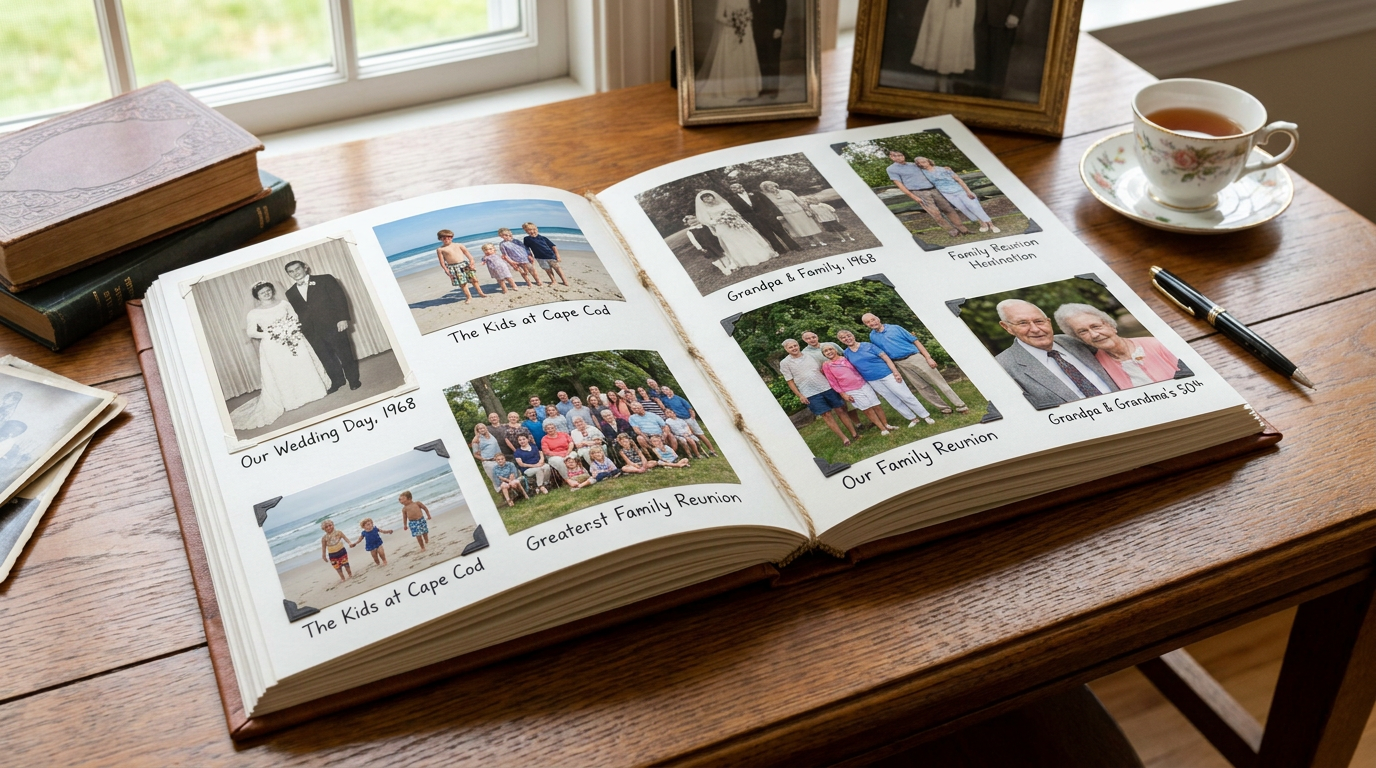
Open your camera roll. Scroll month by month. Pick one photo per month — not the best photo, just one that’s fromYour camera roll is already a rough index of your year. You’re just annotating it.
It works because it removes the hardest part of the job, which is remembering unprompted. Nobody can summon April from a standing start. But almost everybody can look at a blurry photo of a kitchen table in April and immediately recall who was sitting at it.
Twelve photos. Twelve lines. Done in half an hour.
that month. Under each, write one line about what was actually going on around it.
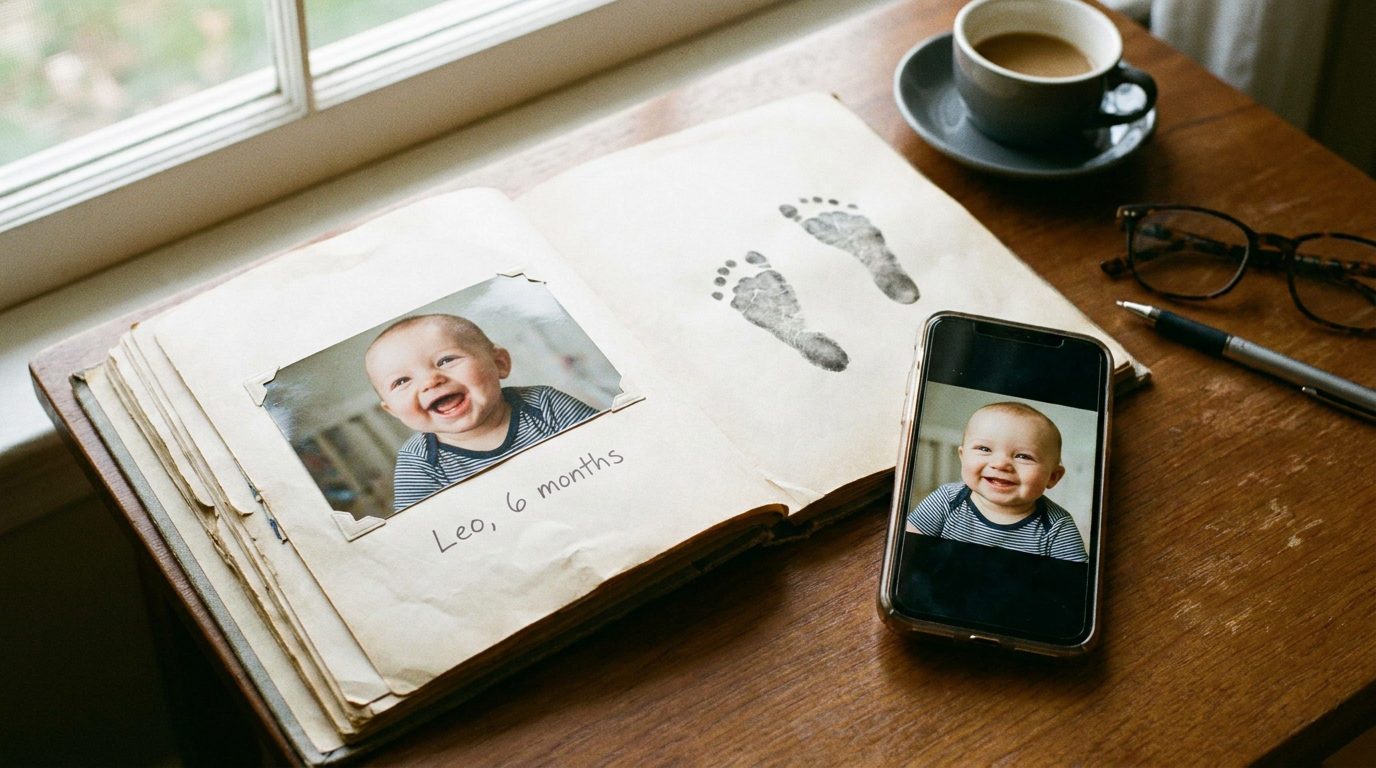
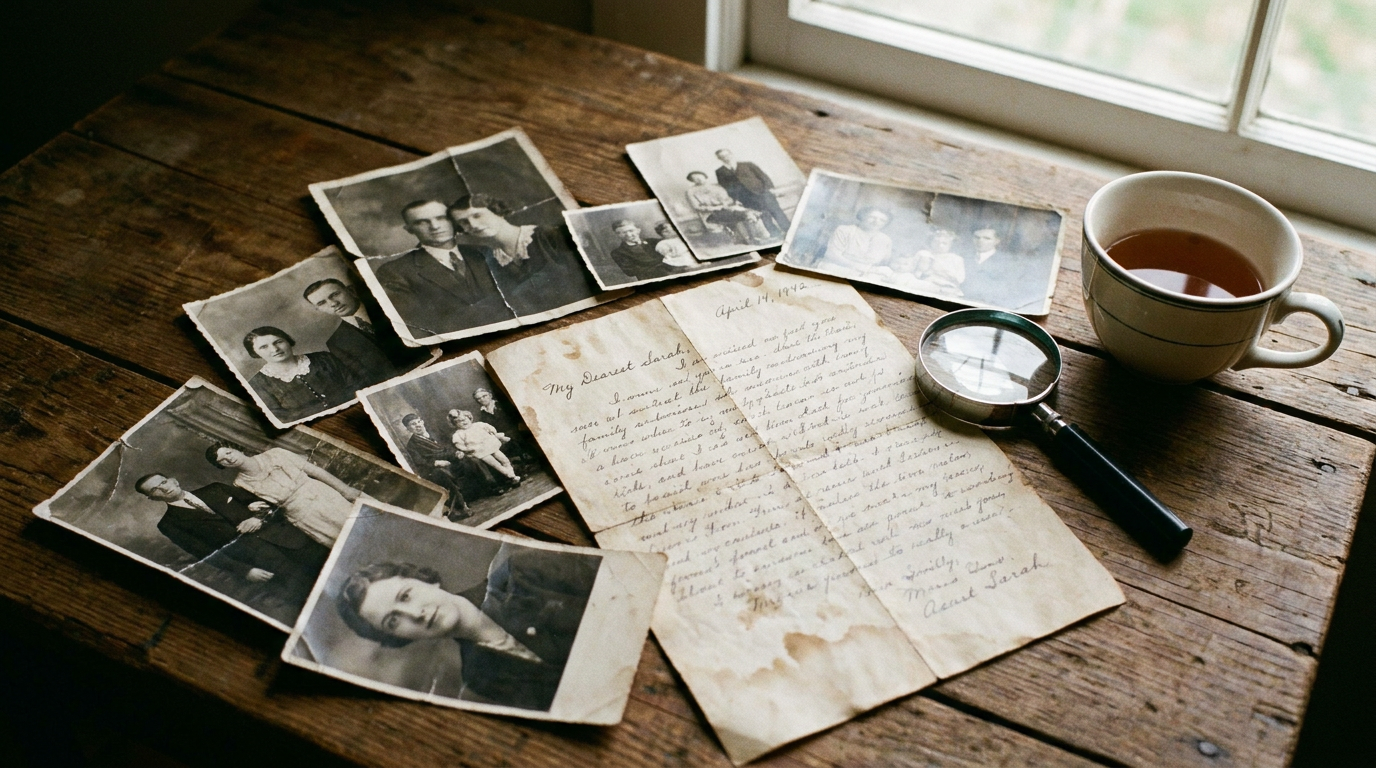
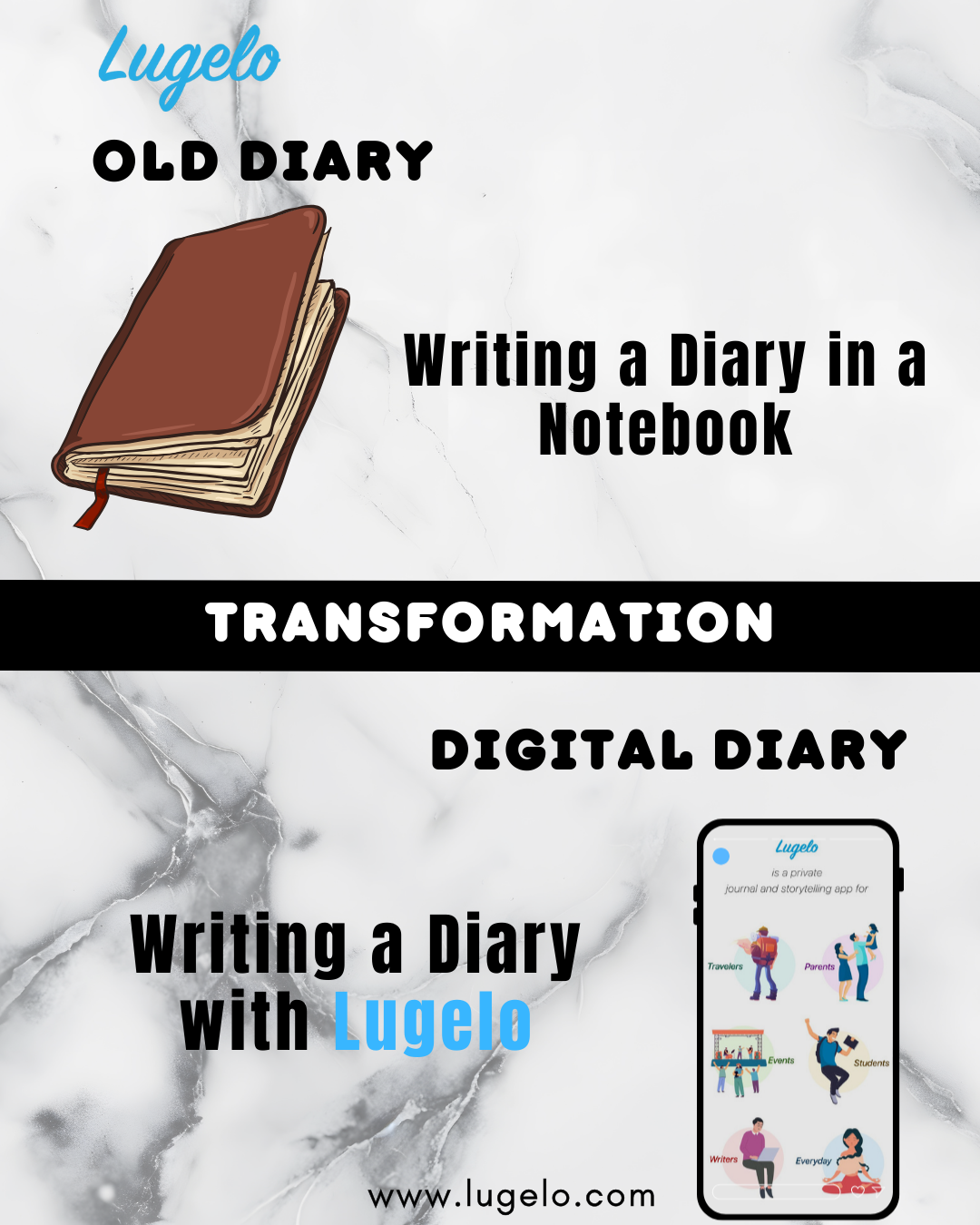
And this is where the real problem shows up. The raw material for a proper year in review is already scattered — some in your camera roll, some in your messages, some in three different notes apps you’ve stopped opening. April is a blank not because nothing happened, but because nothing about April was ever written down in one place. Keeping the photo and the line about it together, in a single dated entry, is the entire point of a tool like Either way — app, notebook, back of an envelope — the method is the same. Twelve photos, twelve lines.
Lugelo
.
The conversation version
Someone does need to write down the good bits afterwards, or you’ll lose them by morning.
Answers get longer and more honest when they’re spoken. You’ll also get corrected, which is the best part: you’ll say something happened in the autumn and be told, flatly, that it happened in February.
Two people take turns asking each other questions out loud.
This works on a long drive, on a walk, or in that strange quiet stretch between the holidays when nobody’s quite sure what day it is. Answering alongside another person is also one of the more reliable consistency mechanisms there is — a point we’ve made before in our For plenty of households, though, the review isn’t only for themselves. Some of it ends up in an envelope.
September journal prompts
A review with six answers is a real review. There is no minimum, and nobody is checking.
, and it holds just as true once a year as it does once a month.
How to Write a Year in Review Christmas Card
A year in review christmas cardSometimes it’s a full printed letter. Sometimes it’s a few lines written inside the card itself. Sometimes it’s a photo with a caption on the back. All three count, and the short ones are not a lesser version of the long ones.
is the annual letter or card that sums up a household’s year and goes out with the holiday greetings.
How long should it be?
That’s the honest answer, and it’s usually what people came here to find out. People genuinely do read the short ones. People genuinely do skim the long ones. If you’re standing there wondering whether to cut something — cut it.
Short. One side.
A simple structure that works
- One line per person in the household.
- One photo.
- One thing you’re looking forward to.
That’s it. That’s the whole format.
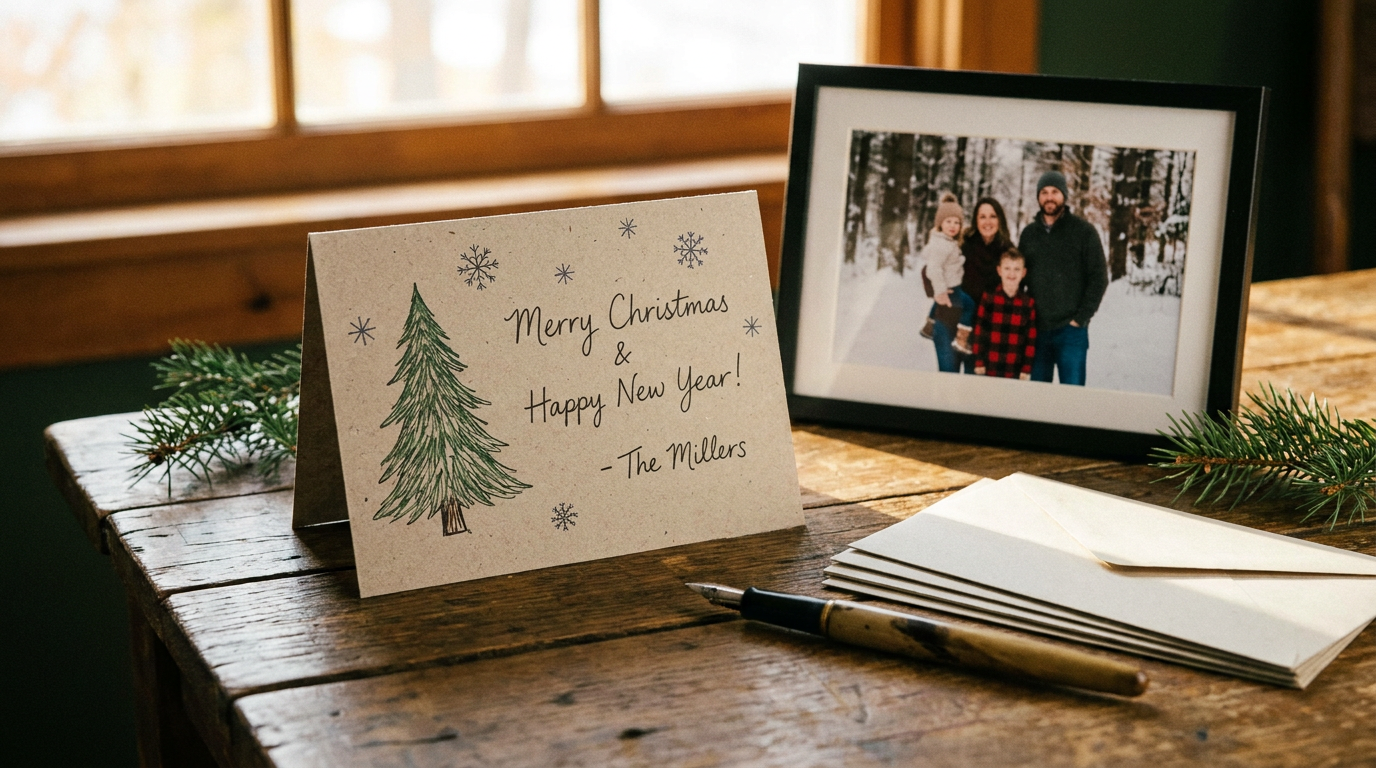
What makes a card a pleasure to receive
“He learned to whistle this year and will not stop” lands. “He continues to excel academically” does not. The first one is a person. The second one is a press release.
Specificity and brevity. Every time, without exception.
It’s worth being fair about the so-called brag letter, because the complaint is much older than any of us. Smithsonian Magazine’s history of traces the form’s spread through the post-war decades — and traces the grumbling about it almost as far back. Critics were mocking these letters in print within a few years of them becoming common.
our love-hate relationship with the Christmas letter
But here’s the thing. The people writing those letters are proud of their families. That is a genuinely good thing to be, and the world would be worse with less of it.
The fix was never modesty. The fix is detail.
Nobody resents hearing that your daughter had a good year. They resent hearing it in the register of a LinkedIn update. Swap the achievement for the small true thing that sits underneath it and the same news becomes a delight to read.
What works well: one specific, small, true detail per person. Naming the ordinary stuff. One good photo. Half a page. Saying a year was hard, briefly.
What wears the reader out: a list of accomplishments. Grade averages and job titles. Six photos and a collage. Three pages, both sides. Explaining at length why a hard year wasn’t really that hard.
And it’s not a throwaway object, either. The Schlesinger Library at Harvard actively collects as historical documents — a research library decided these letters are worth preserving, which is a reasonable argument that the one you’re about to write has a life well past January. The card itself has a longer history than most people assume; the dates to the Victorian era.
first commercial Christmas cardfamily holiday newsletters
When the year was hard
None of those choices need explaining to anyone.
You are allowed to send a short card with no recap at all. You are allowed to write one line saying it was a difficult year without detailing a single part of it. You are allowed to skip the letter this time and just send the card.
Plainly, and briefly:
Practical notes
- Pick the photo where everyone looks like themselves, not the best-composed one.
- Start about three to four weeks before you want them to arrive.
- Check your address list before you print, not after.
- If you’re printing, order a few spares — you will remember someone.
You’ve already written it
Here’s the connective tissue. If you’ve answered even ten questions from the template above, the card is already done.
Your answers to “the small things” and “what you made or finished” areHere’s roughly the shape of a good one:
the card. You’re not writing something new. You’re picking three lines and shortening them.
We finally fixed the back door, which means we no longer have to warn guests about the back door. Nina spent the year learning the recorder; the rest of us spent the year developing character. Theo has become a person who has opinions about soup. Spring was a hard stretch for us and we’re glad to see the back of it. Next year we’re getting the garden into some kind of order — ask us how that’s going.
The card goes out once and it’s gone by January. The answers behind it don’t have to be — and that’s where this gets genuinely interesting.
Four sentences. No achievements. You know exactly what that household was like this year.
Why You Should Answer the Same Questions Every Year
Any single year’s answers are mildly interesting. Ten years of the same ten questions is something else entirely.
That’s the strongest argument in this whole post, so it’s worth slowing down on.
One year gives you a snapshot. Several years give you a direction. You can only see change by comparing like with like — which is precisely why asking the same questions matters far more than asking clever ones. The moment you swap the questions out, you lose the ability to compare, and comparison is the entire payoff.
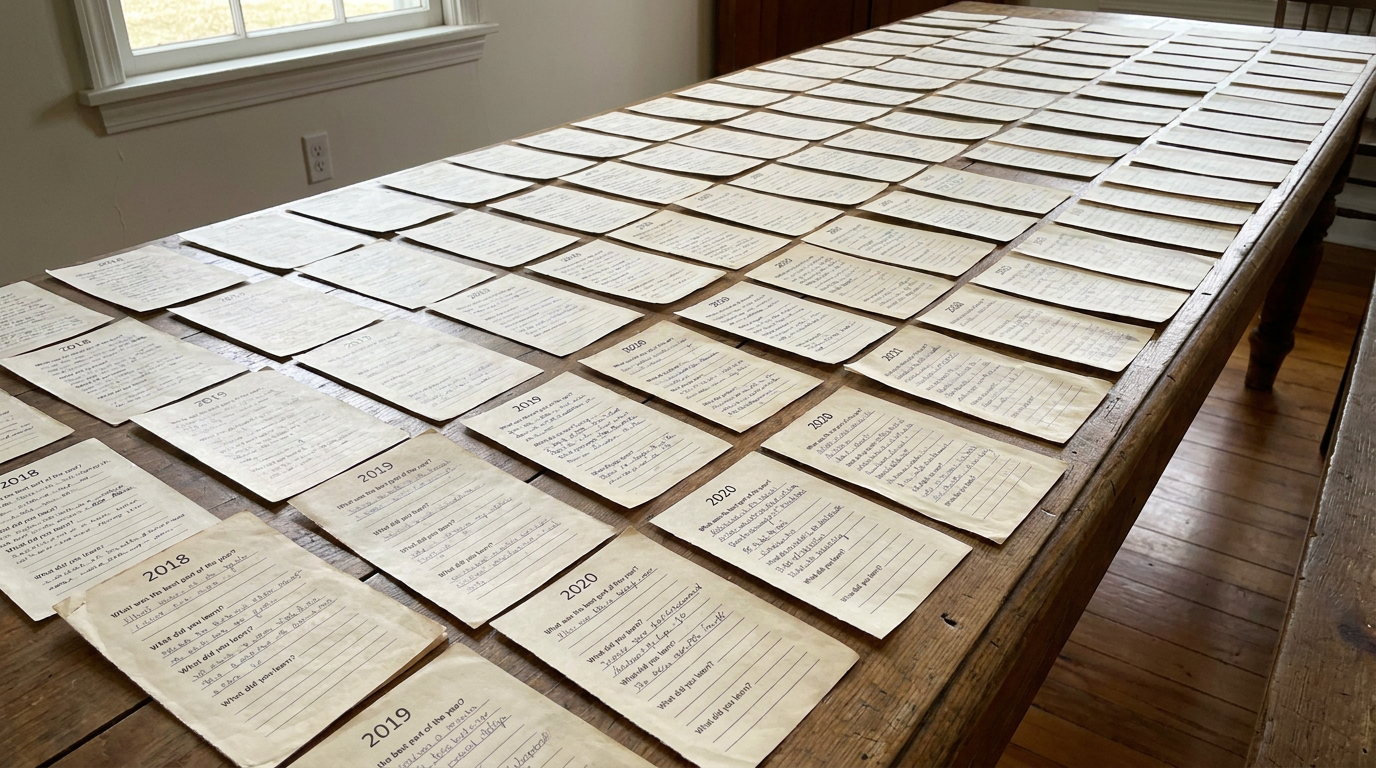
What only shows up across years
Some things are invisible in a single entry and unmissable across five:
- The answer to “who did you see most” changing three times in five years. Nobody notices that while it’s happening. Everybody notices it on the page.
- A “what do you want more of” answer that shows up four years running and never once happens. That’s not a failure. That’s information, and it’s the kind you can act on.
- A single person appearing first as someone new, then as a constant, then as someone you lost touch with — and being able to see the year it turned.
- The same running joke surviving six years, which is funnier written down than it ever was out loud.
None of that is available to you in year one.
The first year feels thin
The value is in accumulation, not in any single entry. The writing is the deposit. The rereading is the interest. You’re not really writing this for December — you’re writing it for a version of yourself who goes looking, some years from now, for a detail nobody else recorded.
It will. That’s normal, and it isn’t a failure of the method or of you.
We’ve made the same case at a smaller scale in our — same idea, one month instead of twelve, and it shows what the year-over-year comparison actually looks like in practice.
October memory journal
And today’s ordinary detail is next decade’s missing detail. Anyone who has ever tried to write something substantial about their own life discovers this immediately: the material is built entirely from what you bothered to record at the time. Our goes into that properly, and the short version is that memory is a worse archivist than you think it is.
guide to writing a memoir
It’s an hour
Which raises an awkward practical question. If you’re going to answer these again next December — where, exactly, are this year’s answers going to be?
That’s the whole commitment. An hour a year, and in a decade you’ll have something that genuinely cannot be bought, reconstructed or generated.
It isn’t a practice. It isn’t a system. It isn’t a lifestyle change or a habit you have to protect. It’s an hour, once, in the same week each December — near enough the same week that you’ll find it again next time.
This is roughly one hour a year.
Let’s be accurate about the cost, because the cost is what stops people.
Where Your Answers Live, and Who Can See Them
There’s a second half to the problem. The review is text, but the best bits of it aren’t. There’s a photo, a voice note of someone laughing, a screenshot of a message you saved. Those live in three different places and drift further apart every year.
For most people the answer is no. And that — not laziness, not lack of interest — is the actual reason the annual habit never compounds. The writing happens. The finding doesn’t.
Here’s the honest test: could you find last year’s answers right now, in under a minute?
Neither is a notes app you’ll eventually migrate off. Neither is an email to yourself. Neither is a photo of a notebook page, sitting at position four thousand in a camera roll.
A document on a laptop you’ll replace within two years is not somewhere you’ll find anything next December.
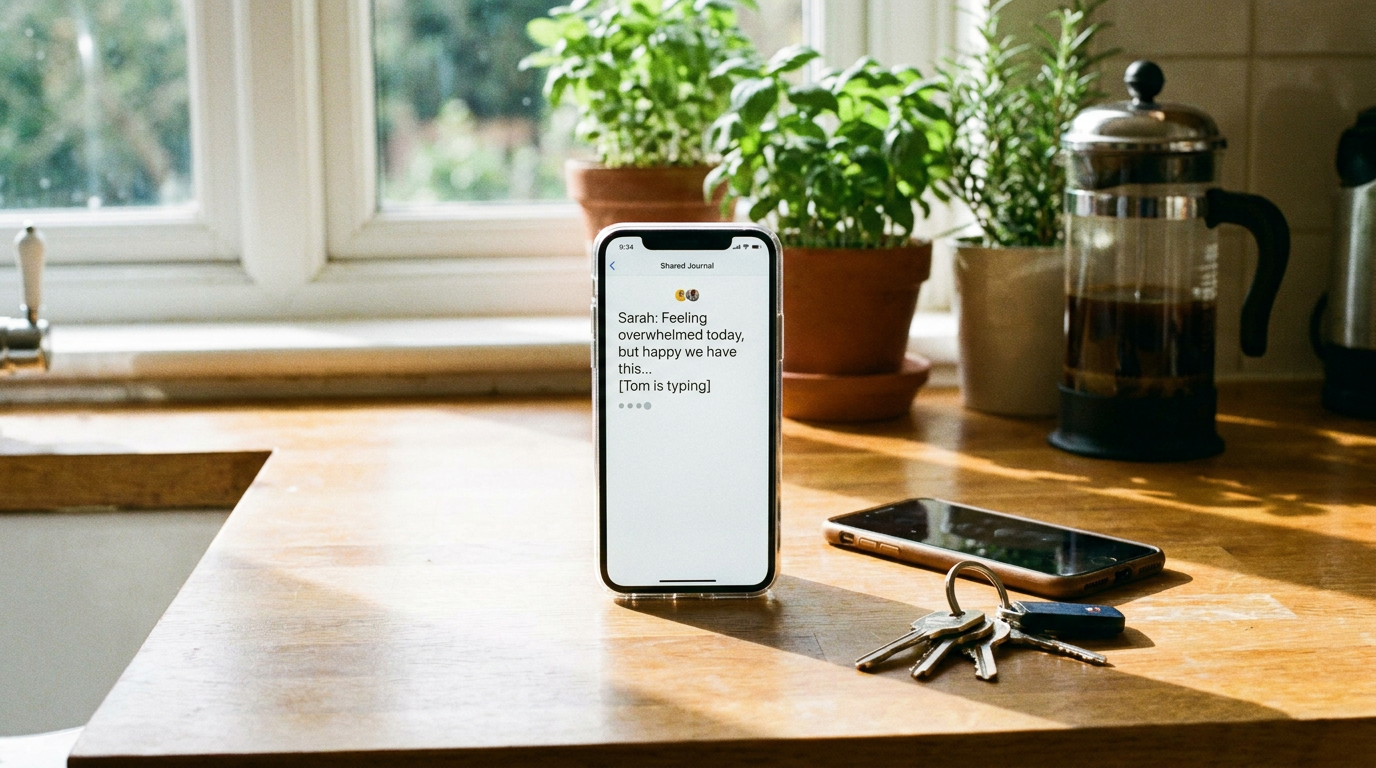
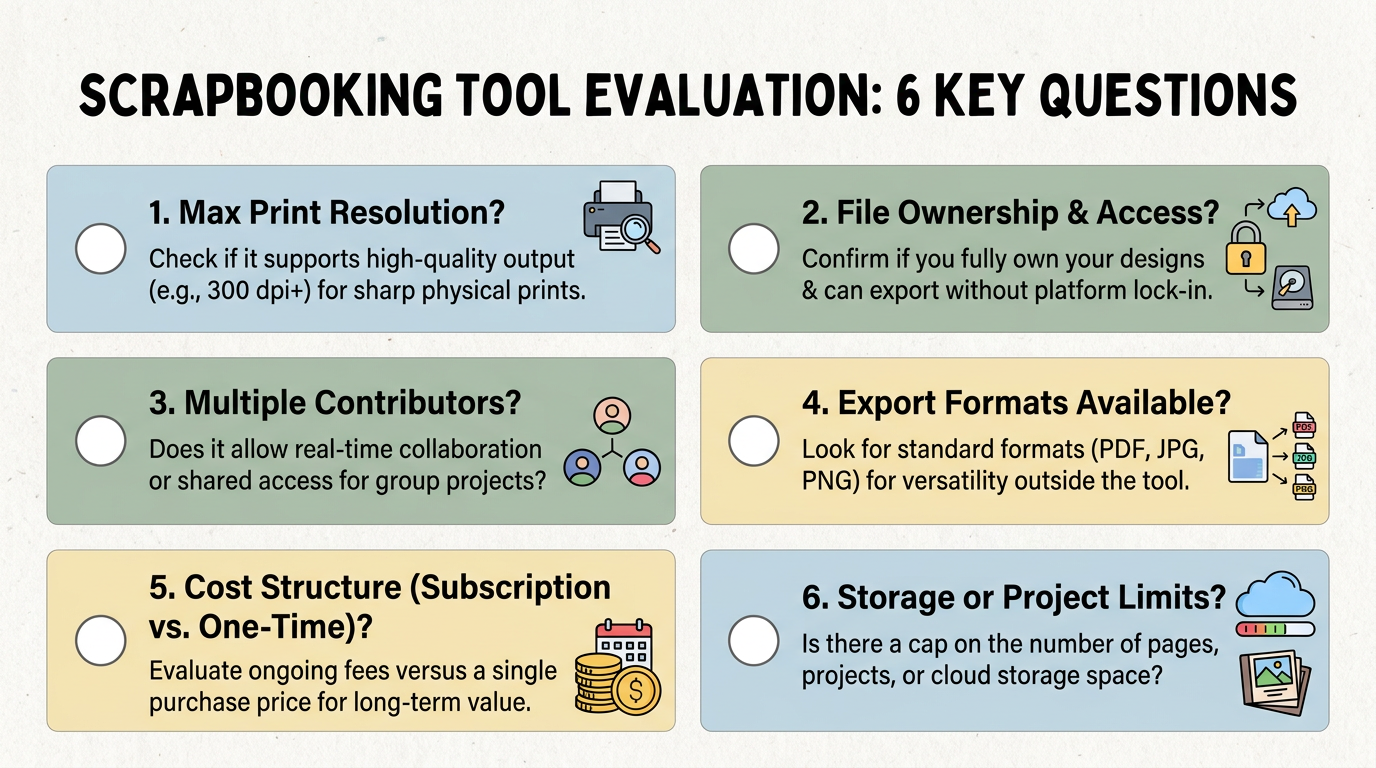
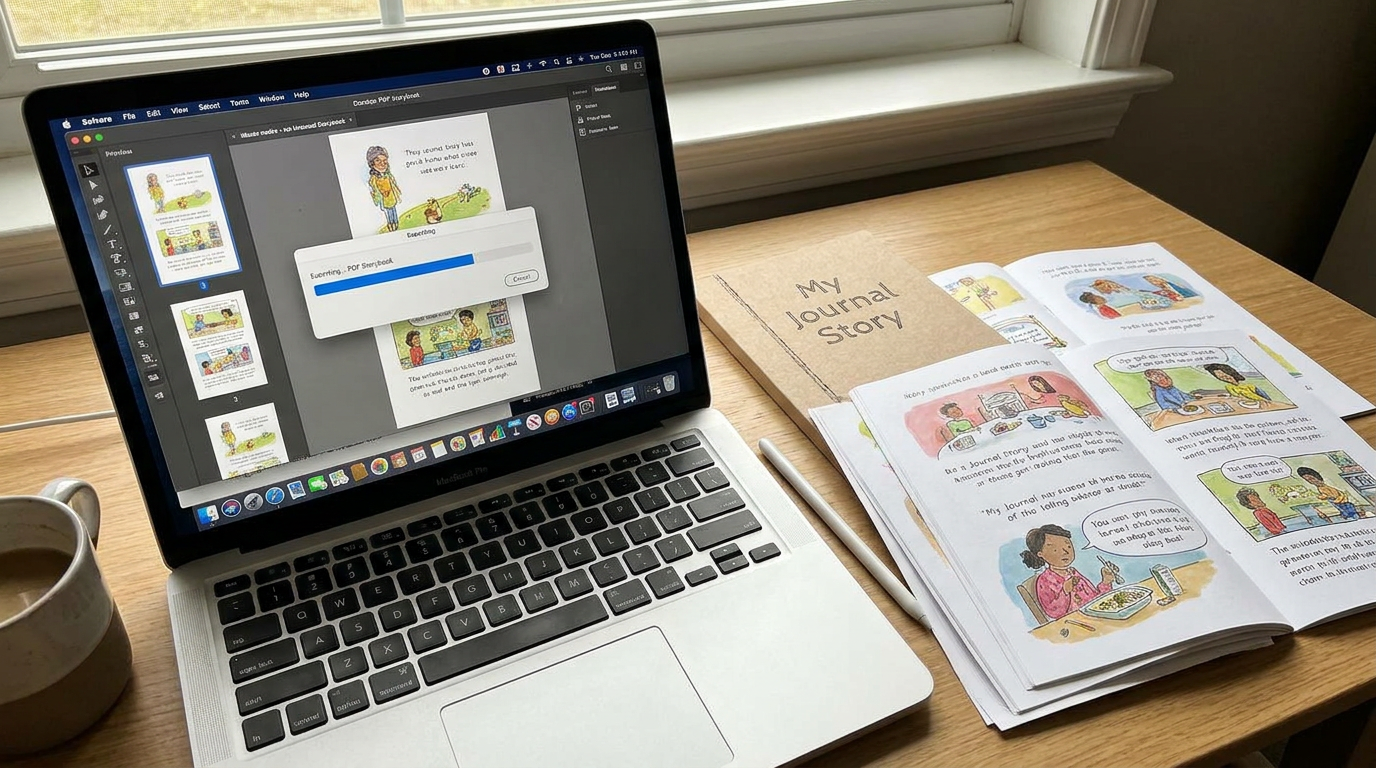
A single entry can hold the text, the photos and the audio together, dated, so that next December the whole thing opens in one place instead of four. A timeline view is what makes several years readable in sequence rather than as scattered files. And for households doing this together — which is most households, since the card is usually a joint project — a means two people can add to the same entry instead of maintaining two half-versions. If you want a printed keepsake out of it eventually, that’s what the are for.
storybook and eBook outputscollaborative journal
On privacy, plainly: journals are private by default. You decide who can view or contribute, and access can be revoked at any time. Data is encrypted in transit. Personal data isn’t sold to third parties, and account deletion is available. The Now — the questions people tend to ask before they start.
FAQ page
A memory journal isn’t the place for marketing language about security, so that’s all we’ll say about it.
sets out the details in plain English.
Year in Review Questions: FAQs
What should a year in review include?
Six things: the facts, the people, the changes, the small ordinary details, what you made or finished, and what you want more and less of. You don’t need all six. Ten answers spread across two or three of those areas is plenty for a complete review, and far more useful than a thin pass at everything.
How do you write a year in review for yourself?
Pick ten questions, answer each in two sentences, and stop. If it’s your first attempt, use the twelve-photo method instead — scroll your camera roll, choose one photo per month, write a line under each. It takes about half an hour and removes the hardest part, which is remembering with no prompt.
What questions should I ask in a year in review?
Use the forty above, or write your own on the same principle: ask small, specific, answerable questions. “How was your year?” gets you nothing. “What did you eat that you’d eat again?” gets you a real memory with a place and a person attached. Small questions unlock big answers; big questions unlock silence.
How long should a year in review be?
As long as it takes to answer ten questions honestly — for most people, under a page. Longer isn’t better and usually isn’t more truthful, just more thorough. Two sentences per question is a good ceiling. If you’re writing paragraphs, the question was too broad.
What is a year in review letter?
It’s the annual letter sent out with holiday cards summarising a household’s year — sometimes a printed page, sometimes a few lines inside the card. The card section above covers structure, length and what to do when the year was difficult. One side of paper is the right length.
When should I write my year in review?
Any time from late November to the end of January. The quiet stretch between the holidays is the easiest window most people get all year, and it’s the one to aim for. Writing it in January is not late — nobody is checking the postmark, and a review written in the first week of January covers exactly the same twelve months.
What do I write if the year was bad?
Record it honestly and skip the sections you don’t want. Don’t go looking for a lesson in it. A short entry is a complete entry.
How do I do a year in review with my family?
Use the conversation version: ask each other the questions out loud, and have one person write down the good bits afterwards. Different people remember the same year differently, and the gaps between accounts are usually the most interesting part of the exercise — one person’s quiet month is another person’s worst week.

The Blank Month, Filled In
April doesn’t have to be a blank next year. That’s the whole offer.
A review with six answers still counts. So does a card with three sentences in it.
The whole of this post reduces to something quite small: ten questions, twelve photos, one line under each. Under half an hour, once. Then do it again next December, and the pair together is worth considerably more than either one on its own.
They’ll tell you what you consumed. They won’t tell you what happened.
The recaps will arrive again next December. They’ll be fun again. Send them to your friends again — nothing here says don’t.
Don’t Just Live It — Keep It
Answer ten questions, add the twelve photos, and keep them somewhere you’ll actually find them next December. That’s the entire job.
Start Saving What Actually Matters
Available on web, iOS, Android and HarmonyOS. Journals are private by default, and you decide who can view or contribute.