The Final Whistle: How to Turn Your World Cup 2026 Journey into a Lasting Legacy with Lugelo
The roar began to fade. Confetti — gold and silver and white — fell like slow snow across MetLife Stadium. Somewhere in the stands, a fan pressed their hands to their face, not quite believing. Somewhere else, arms wrapped around a stranger, because in that moment every stranger felt like family. The final whistle of the FIFA World Cup 2026 had just blown, and 82,500 people inside that stadium in East Rutherford, New Jersey, shared a single, irreversible, magnificent truth: it was over.
Six weeks. One hundred and four matches. Sixteen cities across three nations. And now, silence — or something close to it, the kind of silence that only arrives after something enormous.
You were here. Maybe not in the stadium — but you were here. You watched, you screamed, you stayed up too late, you texted people at 2 AM over goals you couldn’t stop replaying. And now that it’s over, the most important question isn’t who won. It’s this: What happens to all those memories now?
This blog is your answer. A guide to gathering everything you felt, captured, and experienced over six extraordinary weeks of World Cup 2026 football — and turning it into something that will last far longer than the tournament did. Because a story this good deserves to be properly told. And Lugelo is the place to tell it.
Six Weeks, 104 Matches, One Unforgettable Arc
It started on June 11, 2026, at Estadio Azteca in Mexico City — a venue soaked in footballing mythology — and it ended thirty-nine days later beneath the skies of New Jersey. In between, the FIFA World Cup 2026 unfolded as the largest, most sprawling, most ambitious tournament in the history of the sport. Forty-eight nations. Sixteen host cities stretching from Vancouver to Guadalajara, from Seattle to Miami. One hundred and four matches played across the United States, Canada, and Mexico in a shared act of footballing ambition that no one alive had ever seen before.
Think about the sheer scale of what you witnessed. The group stage alone featured 12 groups — 48 nations — each fighting for their tournament lives across weeks of drama that produced upsets no one predicted, penalty shootouts that ended friendships (temporarily), and moments of individual brilliance that people will be quoting for decades. The Round of 32 arrived like a sudden narrowing of the world. Then the Round of 16. The quarterfinals. And then — Week 6.
Week 6 was the emotional crescendo. It was the week where everything that had been building since the opening ceremony finally broke open. On July 14, AT&T Stadium in Arlington, Texas — one of the most striking venues in world sport — hosted the first semifinal, 92,000 seats packed with noise and nerves in equal measure. One day later, on July 15, Mercedes-Benz Stadium in Atlanta, Georgia, hosted the second, a match that many neutral observers called one of the most electric nights of the entire tournament. July 18 brought the Third-Place Playoff to Hard Rock Stadium in Miami — not the grand finale, but a genuine farewell salute, two great teams giving everything for the honor of that bronze medal.
And then July 19. MetLife Stadium. 3:00 PM ET. The Final.
As if the football weren’t enough, the halftime show — the first-ever Super Bowl-style halftime show in World Cup history, featuring performances by Madonna, Shakira, and BTS, curated by Coldplay’s Chris Martin and directed by Hamish Hamilton — transformed the occasion into something beyond sport. It was a cultural event. A once-in-a-generation spectacle. The kind of thing your grandchildren will ask you about.
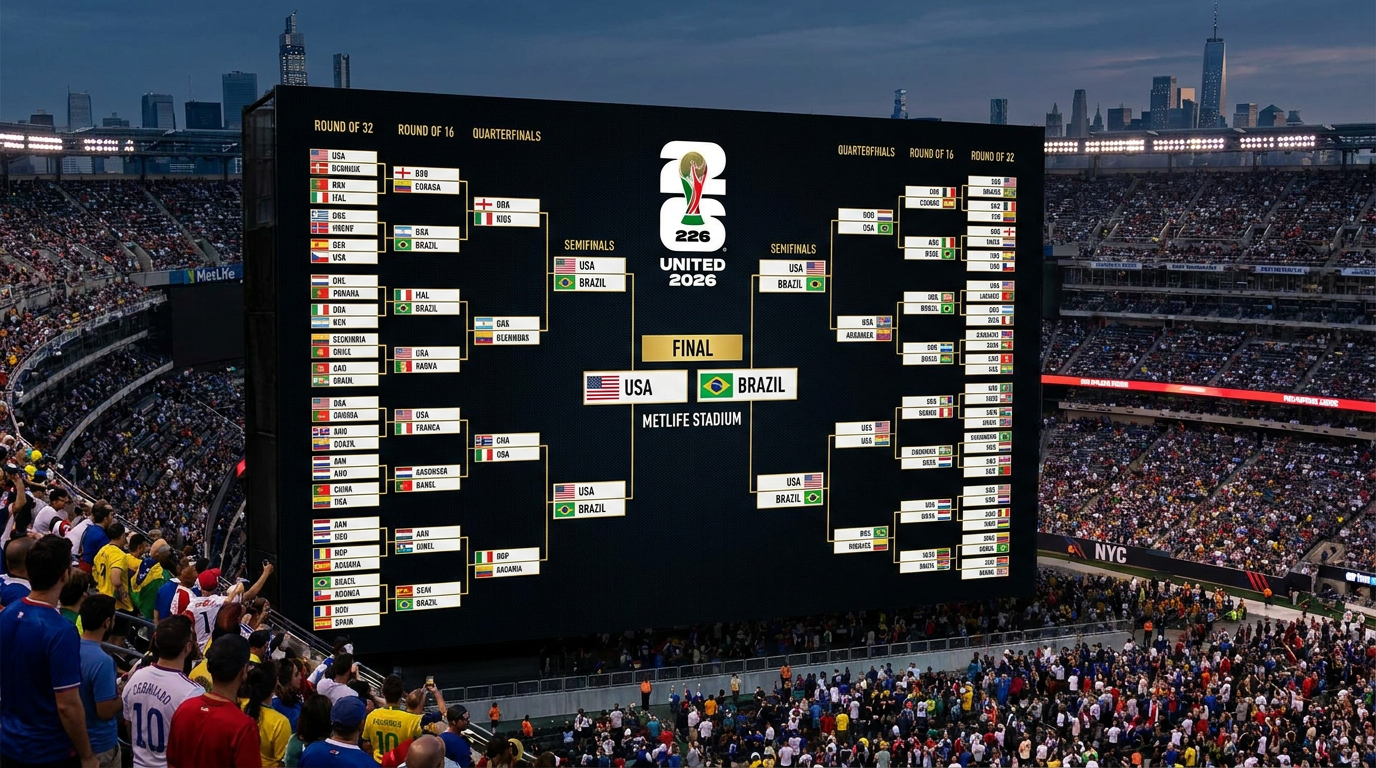
Every match was a chapter. Every week was a movement. The whole six-week arc, from Azteca to MetLife, was a story — your story, because you lived through it alongside billions of others. The question now is whether you’ll let it blur into a fading feeling or shape it into something you can hold onto.
The answer to that starts with understanding why these memories matter so much more than a final scoreline.
Why These Moments Are Worth More Than a Final Score
There’s a reason you remember exactly where you were when that goal went in. It’s not sentimentality. It’s neuroscience.
Research published by the National Institutes of Health confirms that emotional arousal during significant events dramatically enhances memory consolidation — the process by which the brain encodes experiences for long-term retention. When you watch a penalty shootout that determines whether your team advances, your brain isn’t just watching football. It’s filing that moment away with exceptional care, tagging it with urgency, emotion, and meaning. The World Cup Final wasn’t just entertainment. It was a neurological event.
But here’s the uncomfortable truth: even the most vivid memories erode. Details blur. The exact scoreline gets fuzzy. The name of the player who scored first becomes something you have to Google five years later. The feeling lingers, but the specifics — the ones that make the story real — quietly slip away without our noticing. Photos help, but they’re snapshots without context. A photo of a stadium tells you where you were. It doesn’t tell you what you thought in that moment, who you called, what you said, why it mattered. That context is the actual story, and it lives only in your head until you put it somewhere else.
This is where intentional memory-keeping becomes something far more than a hobby. Writing about your personal experiences, according to Harvard Health, reduces stress and helps the mind process intense emotional episodes — exactly the kind of emotional turbulence that six weeks of high-stakes football delivers. Journaling after a major event isn’t just nostalgia. It’s a way of making sense of something that moved you.
“Journals are souvenirs of your past.” — Lugelo
And the World Cup, by its very nature, is a communal experience. You didn’t watch this alone — not really. Even if you sat in your living room by yourself, you were texting your group chat, arguing on social media, calling your dad at halftime. Shared memories and reminiscing strengthen social bonds in ways that psychologists have documented extensively. The World Cup brought people together across oceans and time zones. Preserving the memory of that togetherness deepens its meaning.
There’s also the concept of autobiographical memory — the idea that our lived experiences form the narrative of who we are. Your World Cup 2026 experience is now part of your personal history. It’s a chapter in the story of your life. In 20 years, will you remember how you felt when that goal went in? Will your children know what this tournament meant to you? A well-kept journal doesn’t just preserve the memory. It preserves you — the version of you who was alive and electric and fully present in the middle of something remarkable.
The emotional case for memory-keeping is clear. Now let’s talk about how to actually do it — starting with pulling everything you’ve already captured back into one place.
Looking Back: How to Gather Six Weeks of World Cup Memories
Before you can build something lasting, you need to find everything that already exists. And if you’re anything like most football fans, your World Cup memories are scattered across at least five different places right now.
Start with what journalers call a memory audit. Open your camera roll and scroll back to June 11. What’s there? Stadium shots and selfies, probably. Scoreline screenshots taken in the heat of the moment. Group photos from watch parties. That blurry video you took when the crowd erupted and your hands were shaking. Food and atmosphere shots from the fan zones. The ticket stub you photographed before tucking it in your bag. All of it. Every one of those images is a data point in your World Cup story.
Then go wider. Check your WhatsApp groups — what did you send and receive in the minutes after the biggest moments? Look at your social media archives, your saved posts, your liked videos. Check your voice memos app; you might have captured audio in the crowd without even remembering. Look for match programs, newspaper front pages you photographed, highlight articles you bookmarked. The raw material is almost certainly richer than you think.
The problem — and this is the universal problem of modern digital life — is that all of this is scattered. Different devices, different apps, different platforms. Your camera roll doesn’t talk to your WhatsApp. Your bookmarked articles don’t talk to either. What you have is the contents of a great story with no way to read it in order.
Here’s what to gather for your World Cup journal:
- Match-day photos and stadium shots
- Group selfies and watch party images
- Scoreline and moment screenshots
- Reaction videos (even the shaky, chaotic ones — especially those)
- Photographs of physical mementos: tickets, programs, scarves
- Links to match reports and highlight articles you saved
- Audio clips or voice notes from match days
- Social media posts and group chat messages worth preserving
- Food, fan zone, and atmosphere captures
Lugelo was built for exactly this consolidation challenge. On the platform, you can gather photos, videos, audio clips, URLs, and written notes into a single, organized private journal — a unified archive of everything the tournament meant to you. The approach that works best: organize by match or week. Each game becomes its own journal entry. Each phase of the tournament — Group Stage, Knockouts, Semifinals, Final — becomes its own chapter. Suddenly, what was chaos becomes a timeline. What was scattered becomes a story.
Lugelo’s browser extension makes this even more seamless — you can clip match reports, Wikipedia pages, or highlight articles directly from the web and drop them straight into your journal entry, context and all. And if your notes from the heat of the moment are brief (“GOAL!!!!! 🔥” doesn’t exactly capture the nuance), Lugelo’s AI Journal Assistant can help you expand those fragments into full, rich memory entries — drawing out the detail, the feeling, and the story that lives behind the exclamation marks.
What was the moment that made you hold your breath? The goal that made you jump out of your seat? Find that photo. Find that screenshot. And get ready to write around it — because in the next step, everything you’ve gathered transforms into something truly worth keeping.
From Scattered Entries to a Lasting Keepsake: Your World Cup Timeline and eBook
This is the moment where raw material becomes art.
Imagine it: a complete, chronological record of your World Cup 2026 journey, beginning on June 11 at Estadio Azteca and ending with confetti falling at MetLife Stadium on July 19. Every match that mattered to you. Every goal, every heartbreak, every moment where football felt like the only thing in the world. All of it organized, visually rich, and beautifully presented — not just a camera roll, but a narrative.
Lugelo’s Timeline View makes this possible. Every journal entry you create is automatically placed in chronological order, building a scrollable, visual narrative of your entire tournament experience from first kick to final whistle. Think of it as your personal World Cup documentary — but instead of a production team assembling it, you assembled it from the inside, with your own eyes and your own words. The timeline doesn’t just show you what happened. It shows you your World Cup — which is the only one that truly matters.
The structure practically writes itself. Group Stage weeks become your opening chapters — the nervous excitement, the early upsets, the first real belief that something special might be happening. The Round of 32 and Round of 16 entries carry the weight of rising stakes. The quarterfinals get their own dramatic chapter. And then Week 6 — the semifinals, the third-place match, the Final — becomes the climax that the whole journal has been building toward.
But Lugelo goes further than a digital timeline. Its eBook feature allows you to select your journal entries, choose a theme, and generate a beautifully formatted, PDF-style eBook from everything you’ve created. And that’s where the magic really lands.
Imagine flipping through a 50-page eBook — your eBook — of everything you felt, watched, and celebrated over six weeks of the greatest sporting event on Earth.
This isn’t a generic photo album. It’s a personalized, curated, designed keepsake — yours from cover to cover. You can customize the journal cover, choose your entry themes, and give it a title that means something to you. “My World Cup 2026 Story.” “The Road to MetLife.” “Six Weeks of Football.” The name is yours to choose, and the finished product is something worth printing, sharing, or archiving for decades.
For readers who prefer a head start, Lugelo’s templates offer pre-designed structures that make the eBook creation process even more intuitive — a scaffold you can fill with your own story, your own voice, your own memories. The finished eBook can be kept privately as a personal archive, shared as a PDF with the people who were part of the journey, or printed as a physical keepsake. All user-controlled. All yours.
Think of it this way: before Lugelo, you had a scattered camera roll. After Lugelo, you have a book. The distance between those two things is the distance between a memory and a legacy.
And the legacy-building doesn’t stop with an eBook. Because Lugelo also offers something that no photo album or PDF can — the ability to step back inside your most powerful memories, in full immersive 3D.
Relive It in 3D: Creating Your World Cup VR Gallery
One day — maybe ten years from now, maybe twenty — you’ll want to go back. You’ll want to walk through the night the semifinal was decided, or stand again in the atmosphere of that watch party when the Final entered extra time. You’ll want to feel what it felt like to be inside those six weeks, not just remember that they happened.
With Lugelo’s VR Gallery feature, you actually can.
A Lugelo VR Gallery is a 360-degree immersive virtual space built entirely from your own content — your photos, your videos, your journal entries, your memories. Rather than scrolling through a flat timeline, you move through your World Cup story spatially, the way you move through a room or a museum. It is, genuinely, one of the most remarkable things journaling technology has ever made possible.
Building your World Cup VR gallery begins with selecting the best content from your journal — the photos with the most visual impact, the videos with the most emotional weight. From there, you organize by theme. Match Nights. Fan Zones. The Road to the Final. MetLife, July 19. Each theme becomes a “room” in your gallery — a space filled with the memories, sights, sounds, and stories from that dimension of your World Cup experience.
Lugelo offers pre-built gallery themes like Moments in Time, Places I’ve Been, and People I Love — but the real power for a tournament of this magnitude is building something custom. The Road to MetLife isn’t just a catchy title — it’s a thematic through-line. From the first group stage match through every knockout round, you trace the journey that led to the most spectacular final in the sport’s history, complete with a halftime show featuring Madonna, Shakira, and BTS that no one who saw it will ever forget.
“Step into your memories like never before and experience your life story in immersive VR.” — Lugelo
Inside the gallery, you can embed interactive memory hotspots — points in the virtual space where audio clips play, text entries appear, photos expand, or video moments begin. Walking through the gallery isn’t passive. It’s an experience. It’s the closest thing that currently exists to actually going back.
The emotional proposition of this feature is almost impossibly generous: “One day, you’ll want to walk through that night again. With Lugelo’s VR gallery, you actually can.” And importantly, no VR headset is required. Lugelo’s VR galleries are fully viewable on iOS and Android — accessible to anyone, anywhere, on the device already in your pocket.
But perhaps the most moving use of a World Cup VR gallery isn’t for yourself at all. It’s for the people who come after you. Let your kids walk through your World Cup story. Let them feel what you felt at MetLife on July 19. Let them understand — viscerally, immersively — what it meant to be alive for this. That’s not just memory-keeping. That’s storytelling across generations.
You’ve built the journal, the eBook, and the VR gallery. Now comes the most human part — sharing all of it with the people who were there alongside you.
Share the Story: Turning Your Journal into a Shared Keepsake
The World Cup is never truly a solo experience. Even for fans who watched alone, the tournament unfolded inside a web of relationships — friends on group chats, family on video calls, colleagues rehashing match highlights in the break room, strangers bonding instantly over a shared nation’s fortunes. Football fandom, at its core, is communal. And the story of your World Cup 2026 experience belongs not just to you, but to everyone who lived it alongside you.
This is where Lugelo’s collaboration features open up something genuinely beautiful.
Invite friends and family to contribute their own photos, memories, and perspectives directly into your shared journal. Not just to view it — to add to it. The friend who caught the semifinal in person at AT&T Stadium can drop in their stadium photos and their first-person account. The family member who watched the Final from the pub, surrounded by strangers who became instant friends, can add their own entry. The sibling who was in a completely different country but was texting you throughout can contribute their side of the story. The journal becomes multi-authored, multi-angled, and exponentially richer for it.
Consider a few scenarios that bring this to life:
A group of six friends watched every knockout match together at the same house. They each took photos and videos throughout. With Lugelo, they built a shared journal — one entry per match, co-authored with photos, memories, and personal commentary from each person. The finished eBook became something all six of them treasure.
A family attended the Final at MetLife Stadium together. Using Lugelo, each family member contributed their own perspective — the parent’s emotional entry about what it meant to share this with their children, the teenager’s excited capture of the halftime show, the grandparent’s reflection on how football has changed over their lifetime. One event. Six perspectives. One keepsake that will outlast all of them.
An online community of fans who never met in person but followed the tournament together built a collaborative journal across three countries. The shared experience of watching remotely — the same matches, the same moments — became a document of their friendship.
Privacy is always user-controlled on Lugelo. Your World Cup story, your rules. Share it privately with the people who deserve to be part of it. Keep it entirely to yourself. Or make it public and share it with the world — the choice is entirely yours, and Lugelo’s collaboration features are designed to honor that. Research into the mental health benefits of life story writing consistently shows that shared storytelling deepens meaning and strengthens the social bonds that make significant experiences feel real and lasting.
One final suggestion for your shared journal: create a collaborative “Final Memory” entry. Ask everyone in your group to add their reaction to the World Cup Final — what they felt, where they were, what moment broke them open. It’s a digital version of signing a match program. And unlike a signed program, it never fades.
The act of sharing the story brings us to the blog’s final and most resonant beat — the bigger question that all of this memory-keeping is really answering.
You Were Here: The Legacy of Keeping Your World Cup Story
Step back, for a moment, from the journals and the eBooks and the VR galleries. Step back from the features and the tools and the practical advice. And sit with the bigger truth.
The FIFA World Cup 2026 was the first 48-team World Cup in the history of the sport. Not a minor administrative change — a fundamental reinvention of football’s greatest competition, one that brought new nations to the global stage and expanded the boundaries of who gets to participate in the game’s defining moment. Future historians of football will mark 2026 as a turning point. And you were alive for it. You watched it happen. That is not a small thing.
There’s a concept called witness memory — the significance of having been present, even at a distance, for something historic. You don’t have to have been in MetLife Stadium on July 19 to be a witness to this tournament. Billions of people watched. Billions of people felt the same suspension of ordinary life that only the World Cup creates — that six-week period where football becomes the organizing principle of human attention across the entire planet. Being part of that, even from your living room, is meaningful. It is worth preserving.
Research published in the PMC journal on the power of positive episodic memories demonstrates that these kinds of experiences — charged with positive emotion, shared with others, embedded in a significant cultural moment — retain their emotional intensity and contribute measurably to long-term wellbeing. The memories you made during this World Cup aren’t just nice to have. They are, in the most literal scientific sense, good for you.
But science aside — here is the human truth. In ten years, the details will have blurred. In twenty, more so. In thirty, you might struggle to recall which semifinal happened in which stadium, or exactly how the Final unfolded in its final minutes. The feeling will persist, because the brain is good at preserving emotional impressions. But the story — the specific, detailed, personal account of what you experienced — will exist only if you wrote it down.
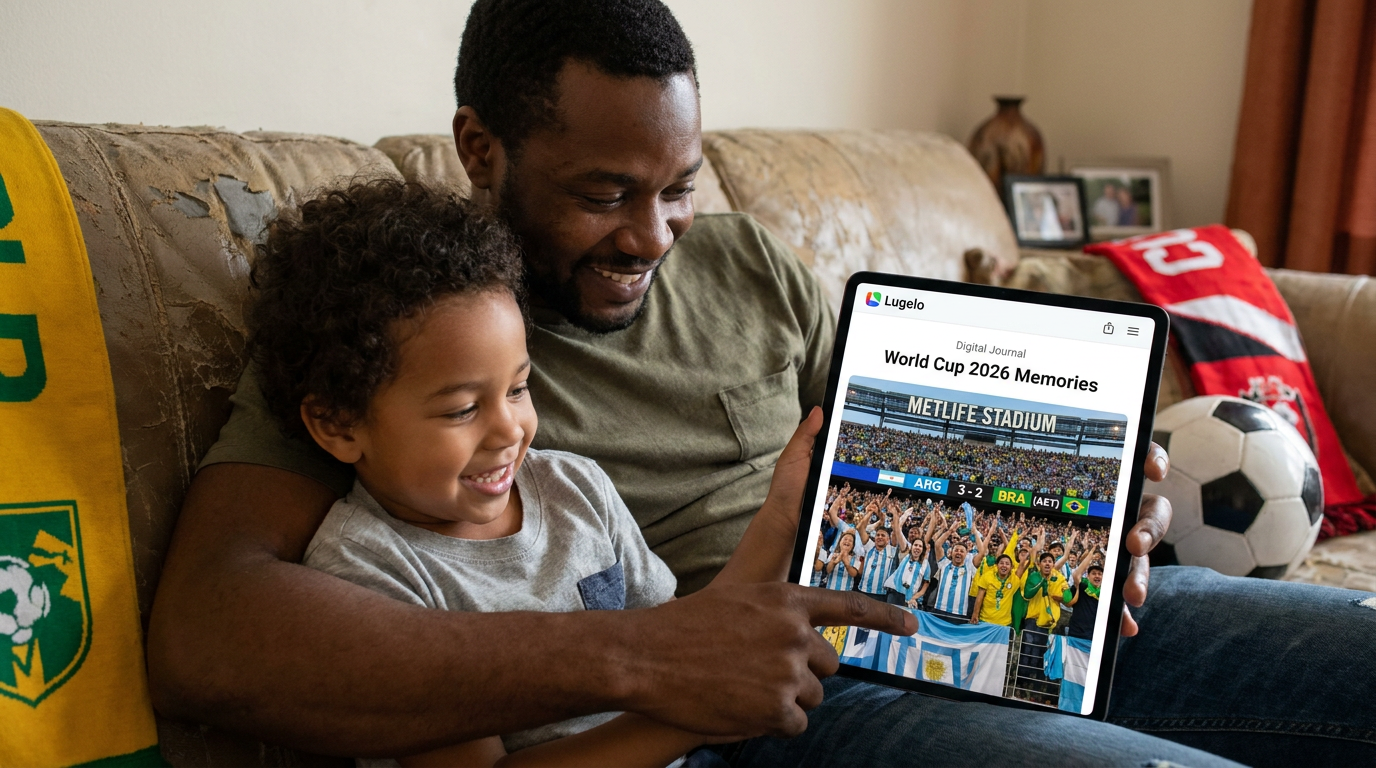
Your World Cup journal isn’t just for you. It’s for the version of you who will want to remember this in twenty years — the one who will sit quietly with a tablet and scroll through a Lugelo timeline and feel, with startling vividness, what it was like to be here. It’s for your children and grandchildren, who will want to understand what this tournament meant to the people who lived through it. It’s for the record — personal, private, human — that you were present for something that mattered.
Lugelo exists for exactly this purpose. Not as a social media platform, not as a content tool, but as a private, personal space for the stories that deserve more than a fading camera roll. Everyone has a story to tell — share yours on Lugelo. The greatest sporting event on Earth just gave you one of the best chapters you’ll ever have.
The final whistle has blown. The story isn’t over. It’s just beginning to be told.
“Journals are souvenirs of your past. Rejoice in yours.” — Lugelo
The Story Is Yours — Now Make It Last
The FIFA World Cup 2026 is over. The confetti has been swept from the MetLife Stadium turf. The trophies have been lifted. The planes have carried millions of fans back to their ordinary lives. And somewhere in your camera roll, scattered across your apps and your memory, six extraordinary weeks of football are waiting to be shaped into something more than a fading feeling.
You gathered memories across 104 matches and 39 days. You have photos you love, moments you’ll never forget, and a story that deserves to be told properly. Don’t let it fade into a forgotten camera roll. Gather it, shape it, and turn it into the story it deserves to be.
Journals are souvenirs of your past — and this was one of the greatest chapters you’ll ever live.
Start Your World Cup Legacy Journal on Lugelo
Your six weeks of memories deserve more than scattered screenshots. Gather them, shape them, and turn them into something you’ll treasure forever — a timeline, an eBook, a VR gallery, or all three. Private, collaborative, and beautifully yours.
Create Your First Journal — It’s Free
Explore how Lugelo turns memories into keepsakes →