Author: Musa Mawanda, Ph.D

Your World Cup Story Starts Now: How to Create the Ultimate World Cup 2026 Journal with Lugelo

Your World Cup Story Starts Now: How to Create the Ultimate World Cup 2026 Journal with Lugelo

Close your eyes for a second. Picture it: the roar starts low, somewhere deep in the belly of the Estadio Azteca — eighty-seven thousand voices finding each other at once. The tunnel opens. Mexico walks out. Fifty-five years of World Cup folklore embedded in every blade of that pitch. A wall of noise crashes over the stands like a wave, flags of green, white, and red rippling in the June heat. And somewhere across North America, in 16 cities spread across three countries, 48 nations begin their stories simultaneously. June 11, 2026. The greatest football tournament in history. The whistle hasn’t blown yet, but the feeling is already everything.

Now fast forward five years. You’re sitting with your family, someone asks, “Where were you when that happened?” — and you struggle to remember. Not because the moment didn’t matter, but because memory is fragile. The blur of 104 matches, 39 days, and a hundred incredible moments collapses into a vague, golden feeling with no edges. You watched every minute of it. You remember almost none of it.

That’s the paradox of once-in-a-generation experiences: they feel so big in the moment that we assume we’ll remember them forever. We rarely do. This blog is your guide to making sure that doesn’t happen. It’s a practical, inspiring walkthrough to building the ultimate World Cup 2026 journal in Lugelo — from the opening whistle on June 11 to the final whistle on July 19 — so that five, ten, fifty years from now, you don’t just remember that you watched it. You remember exactly how it felt.

Here’s what we’ll cover: setting up your journal before kick-off, capturing the electricity of opening day, tracking every prediction across 104 matches, collaborating with your squad, using AI prompts to keep the writing going across 39 days, and — the payoff — turning it all into an eBook and VR gallery that lasts forever.

The tournament is on! Your story starts now.

Why the FIFA World Cup 2026 Is a Once-in-a-Generation Moment Worth Documenting

There are sporting events, and then there are civilisational moments — occasions so vast in scope and so deep in human significance that they transcend sport entirely. The FIFA World Cup 2026™ is the latter. And the numbers alone tell only part of the story.

For the first time in history, 48 nations will compete at a single World Cup. That’s 16 more than the 32 teams who contested Qatar 2022 — 16 more nations, 16 more sets of fans, 16 more stories of qualification, sacrifice, and national pride converging on a single tournament. According to FIFA, the tournament will span 16 cities across three countries — the United States, Mexico, and Canada — making it the first tri-hosted World Cup in the history of the game. 104 matches will be played over 39 days, from June 11 to July 19, 2026, culminating in a final at MetLife Stadium in New Jersey that will be watched by an estimated billion people around the world.

But the statistics don’t capture what makes this tournament genuinely historic. Mexico becomes the first nation ever to host the World Cup three times, opening the tournament at the legendary Estadio Azteca — a venue that has witnessed Diego Maradona’s Hand of God, the Goal of the Century, and countless other moments that define what football means to humanity. When Mexico walks out on June 11, they’ll be walking into a building soaked in more World Cup history than any other stadium on earth.

And then there are the nations making their debuts on football’s grandest stage. Haiti qualifies for the first time ever, carrying the hopes of a nation and an entire diaspora with them. Bosnia and Herzegovina — who dramatically beat Italy in the playoffs — arrive at their first-ever World Cup, a football story so good it barely seems real. These are the underdog narratives that the sport lives for, and they’re just two of the many new storylines that the expanded format unlocks.

“The FIFA World Cup is the biggest peacetime gathering of nations on earth. The 2026 edition is the biggest it has ever been.”
— Britannica’s complete guide to the 2026 FIFA World Cup

Then there’s the cultural dimension. This isn’t just a sporting event — it’s a festival. Three opening ceremonies across three cities on June 11 and 12 will set the tone: Shakira and Burna Boy headline the Mexico City ceremony at Estadio Azteca on June 11, while Los Angeles hosts Katy Perry, Future, Anitta, LISA, Rema, and Tyla at SoFi Stadium on June 12 — and Toronto welcomes the world with Michael Bublé and Alanis Morissette. Three cities, three ceremonies, one extraordinary opening weekend that signals this World Cup is as much a cultural celebration as a sporting competition.

A collage-style graphic showing the flags of all 48 participating nations arranged in a grid, with the World Cup trophy in the centre.

And here’s the argument for your World Cup 2026 journal: research in cognitive psychology consistently shows that our memories of even the most vivid, emotionally intense experiences fade dramatically without active documentation. We don’t remember events — we remember the last time we thought about them. Journaling breaks that cycle. It locks the details, the emotions, the context, and the texture of an experience into a permanent record before the neural pathways fade. The World Cup 2026 is not an event you want to experience only once. It deserves to be lived twice — once in real time, and once, years from now, through the pages of your journal.

This tournament is a once-in-a-generation moment, and very likely the last of its kind for decades. The time to start capturing it is before the first kick-off — not after the final whistle.

Now that we understand why this tournament demands to be documented, let’s talk about how — starting with setting up your World Cup journal in Lugelo before June 11 arrives.

Setting Up Your World Cup 2026 Journal in Lugelo — Before Kick-Off

The best journaling habit is the one you build before you need it. If you wait until after the opening match to set up your journal, you’ll already be playing catch-up — and the memories from those first electric hours are the ones that set the emotional tone for the entire tournament. So let’s get your journal ready now, while you still have time.

The first thing to know is that Lugelo is built for exactly this kind of milestone experience. It’s not a notes app. It’s not a social media platform. It’s a dedicated journaling tool designed to help you capture, preserve, and revisit the moments that actually matter — with multimedia, AI assistance, collaboration, and beautiful output formats built in from the ground up. Setting it up takes minutes. The payoff lasts a lifetime.

Here’s how to get started:

Step 1: Create a dedicated journal for the World Cup. Don’t mix these memories in with everyday journaling — this tournament deserves its own space. Lugelo lets you create unlimited journals, so give the 2026 World Cup a home of its own. Name it something that will make you smile when you open it in 2036: “My World Cup 2026 Story”, “Road to New Jersey: World Cup 2026”, or even something personal to your team allegiance, like “Three Lions — Summer 2026.” The name is the first signal to your future self that this journal matters.

Step 2: Set a custom cover. Lugelo allows fully personalised journal covers, and this is not a step to skip. Use an opening ceremony photo, a photo of your favourite team’s home kit, a scan of a match ticket, or a hero image of the Estadio Azteca at sunset. The cover sets the emotional tone of the entire journal from the moment you open it — and it’s the first thing you’ll see every time you return.

Step 3: Enable collaboration from day one. Right in the setup stage, invite the family members, friends, or fellow fans who’ll be watching the tournament with you. Lugelo’s privacy controls are granular — you decide exactly who has access, and each contributor’s entries remain distinctly theirs. More on this in Section 5, but setting collaboration up at the start means nobody misses the opening day.

Step 4: Choose a template. Lugelo’s pre-built templates and writing prompts are specifically designed to remove the blank page problem. Select a travel, event, or milestone template as your base structure, then customise it to fit the football format. Structure matters in long-form journaling — a consistent template makes each entry easy to write and even easier to read back later.

Step 5: Write your “before it all begins” entry. The evening of June 10 — the night before the opening match — write a short first entry. Your predictions for the tournament. The team you’re backing. Your excitement level on a scale of one to ten. Who you’re planning to watch with. This entry becomes the emotional baseline for your entire World Cup journal: the “before” against which everything else is measured.

A smartphone screen showing the Lugelo app's journal creation screen, with a World Cup themed cover image being selected and a journal named "World Cup 2026 — My Story".

The beauty of Lugelo is its flexibility. It works seamlessly across web, iOS, Android, and HarmonyOS — which means you can start your setup on your laptop tonight and switch to your phone tomorrow during the match, without losing a single word. If you’re a visual learner, Lugelo’s how-to videos walk you through every feature in detail, so there’s genuinely no barrier to getting started.

Five steps, fifteen minutes, and you’ll have a journal that’s ready to hold the greatest football story of your life. All that’s left is for June 11 to arrive — and when it does, you’ll want to be ready to capture every second of it.

Capturing Opening Match Day — June 11 at the Estadio Azteca

There are days that divide time into “before” and “after.” June 11, 2026 is one of them. At the Estadio Azteca in Mexico City — a stadium that has hosted more World Cup history than any other building on the planet — Mexico vs South Africa will kick off the biggest World Cup in history. And whether you’re watching from the stands, from a living room in Manchester, from a bar in Lagos, or from a garden in São Paulo, the emotional charge of this day is unlike anything else in sport.

The opening ceremony comes first. Shakira and Burna Boy take the stage at Azteca before the match — a fusion of Latin passion and African energy that perfectly encapsulates the global character of this tournament. It’s a cultural statement as much as a performance, and it deserves its own journal entry. Before a ball is even kicked, write down what you’re feeling: the anticipation, the spectacle, the sense that something enormous is beginning.

Here’s the key insight about matchday journaling: the best entries begin before kick-off. The pre-match rituals are the details that make memories personal and irreplaceable. What are you eating? Who’s in the room with you? What is the group chat saying? Is your jersey on? Is your superstition in place — the lucky seat, the lucky snack, the muted commentary during penalties? These small, specific, human details are what transform a journal entry from a match report into a genuine memory. Anyone can find the result of Mexico vs South Africa in five years. Nobody else can find the entry that describes exactly what your living room felt like at kick-off.

During the match itself, Lugelo’s multimedia capabilities become your secret weapon. You don’t need to pause the match to type lengthy entries — that’s not what great matchday journaling looks like. Instead:

  • Snap a photo of the TV screen at kick-off — the lineup, the first formation, the roar of the Azteca translated into pixels.
  • Record a 10-second voice note at a key moment. A goal. A VAR decision. A near-miss that nearly gives you a heart attack. You don’t need words — just your raw, unfiltered reaction.
  • Drop a text entry at half-time — two or three sentences on how the match is feeling, which team is dominating, and whether your pre-tournament predictions are already starting to unravel.

Lugelo’s Speech-to-Text feature is particularly invaluable during live matches. Nobody wants to type mid-game. Just speak — Lugelo’s voice recognition captures your words in real time and converts them to text, hands-free. You can narrate a moment, record a reaction, or dictate your half-time analysis without ever looking away from the screen.

A group of friends in football jerseys watching an opening match on a large TV screen, one person laughing and another holding up their phone to capture the moment.

After the final whistle, sit down for a proper post-match entry. Give yourself ten minutes and follow this simple structure:

  1. The score — the factual anchor.
  2. The standout moment — the single image or incident that defined the match for you.
  3. The surprise — something you didn’t expect.
  4. Your reaction — the emotion. Don’t censor it.
  5. The prediction update — how has this result changed what you think will happen in the tournament?

That’s it. Five points, ten minutes, and you’ve preserved the opening match of the greatest World Cup in history from your unique perspective as a fan. No broadcaster, no journalist, no FIFA highlights package can ever replicate what you just wrote — because it’s yours.

The FIFA official match schedule gives you a full view of every match across the tournament, so you can plan your journaling sessions across the entire opening week. Because here’s the thing: the opening match is just the beginning. As the group stage unfolds, a new challenge emerges — keeping track of the predictions you’re making and the calls you’re getting right (and spectacularly wrong).

The Prediction Tracker — Logging Scores, Picks, and Upsets Match by Match

Ask any true football fan what makes a World Cup addictive, and the answer is almost always the same: the predictions. The bold calls, the shocking upsets, the moments when a 200-to-1 outsider puts a footballing giant to the sword, and somewhere in a living room across the world, someone yells “I told you so!” The prediction game is as much a part of the World Cup experience as the matches themselves — and your World Cup 2026 journal is the perfect place to play it.

The genius of turning your Lugelo journal into a prediction tracker is simple: it gives you a reason to return to the journal after every single match. Not just the ones involving your team. Not just the finals. Every match. Because every match now has something personal riding on it — your prediction, your instinct, your football knowledge on the line. It transforms the journal from a passive record into an active, living document that grows richer with every result.

Setting up a prediction format in Lugelo is straightforward. Create a recurring entry structure — either one entry per match (for the hardcore fan) or one entry per matchday (for the casual fan who wants to cover all the action without burning out by the quarter-finals). The structure looks like this:

  • Match: Teams + Date + Stadium
  • My Predicted Score: What do you think the scoreline will be?
  • Key Player to Watch: Who are you keeping your eye on?
  • Actual Result: Fill this in after the final whistle.
  • Did My Pick Advance? ✓ or ✗ — simple accountability.

A flat-lay of a notebook, football stickers, and a phone displaying a Lugelo journal entry with a match prediction template — score, teams, and key player noted.

With 48 teams across 12 groups in the expanded format, the group stage alone provides 48 matches of prediction opportunities before the round of 32 even begins. ESPN’s comprehensive guide to all 48 World Cup 2026 teams is an excellent resource for building your prediction knowledge base — checking key players, recent form, and the bookmakers’ expectations before you commit your picks to paper.

The expanded 48-team format also guarantees something that makes journaling particularly electric: upsets. More nations means more mismatches, more Davids meeting Goliaths, more jaw-dropping moments when a first-time qualifier takes down a football superpower. Haiti’s tournament debut. Bosnia and Herzegovina’s first-ever World Cup appearance after beating Italy in the playoffs. These are the stories that define tournaments — and the shock of witnessing them, captured in a journal entry written in the immediate aftermath, is something no highlights reel can replicate.

There’s also the bracket tracking angle that makes the journal feel like a genuine companion to the tournament. Dedicate a section to tracking which teams advance from each of the 12 groups — updating it after every matchday as the bracket takes shape. By the end of the group stage, your journal will contain a complete, handwritten (or hand-typed) record of every group table, every surprise elimination, and every team that beat the odds to advance.

The timeline view in Lugelo’s features adds another dimension to this: after Week 1, you can look back at your entries in chronological order and see the tournament’s shape beginning to emerge — the early form teams, the shock results, the predictions you nailed and the ones that aged poorly by Day 3. It gives your World Cup journal 2026 a narrative structure that feels genuinely cinematic.

Prediction tracking is even more compelling when it becomes a group sport — which brings us to one of Lugelo’s most powerful features for the World Cup: collaborative journaling with the people who matter most to you.

Invite Your Squad — Collaborative World Cup Journaling with Friends & Family

The World Cup has never been a solo sport. It’s watched in groups, debated across kitchen tables, celebrated in living rooms, and suffered through on sofas surrounded by people who feel every moment as deeply as you do. The greatest World Cup memories are almost never about what happened on the pitch alone — they’re about who was in the room with you when it happened.

Lugelo’s collaborative journaling feature is built for exactly this reality. Rather than one person shouldering the entire journaling experience, your World Cup 2026 journal becomes a shared, co-authored document — every person in your group contributing their own perspective, their own photos, their own voice notes, and their own emotional reactions to the same matches. The result is something richer and more textured than any single voice could produce: a true multi-perspective account of the tournament.

Inviting collaborators to your journal in Lugelo is straightforward. Send a privacy-controlled invitation to the people you want to include — family members, friends, your WhatsApp group, your work colleagues who are all ignoring their inboxes for 39 days. Each person can add their own entries, photos, and voice notes without disrupting anyone else’s contributions. The family journal stories on Lugelo show exactly how this looks in practice — real journals, real families, real stories built together.

The use cases for collaborative World Cup journaling are as varied as football fandom itself:

  1. The geographically scattered family — siblings and parents spread across different cities, each watching the matches in their own home, each adding their local watch party entries to a single shared journal. The morning after each match, everyone wakes up and reads each other’s entries — a daily ritual that keeps the family connected across distance.
  2. The multi-allegiance friend group — four friends, four different national teams all in the tournament. Each person logs their emotional reactions to the same matches, but from completely different perspectives. One person’s moment of heartbreak is another’s moment of triumph. One journal. Four stories. Infinitely richer than any single account.
  3. The international fan collective — friends from different countries whose national teams are all competing. A Brazilian fan, a French fan, a Nigerian fan, and a Japanese fan, all contributing to the same journal across 39 days. When the tournament ends, they have a document that captures the World Cup from four different cultural perspectives simultaneously.

“Everyone has a story to tell. The World Cup gives everyone a story worth keeping.”
— Lugelo

The watch party documentation angle is particularly worth pursuing for each match gathering. Create a dedicated entry for every watch party: who was there, what you ate, what the atmosphere was like before kick-off, who made the best reaction to a goal, and who had to leave the room during penalties. These are the social memories that sit alongside the footballing memories — the context that makes the sporting moments human.

Four friends of different backgrounds laughing together at a World Cup watch party, one holding up a phone showing a collaborative Lugelo journal with multiple entries from different contributors.

For users who are conscious about privacy — and many people are — Lugelo’s approach is worth emphasising. The journal remains entirely private to the invited group. There’s no public social media sharing required, no algorithm surfacing your private moments to strangers, and no advertising built around your memories. You share with exactly the people you choose, and nobody else. In an era where everything seems to end up online, a genuinely private shared space feels like a rare and valuable thing.

The collaboration features on Lugelo’s platform go deep — every contributor’s additions are visible to the group in real time, so the journal grows and evolves throughout each matchday. By the time the semi-finals arrive, you’ll have a document that dozens of people have shaped together, carrying dozens of unique voices — all united by the same tournament.

Bringing people together is just one layer of the challenge. The other is sustaining the momentum across 39 days and 104 matches — which is where Lugelo’s AI assistant becomes the most underrated tool in your World Cup journaling kit.

Never Run Out of Things to Write — AI Prompts & Templates for Every Matchday

Thirty-nine days. One hundred and four matches. Five weeks of football that starts with a ceremony at the Azteca and ends with a nation lifting the trophy under the lights at MetLife Stadium. It’s an extraordinary, relentless, beautiful marathon of a tournament — and even the most passionate football fan can hit a journaling wall somewhere around Week 3.

You know the feeling. It’s midnight. Portugal just played a 90-minute goalless draw. You know something happened — there were talking points, a tactical battle, a moment that nearly broke the deadlock — but you’re exhausted, and the blank page is doing nothing to help. This is the moment where most journals quietly die.

Lugelo’s AI Journal Assistant exists specifically to solve this problem. And for a 39-day tournament, it’s not a luxury — it’s a necessity. Here’s how it works: instead of staring at a blank page, you jot a quick voice note or a handful of bullet points — “0-0 Portugal. Boring first half. Bruno had a chance in the 70th. Tactical masterclass from the Portuguese manager. My pick still alive.” — and then you ask the AI to expand it. What comes back is a beautifully written, emotionally resonant journal entry that captures the match from your perspective as a fan, in your voice, in minutes. Not hours. Minutes.

The AI doesn’t write for you — it writes with you. Your bullet points, your reaction, your perspective remain the raw material. The AI simply transforms them into something worth reading years from now, when you can’t quite remember why that Portugal draw felt so tense.

Here are some AI prompts worth trying across your World Cup 2026 journal:

  • “Describe how I felt watching the opening match, as if I’m writing to my future self ten years from now.”
  • “Turn these match notes into a vivid match report from my perspective as a fan in my living room.”
  • “Write a short reflection on why [team] matters to me and what their World Cup journey means.”
  • “Help me capture the atmosphere of our watch party — who was there, what we ate, and the moment everything changed.”
  • “It’s the quarter-finals. Write an entry about what it feels like to have watched this tournament unfold and still have so much left.”

A close-up of someone typing a short note into their phone during a match, with the Lugelo AI assistant generating a full journal entry on screen below their rough bullet points.

Beyond the AI assistant, Lugelo’s pre-designed templates give every matchday entry a consistent structure that makes writing feel effortless and reading back feel rewarding. A simple template rhythm — pre-match expectations, key moments, result reaction, prediction update, tomorrow’s matches to watch — means you never have to figure out where to start. You just open the template and fill it in.

For the truly lazy journaler (and there’s no shame in that — it’s 1am and Brazil just equalised in extra time), Speech-to-Text is the answer. Open Lugelo. Press the voice recognition button. Talk for sixty seconds about what just happened. Lugelo converts it to text, and you can format it later. The key insight here: done is better than perfect. A rough voice note captured at midnight is worth infinitely more than a beautifully written entry you intended to do tomorrow and never got around to.

For readers who are following World Cup coverage online — checking post-match analysis, reading injury reports, catching up on press conferences — Lugelo’s browser extension for Chrome and Firefox lets you clip articles, stats, and analysis directly into your journal entries. Find an incredible post-match breakdown of a tactical masterclass? Clip it. Read a quote from a manager that perfectly captures what you’re feeling? Clip it. Your journal becomes a living archive of the tournament as it’s being documented in real time.

The complete breakdown of Lugelo’s AI journaling features — including the AI assistant, templates, speech-to-text, and browser extension — is worth exploring before June 11 so you’re ready to use every tool from day one.

With consistent entries building across five weeks — the group stage thrill, the round of 32 drama, the quarter-final heartbreak or euphoria, the semi-final tension — by the time July 19 arrives, you’ll have something extraordinary in your hands. Something you built across 39 days. Something that no one else in the world has. And Lugelo gives you the tools to turn it into a keepsake that will outlast the tournament itself.

From Opening Whistle to Final Whistle — Turning Your World Cup Journal into a Lasting Keepsake

July 19, 2026. MetLife Stadium, New Jersey. The final whistle blows. A nation erupts. Confetti falls. The trophy is lifted. And somewhere, in the noise and the emotion and the beautiful exhaustion of it all, you have 39 days of journal entries, hundreds of photos, voice notes, video clips, and memories from across the most extraordinary football tournament ever staged. The question is: what do you do with all of it?

The answer is where Lugelo becomes something genuinely irreplaceable — not just a journal app, but a memory architecture for the most significant sporting event of your lifetime.

The eBook: Your World Cup Story in Print-Quality Format

At any point during or after the tournament, you can compile your journal into a beautifully designed eBook or PDF. Choose a theme, arrange your entries, add your favourite photos from across the group stage through to the final, and generate something that looks and feels like a proper, published keepsake. This is the souvenir that no official FIFA merchandise can replicate — because it’s your story of the tournament, told in your voice, with your photos and your memories embedded in every page. It’s the kind of thing you’ll want to share with your family, keep on your hard drive, and maybe, someday, show your children or grandchildren.

The eBook creation and timeline features on Lugelo make this process intuitive and beautiful — you don’t need design skills or technical knowledge. The platform does the heavy lifting; you provide the memories.

The VR Gallery: Your Personal World Cup Museum

This is Lugelo’s most distinctive and emotionally powerful feature — and if you’ve been taking photos and videos consistently across the 39 days of the tournament, the VR Gallery is the payoff that makes all of it worthwhile. Every image and video you’ve captured can be assembled into a Lugelo VR Photo Gallery — an immersive, 360-degree virtual space where you can literally walk through your World Cup memories. Not scroll through them. Walk through them. Your own personal World Cup museum, built from your own personal archive.

Imagine standing in a virtual gallery where one wall holds photos from the opening ceremony at Azteca, another captures the round of 32 watch party, and another shows the moment your team’s star player scored in the quarter-final. Your memories aren’t just preserved — they’re inhabitable. That’s a concept that no photo album, scrapbook, or social media account can come close to matching.

A person sitting in a cosy room, holding a tablet showing a beautifully designed Lugelo eBook cover titled "World Cup 2026 — Our Story", with match photos and journal entries visible on the screen.

The Timeline: The Visual Story of a Tournament

Looking back at your journal’s timeline view — from the first entry on June 10 through to the final on July 19 — tells the story of an entire tournament in a single, scrollable narrative. The opening excitement. The group stage drama. The upsets that nobody saw coming. The agonising semi-finals. The final. Every entry sits in its correct place in the chronological arc, and the effect is genuinely cinematic — the shape of a tournament made visible, entry by entry, day by day.

Sharing, Privacy, and Legacy

The finished eBook can be exported and shared privately with every collaborator who contributed to the journal — a beautiful, co-authored record of a shared experience. Or it can stay entirely private, visible only to you. Lugelo’s default is privacy; sharing is always a choice you make consciously. The family journal stories on Lugelo are filled with examples of real journals transformed into real keepsakes — proof that the output is as beautiful as the process.

And here is the deepest argument for building your World Cup 2026 journal, the one that sits beneath all the features and templates and AI prompts: legacy. In ten years, this journal will be one of the most vivid personal records in your possession — not a general memory of “watching the World Cup in 2026,” but a granular, emotionally textured account of exactly where you were, who you were with, and how you felt during 39 days of the most extraordinary football tournament in history. In thirty years, your children might explore it. In fifty years, your grandchildren might walk through the VR gallery and see the world the way you saw it, on a Tuesday afternoon in July 2026 when someone lifted a golden trophy in New Jersey.

That is what documentation does. It defeats time.

“Journals are souvenirs of your past.” — Lugelo

The most powerful souvenir you’ll ever own from the FIFA World Cup 2026 won’t be a shirt, a scarf, or a match programme. It’ll be the journal you wrote, the photos you took, the voice notes you recorded, and the eBook you built across 39 days — assembled in Lugelo, preserved forever, and ready to take you back to June 11 every time you open it.

Your World Cup Story Deserves to Be Kept

The FIFA World Cup 2026 will be over before it feels like it’s really begun. That’s the cruel physics of extraordinary experiences — they pass fastest when you want them to last longest. Thirty-nine days. One hundred and four matches. Three countries. Forty-eight nations. One chance to document it the way it deserves to be documented.

The path is laid out in front of you: set up your journal tonight, capture the opening ceremony tomorrow, log your predictions from day one, invite your squad to contribute their voices, let Lugelo’s AI help you write when the words won’t come, and walk away on July 19 with an eBook and a VR gallery that makes the whole thing live forever.

The best World Cup journals are the ones that start on Day 1. June 11 is three days away. The time is now.

“Everyone has a story to tell — Share yours on Lugelo.” Your World Cup 2026 story is waiting to be written. Make sure you write it.

A wide-angle shot of fans celebrating together in a living room after a memorable World Cup match, arms raised, jerseys on, faces lit with joy — a moment worth preserving forever.

Your World Cup 2026 story starts on June 11. Don’t let it slip away.

Save Today Before It Becomes a Blur. Don’t Just Live It — Keep It.

Create your free World Cup journal on Lugelo today — add your friends and family, set up your prediction tracker, and be ready to capture every goal, shock, and moment of magic from kick-off to the final whistle.

Start Your World Cup Journal — It’s Free

Download Lugelo on iOS, Android, or use it on the web — wherever you watch the match, Lugelo is ready.

From Watch Parties to Memory Lanes: Capturing Every Group Stage Moment with Friends & Family on Lugelo

From Watch Parties to Memory Lanes: Capturing Every Group Stage Moment with Friends & Family on Lugelo

There’s a specific kind of magic that only exists inside a living room during a World Cup match. The lights dimmed just enough. Someone’s made way too much food. The pre-match predictions are flying — confident, chaotic, completely wrong — and the group is buzzing with that particular cocktail of nerves and joy that only football can brew. You’re not just watching a game. You’re in it together.

Right now, in Week 2 of the FIFA World Cup 2026, that magic is happening night after night. France vs. Senegal on June 16. England vs. Croatia on June 17. USA vs. Australia on June 19. Spain vs. Saudi Arabia on June 21. The group stage is in full swing — and for millions of households across the country, these matches are more than sporting events. They’re occasions. Gatherings. Rituals.

This is already the biggest World Cup in history. Forty-eight teams. One hundred and four matches. Sixteen host cities spread across the United States, Canada, and Mexico. And according to a study highlighted by Sports Business Journal and Goal.com, 75% of Americans plan to follow the 2026 World Cup in some capacity. The scale of shared fandom is genuinely staggering — a once-in-a-generation cultural moment unfolding in real time across living rooms, bars, backyards, and fan zones from Los Angeles to Boston.

But here’s the question nobody asks in the middle of the celebration: What happens to all of this after the final whistle blows?

The laughter when someone’s ridiculous score prediction somehow landed. The half-time argument about tactics that lasted well into the second half. The photo of everyone’s faces in the exact moment the goal went in. The voice note someone sent at midnight that perfectly captured how the night felt. These are the textures of real shared experience — and almost all of them disappear. Into group chats. Into camera rolls. Into memory, which is the most unreliable archive of all.

That’s where collaborative journaling for group events changes everything. And that’s where Lugelo comes in — not as a tool, but as the place where scattered watch party moments become a story the whole group can keep forever.

The Group Stage Problem: Big Moments, Scattered Memories

The group stage of the 2026 World Cup is the most gloriously chaotic stretch of football on the planet. From June 15 through June 21 alone, the schedule is relentless in the best possible way. England vs. Croatia on June 17. Argentina vs. Algeria on June 16. USA vs. Australia on June 19. Brazil vs. Haiti on June 19. Spain vs. Saudi Arabia on June 21. Every night brings a new reason to gather, a new set of predictions to make, a new batch of moments to react to together.

The watch party culture that builds around this kind of schedule is real and it is vivid. But the aftermath? That’s where things get messy.

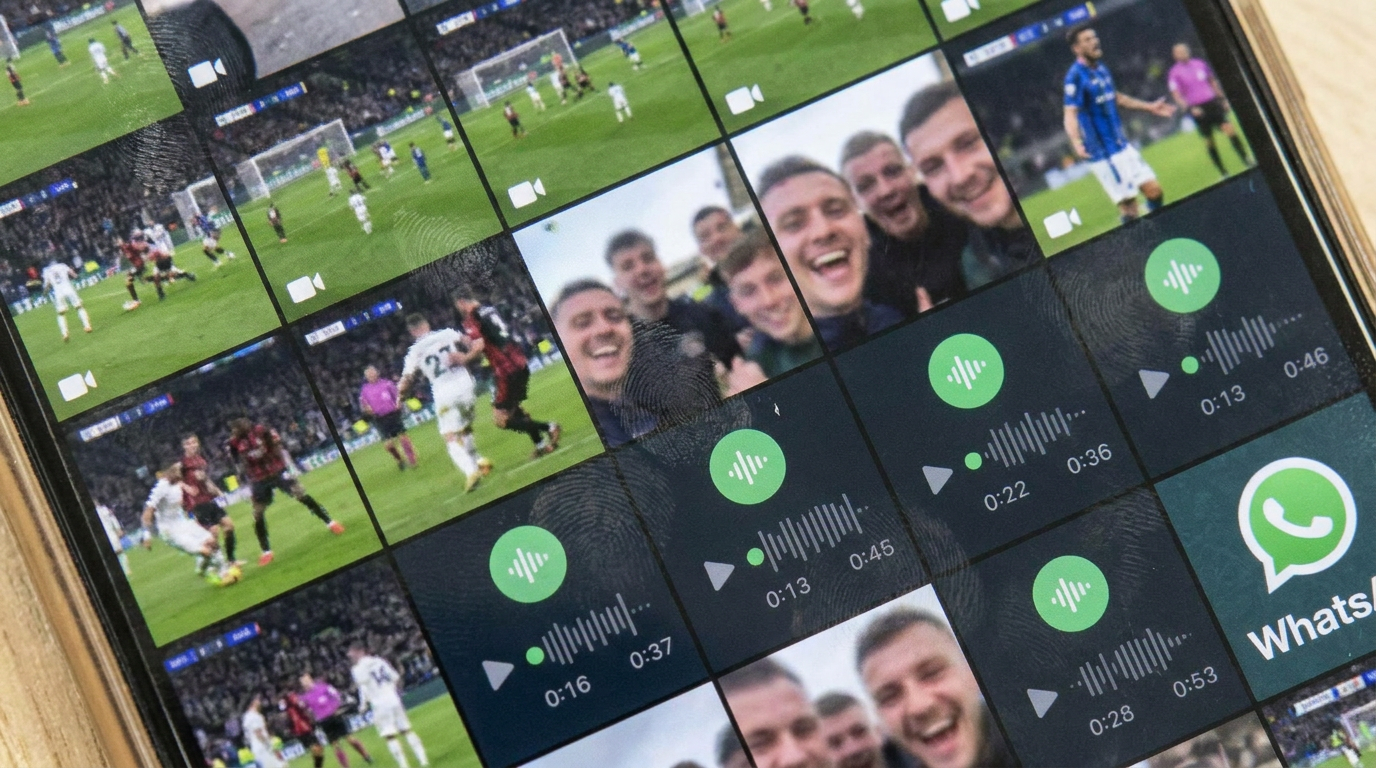
Think about what actually happens in the hours and days after a big group stage match. Someone’s got 200 photos across three different phones, most of them blurry mid-reaction shots. There are at least four separate WhatsApp threads, each carrying fragments of the pre-match banter and the post-match fallout, now buried under dozens of football memes and an argument about whether the referee was right. The prediction sheet — the physical one, the one with everyone’s handwriting on it and the running tally of who was right — is somewhere on the coffee table. Or maybe it got recycled. The voice note someone sent during the penalty has been unlistened to by half the group. The photo of the goal celebration in the living room is in three different camera rolls and nobody’s shared it to anyone.

This is the default experience of group memory. Not because people don’t care — they care deeply — but because there’s no system. No shared home for all of it.

A cluttered phone camera roll filled with blurry football match screenshots, group selfies, and scattered WhatsApp voice notes.

The psychology here is important. Researchers have long understood that shared memories are the connective tissue of group identity — but only when those memories are actively preserved and revisited together. A moment that lives only in someone’s individual camera roll isn’t really a shared memory. It’s a personal memory that happened to occur in the presence of others. The distinction matters more than most people realize. When memories are documented collectively and returned to as a group, they become part of the story the group tells about itself. That’s how watch parties become lore. That’s how “remember the night of the Argentina match” becomes a sentence that means something to everyone in the room.

Social media offers an imperfect workaround. People post their highlight moments — the best photo, the most quotable reaction, the neatest summary of the night — and it captures a fragment. But social media posts are fragments by design. They don’t capture the pre-match prediction. They don’t carry the half-time debate. They don’t preserve the moment someone’s absurd 4-1 scoreline call turned out to be exactly right. They show the world that the evening happened; they don’t tell the group what the evening actually felt like.

The natural antidote to all of this is a shared journal for a World Cup watch party — one place, every contributor, every perspective, every moment. A single living record of the whole group stage experience, built collaboratively by everyone who was there. That concept isn’t new — people have been keeping scrapbooks and memory boxes for generations. What’s new is having a tool that makes it effortless, beautiful, and genuinely collaborative, regardless of how many people are involved or what devices they’re using.

That’s exactly what the next section is about — because setting one up is far simpler than it sounds.

Creating Your World Cup Collaborative Journal on Lugelo

Here’s what most people don’t realize about starting a collaborative group journal: it doesn’t require planning, technical skills, or even much time. On Lugelo, it takes about as long as it does to set up a new WhatsApp group — except the result is infinitely more beautiful and actually permanent.

The idea is simple: you create a dedicated journal for your World Cup 2026 watch parties — call it something like “World Cup 2026: Our Group Stage Journey” or “Watch Party Diaries: The Lads vs. the World” — and that journal becomes the shared home for everything your group captures over the course of the tournament. Every match entry. Every photo. Every voice note. Every prediction. Every post-match verdict. All of it, in one place, organized and accessible to everyone you invite.

Inviting contributors is as straightforward as sharing a link. Once your friends and family are in, each person can add their own photos, notes, voice reactions, and match predictions directly from their phone — whether they’re on iOS, Android, HarmonyOS, or web. That’s the critical practical detail: everyone at the watch party, regardless of their device or their tech comfort level, can contribute. There’s no friction, no “I don’t have that app,” no one left out.

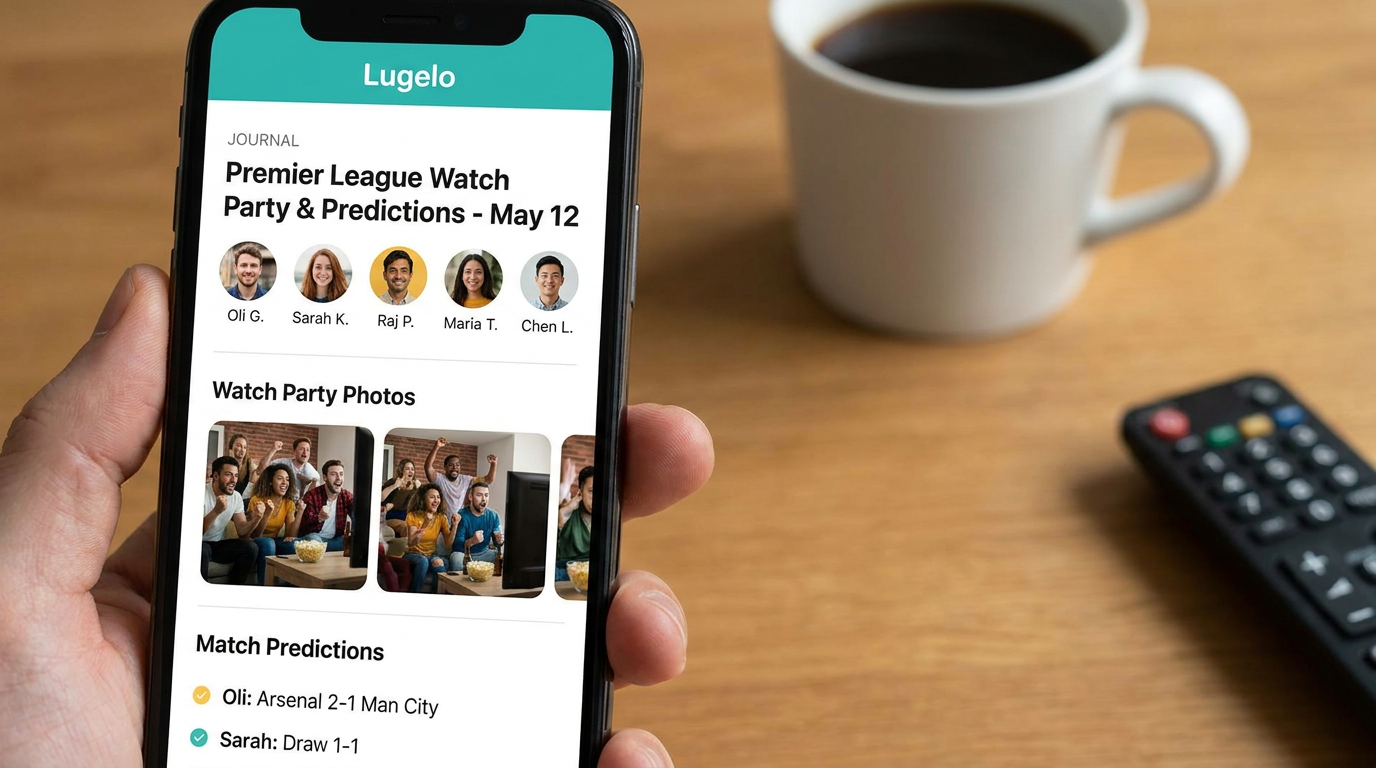
A smartphone screen showing a Lugelo collaborative journal with multiple contributor avatars, watch party photos, and match prediction notes.

One of the things that makes Lugelo genuinely different for a use case like this is that it’s private by default. Unlike social media, where anything you post enters a public or semi-public ecosystem controlled by algorithms you didn’t choose, your Lugelo journal stays exactly where you put it — within your group, accessible only to the people you’ve explicitly invited, controlled entirely by you as the journal owner. Your group’s inside jokes, embarrassing predictions, and unfiltered reactions don’t end up feeding a data model or appearing in someone’s suggested content. They live in your journal, private and protected.

Think about what a group’s World Cup journal might actually look like across Week 2, built entry by entry as the matches roll in. Before England vs. Croatia on June 17, someone creates a “Pre-Match Predictions” entry and everyone drops in their scoreline pick. During Argentina vs. Algeria on June 16, one contributor snaps a photo of the group’s stunned faces at a controversial moment in the second half. After the USA vs. Australia match on June 19, the person who called the result correctly gets to write the post-match entry — by group agreement, naturally. By the end of the week, there’s a running “Best Reaction of the Week” thread, a photo album from three different watch parties, and at least one voice note from the Spain vs. Saudi Arabia match that has already become something of a group legend.

That’s not a hypothetical. That’s what documenting with intention looks like — and Lugelo’s collaboration features are built precisely for this. As the platform puts it: “Save moments from a holiday, concert, hiking, birthday, outing and more into a single journal with everyone’s updates.” A World Cup group stage, spanning a full week of high-emotion, high-stakes matches, is exactly the kind of multi-day, multi-person experience that this feature was designed for.

The 2026 World Cup has its own communal spirit baked into its infrastructure — fan hubs, public screenings, and shared spaces designed to bring people together around the matches. Your collaborative journal is the private version of that: the fan hub that belongs exclusively to your group, where the energy of the tournament lives alongside your own story.

If you’re reading this before the next match kicks off, you could start your journal right now. Download Lugelo, create the journal, share it with the group — and by the time the first whistle blows tonight, you’re already capturing.

The journal is ready. The contributors are in. Now the real question is: what should you actually capture? The answer is richer than you might expect.

What to Capture — A Multimedia Guide for Every Match

Think of your World Cup journal not as a diary but as a living documentary of your group’s experience — one that weaves together text, photos, voice, and video into a layered story that no single format could tell alone. Research on social bonding and sport confirms that the emotional and social experience of watching sport together is genuinely powerful — and the journal is how you honour that experience by preserving it properly.

The question of what to capture breaks naturally across the rhythm of every match. And once you think about it this way, you’ll find there are moments worth documenting at every stage — before, during, at half-time, and after.

Before the match is actually one of the richest moments to capture, and the one most people skip entirely. Take five minutes before kick-off and open the journal for a pre-match entry. Write down everyone’s scoreline predictions — the more specific and overconfident, the better. Ask each person: which player are you watching most closely tonight? One word to describe how we’re feeling right now. These pre-match snapshots are pure gold in retrospect. When France vs. Senegal is over and the person who predicted a 3-0 France win is crowing, you want the receipts. Lugelo’s AI Journal Assistant can turn a quick voice note of everyone shouting out their predictions into a polished written entry in seconds — no one has to type a word if they don’t want to.

During the match is about instinct. Don’t try to document everything — just capture the moments that feel charged. The group’s reaction when a goal goes in. The collective horror at a VAR decision. The person who has been ominously quiet all match suddenly becoming the loudest person in the room. Photographs here should focus on people, not screens. The TV will have better footage of the match than your phone ever will — but no camera in the world will capture the exact expression on your friend’s face when their team concedes in injury time. That’s yours to keep.

“The goal is not to document everything. It’s to capture the moments that, five years from now, will make everyone burst out laughing or well up with pride.”

Half-time is the moment for longer-form capture. The group is talking, the energy is high, opinions are flying. This is where Lugelo’s Speech-to-Text feature earns its place — hit record, let the half-time debate happen naturally, and Lugelo transcribes the chaos into a readable entry. Voice notes work beautifully here too. The raw, unfiltered half-time analysis — even when it’s spectacularly wrong — is exactly the kind of thing that makes a journal come alive when you read it back later.

A family gathered around a coffee table during a football match, one person holding up their phone to capture the group's reaction after a goal.

After the match, take ten minutes for the post-match entry. Document the final scoreline, the best moment of the game as experienced in your living room (not on the pitch — in the room), who had the winning prediction, and a short group verdict: did the result surprise anyone? Was this a great watch party or a tense, difficult one? These post-match entries become the chapters of your group stage story.

Running threads across Week 2 add another layer of richness. Consider a “Player of the Day” pick after each match — one entry per game, updated by whoever calls it first. A “Watch Party MVP” running tally for whoever’s calling the most correct predictions. A growing photo album of the food spread at each gathering, because let’s be honest, the snack evolution across a football tournament is its own kind of storytelling.

Web clippings are an underused feature that can add extraordinary context to your group’s entries. Lugelo’s Browser Extension lets you clip match recaps, player stats, and post-match headlines directly into a journal entry — so your record of Spain vs. Saudi Arabia on June 21 includes not just the group’s own reactions but the actual match report, the post-match analysis, the key statistics. Years from now, that entry will read like a complete capsule of the evening, not just a personal diary entry.

Lugelo supports text, photos, videos, audio clips, URLs, and social media shares — all flowing into a single, beautifully organized journal. Want to learn exactly how each feature works? Lugelo’s help videos walk you through everything in action. And if you want the full feature overview, the features page covers photos, videos, audio, and more.

Capturing is the first act. But all of this raw material is building toward something — a proper keepsake that the group can return to long after the tournament is over.

Why Scattered Social Media Posts Don’t Do Justice to Shared Experiences

There’s nothing wrong with posting about the match. Sharing a photo on Instagram, tweeting a reaction, dropping a clip into a TikTok — these are natural, joyful parts of modern fandom. But they are not the same thing as preserving the shared experience of your group. Not even close.

Social media captures the highlight reel. A collaborative journal captures the full story — the build-up, the anticipation, the arguments, the in-jokes, the aftermath, the quiet moment after the final whistle when everyone is processing what just happened. One is a broadcast. The other is a record.

“A photo on your feed tells the world you were there. A journal tells your group what it actually felt like.”

Think about the structural differences. A social media post is public, or at least semi-public — it goes out to followers, acquaintances, and algorithm feeds that you don’t control. It’s ephemeral in its own way: stories disappear after 24 hours, posts get buried under an endless new feed within days, and the platform’s own changes can make old content inaccessible or invisible. There’s no unified narrative. When every person at the watch party posts their own version of the evening separately, what you get is five competing fragments, not one shared story. Each post reflects one person’s perspective, one moment, one edit — chosen for external presentation, not internal honesty.

Scientific research confirms that being in a crowd during shared experiences creates physiological synchrony and group bonding — the kind of deep social connection that watch parties naturally generate. But those bonds are meaningfully strengthened when the memory is preserved and revisited together, as a group. Scrolling past an old Instagram post alone doesn’t do that. Opening a collaborative journal together — seeing everyone’s contributions, reading each other’s predictions, hearing the voice notes — does.

A private collaborative journal vs. social media comparison comes down to a few fundamental dimensions:

  • Privacy: Your journal on Lugelo is private by default. No algorithm sees it. No platform monetizes it. No stranger stumbles upon your group’s candid photos. Your watch party banter stays in the watch party. Social media, by contrast, is built on the logic of audience — what you post is, by design, a performance for people beyond your group.
  • Permanence: Lugelo journals are yours, stored securely, accessible whenever you want them. Social media content is ephemeral, platform-dependent, and subject to changes in terms, ownership, and algorithmic visibility that are entirely outside your control.
  • Multiple Perspectives: In a Lugelo journal, every contributor’s perspective lives in the same space — layered, woven together, forming a richer picture than any single viewpoint could. Social media posts are inherently singular.
  • Story Depth: Lugelo supports long-form text, audio, video, links, images, and clippings all in one organized entry. A social media post is a single format, length-limited, optimized for scrolling.
  • Revisitability: A collaborative journal is designed to be returned to — to be read, listened to, and experienced again. A social media feed is designed for forward momentum, not backward reflection.
  • Authenticity: In a private journal, you capture what actually happened — not what looks good for a feed. The messy half-time analysis, the embarrassing prediction, the voice note that perfectly captured the chaos. That’s the real story.

Lugelo’s privacy-first design reflects this philosophy. No data sold to third parties. Owner-controlled access. Encrypted in transit. The group’s story belongs to the group — and that should mean something. You can also see how real families and friend groups use Lugelo to capture the kinds of shared stories that social media simply can’t hold.

The why is now clear. The how is waiting. And the payoff — what all of these entries become once the group stage is over — is where things get genuinely extraordinary.

From Journal to Keepsake: Timelines, eBooks, and VR Galleries

Here’s the part most people don’t anticipate when they start journaling: the transformation. You begin by capturing moments — a photo here, a voice note there, a quick post-match entry before bed — and what you think you’re building is a record. What you’re actually building is a keepsake. And Lugelo is the platform that makes that transformation happen with a kind of magic that has to be experienced to be believed.

Once your group has documented the full journey through Week 2 of the group stage — and ideally beyond, through the knockout rounds — Lugelo turns that collection of raw entries into something that lasts.

A person holding a beautifully designed digital journal eBook on a tablet, with World Cup match photos, handwritten-style captions, and a colorful timeline layout visible on screen.

The Timeline view is the first gift. Open your journal after the group stage ends and see every match, every entry, every contributor’s moment laid out in chronological order — a visual memory lane of the entire experience. June 16: France vs. Senegal, the prediction entry, the half-time voice note, the post-match photo. June 17: England vs. Croatia, the watch party MVP tally, the photo of the group at the exact moment the final whistle blew. June 21: Spain vs. Saudi Arabia, the last group stage night, the weekly wrap-up entry. It’s all there, connected, ordered, whole. The timeline doesn’t just store the memories — it gives them shape and sequence.

The eBook is where the journal becomes a proper keepsake. Select a theme from Lugelo’s library and generate a beautifully formatted PDF from the journal — clean layouts, your photos, your words, organized into something you could print, frame, share, or simply keep. Imagine a chapter titled “Argentina vs. Algeria, June 16 — The Night Everyone Was Wrong” followed by “England vs. Croatia, June 17 — The Nation Holds Its Breath” and closing with “Spain vs. Saudi Arabia, June 21 — End of an Era, Beginning of Something Else.” That’s not a hypothetical future product. That’s something you can create right now, from your group’s actual journal entries, using Lugelo’s eBook and Timeline features.

The VR Gallery is genuinely unlike anything else available for personal memory-keeping. Once your group’s watch party photos and videos are in the journal, Lugelo can transform them into an immersive, 360-degree gallery that you step into and explore — as if you’re walking back through the living room on the night of the match. The photo of everyone’s faces when the goal went in becomes something you can stand inside. The video of the half-time debate plays around you. Lugelo VR Galleries represent the frontier of what collaborative memory-keeping can become — and for a group that has spent a week living intensely together through a World Cup, the ability to re-enter that experience is genuinely moving.

Friends gathered around a VR headset, laughing as they explore an immersive gallery of their shared World Cup watch party memories.

There is real science behind why this matters. Research published in the Journal of Business Research has found that memories of extraordinary group experiences lead to greater cohesion and well-being — and that having a tangible keepsake to revisit amplifies that effect significantly. The journal doesn’t just preserve the memory. It actively strengthens the bond. Every time the group returns to it — on the anniversary of a great watch party, before the next World Cup, on a rainy afternoon years from now — it does that work again.

Think about physical scrapbooks and photo albums. For generations, families have kept them precisely because they understood, intuitively, that memory needs a home. Lugelo is the digital-first, collaborative evolution of that tradition — built for the way people actually live today, across multiple devices, multiple contributors, and multiple formats. It doesn’t replace the instinct that made people keep scrapbooks. It fulfils it, at scale, with tools that make the result more beautiful and more accessible than a shoebox of photos ever could be.

Lugelo’s ready-to-use templates make starting even faster — structured starting points so the group isn’t staring at a blank page before the first match. By the time the group stage ends, what began as a simple journal has become a record that the group will return to, laugh at, and treasure — for years.

All that remains now is the practical question: how do you actually start? That’s where the next section hands you everything you need.

Your World Cup Journal Starter Kit: Prompts and Tips for Every Match

Think of this as your cheat sheet. The journal is ready. The group is in. The match is tonight. Here is exactly what to capture — and how — across every stage of the watch party experience.

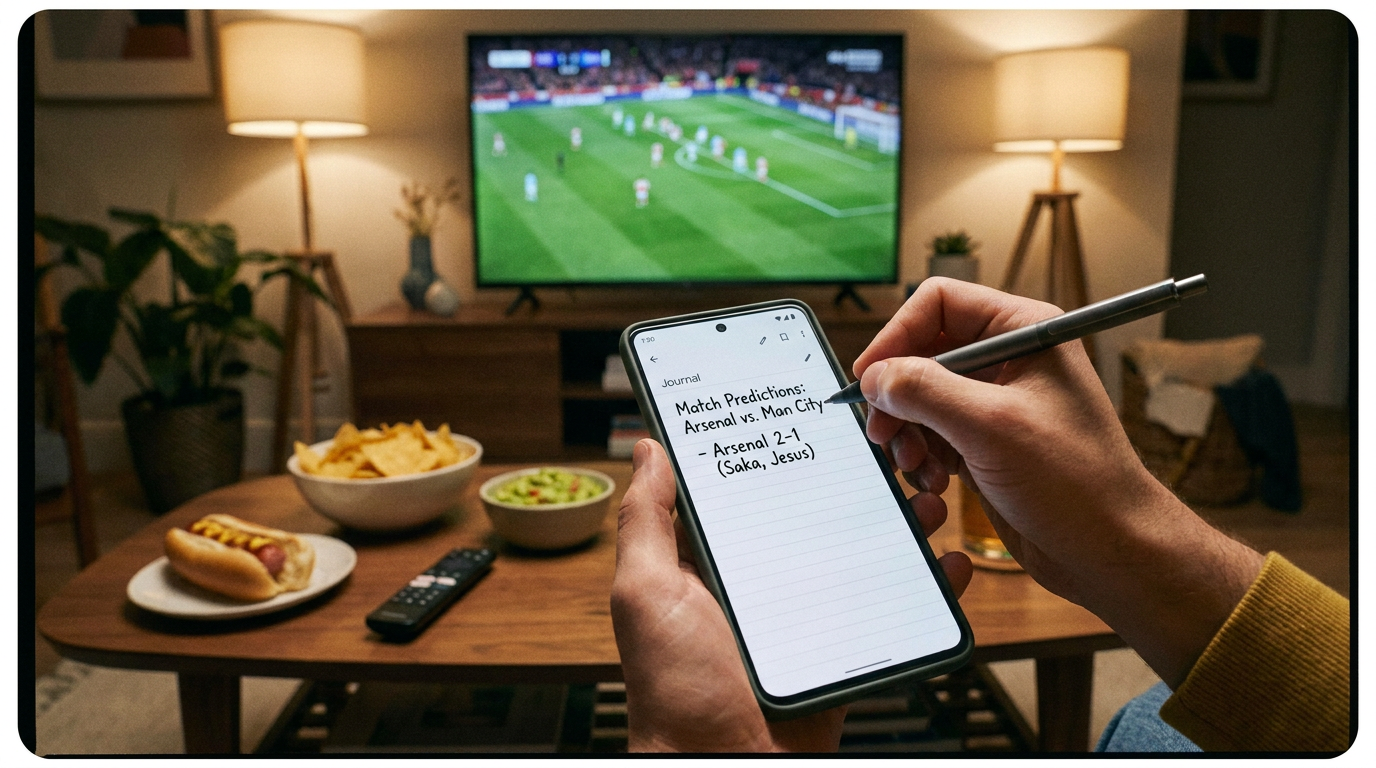
A hand writing match predictions in a journal app on a mobile phone, with football snacks and a TV remote visible on the table nearby.

Before the match — the pre-kick-off entry:

Open the journal ten minutes before kick-off and run through these group prompts. They take two minutes and they’re worth gold in retrospect:

  • “Who do we think wins and what’s the scoreline?” — get everyone’s prediction on record, no hedging allowed.
  • “Which player are you watching most closely tonight?” — this one always produces strong opinions and great post-match callbacks.
  • “One word to describe how we’re feeling right now.” — simple, fast, and captures the atmosphere instantly.

You don’t need to type any of this. Use Lugelo’s AI Journal Assistant to turn a quick voice note into a polished written entry. Talk into your phone for sixty seconds, let the AI shape it, and the entry is done before the first whistle blows.

During the match — in-the-moment captures:

  • Goal reaction photo. Capture the group, not the screen. The screen will have better footage. Your group’s faces will not.
  • Voice note after a controversial VAR decision. The raw, immediate reaction — the disbelief, the outrage, the relieved exhale — is impossible to recreate later. Record it the moment it happens.
  • Short video of the half-time formation analysis. Even if it’s completely, spectacularly wrong. Especially if it’s completely, spectacularly wrong.

After the match — the post-match entry:

  • “Best moment of the match — in our living room, not on the pitch.” The moment on the sofa, not the highlight reel.
  • “Who’s buying the next round of snacks for getting their prediction wrong?” Essential accountability.
  • “Rate this watch party out of 10.” Short, decisive, non-negotiable.

The Weekly Wrap-Up — for June 21, the end of Week 2:

The final group stage night of Week 2 deserves a proper wrap-up entry. Gather the group, physically or virtually, and tackle these together:

  • “Best group stage match we watched together.” One pick, one reason, no arguments — or unlimited arguments, as preferred.
  • “Most outrageous prediction of the week.” Name the person. Celebrate the audacity.
  • “Who in our group would make it to the knockout stage — and why?” Turn the tournament’s survival narrative onto the group itself. This one generates genuinely memorable answers.

Two practical rules that will make the journal exceptional:

First: let the person with the correct prediction write the post-match entry and name the chapter. It creates investment, competition, and genuinely varied writing styles that make the journal richer to read back.

Second: set a group expectation that short entries are fine. Not every match produces a masterpiece. Sometimes the entry is three words and a photo. That’s enough. The journal grows organically — don’t let the pursuit of perfection become a reason not to document.

Lugelo’s AI Journal Assistant and templates remove the last remaining barrier: effort. The AI takes the rough material — a voice note, a few scattered thoughts, a list of predictions — and shapes it into something worth keeping. The templates give the journal structure from the start, so even the most reluctant journaler in the group has a clear starting point.

For readers who have questions about getting started, Lugelo’s FAQs cover everything clearly. And for those who prefer to learn visually, the how-to videos walk through every feature in real time.

The best prompts, in the end, are the ones you’ll create yourselves — live, in the moment, when something happens in that living room that no one could have scripted. This starter kit just makes sure you’re ready when it does.

A split scene: on the left, a group of friends watching a World Cup match together in a warm living room; on the right, a glowing phone screen showing a beautifully organized Lugelo collaborative journal with their shared photos and match memories.

Every group stage match is a story. Make sure yours gets told.

The Moments You Document Today Are the Stories You’ll Tell for Years

Come back for a moment to the image that started this. A group of people gathered around a screen. Argentina vs. Algeria on a Tuesday night in June. USA vs. Australia unfolding on a Friday evening. The room full of that particular energy — something between anticipation and belonging — that only exists when the people you love are watching something that matters together.

The World Cup will end. July 19 will come, a winner will be crowned, the tournament will become history, and the group chats will slowly quiet down. The prediction sheets will be lost. The voice notes will get buried. The photos will scatter across camera rolls and hard drives, unseen, unorganized, waiting for a moment of nostalgia that never quite comes.

But the journal — your collaborative journal — will still be there. Complete. Organized. Alive with every prediction, every reaction, every voice note, every photo, every half-time debate, and every post-match verdict the group produced together. Years from now, someone will open it — maybe before a different World Cup, maybe on a random Tuesday afternoon when someone asks “remember that night during the group stage?” — and the whole summer will come back. Not fragments. The whole thing. Everyone’s perspective, woven together, exactly as it was.

Journals are souvenirs of your past. This one can be a souvenir of a summer that an entire group lived together — and that makes it something rarer than any tournament trophy.

Everyone has a story to tell — yours is worth keeping.

The moments you document today are the stories you’ll tell for years. Start now, before the next match kicks off.

Start Your Group Journal — It’s Free

Don’t let this World Cup slip through your fingers.

Start your collaborative group journal on Lugelo today — before the next match kicks off. Invite your friends, add your first prediction, and let the memories begin. Start your group journal on Lugelo — it’s free.

Curious how it works first? Explore Lugelo’s collaboration features or watch how to get started — it takes less time than the pre-match warm-up.

Available free on iOS, Android, and web. Your group’s story is waiting.