And it’s just a picture. There’s a date stamp that means nothing to anyone but you. No names. No story. No indication of why your hands were shaking when you took it, or that it happened three weeks after she’d told you she was never going to learn, or that the bike had been your brother’s.
Nine minutes later, you find it.
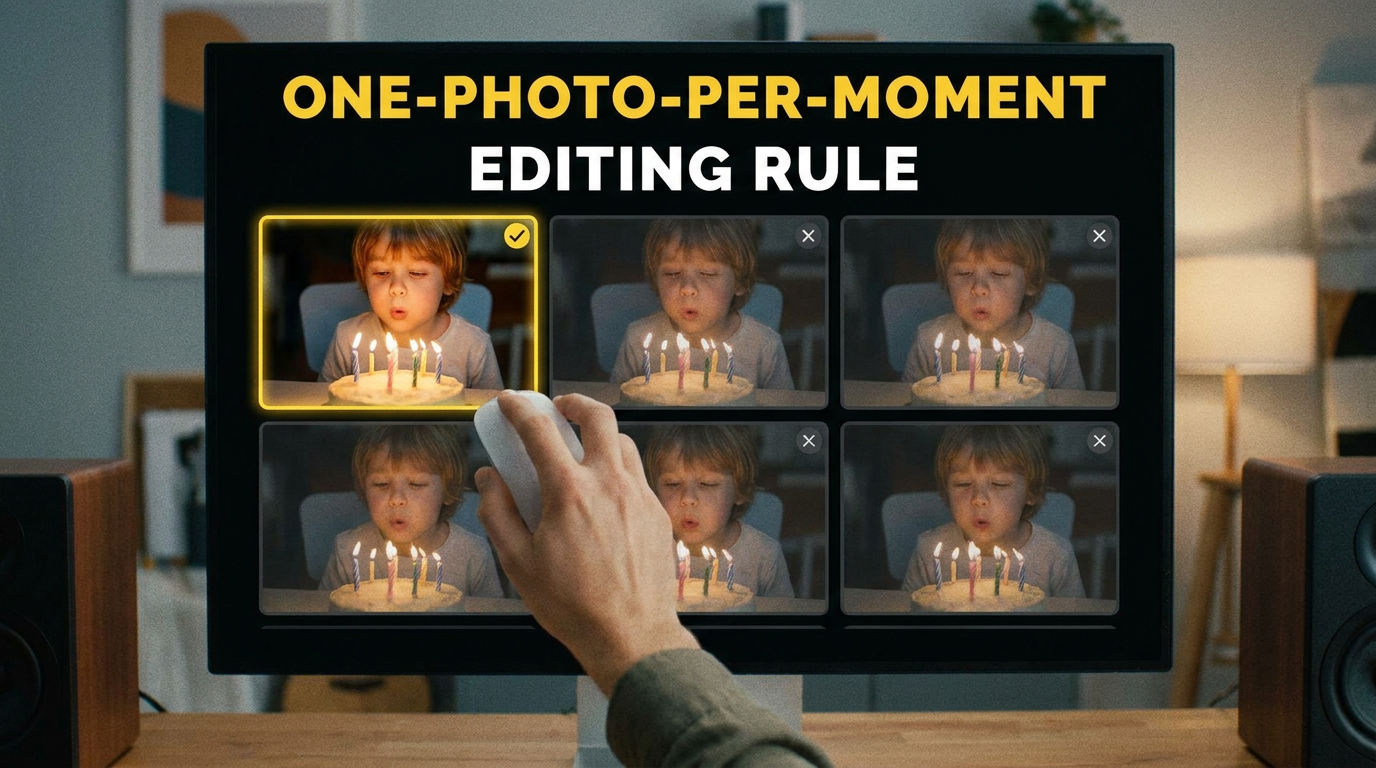
So you scroll. Past four hundred screenshots. Past three nearly identical photographs of a parking space you were worried you’d forget. Past a receipt, a meme someone sent you in 2023, twelve pictures of a restaurant menu. Past a blurred thumb.
Picture this: it’s a Sunday evening and you’re looking for one photograph. Just one. The afternoon your daughter finally rode her bike without you holding the saddle — the wobble, the shriek, the look back over her shoulder. You know it exists. You took it.
Here’s the gap nobody names: saving is not the same as preserving.
We have never captured more and remembered less. Roughly — about 5.3 billion every single day. The typical phone carries somewhere in the low thousands of images, with most credible estimates landing between about 2,000 and 2,800. Plenty of family phones carry many multiples of that. Volume has never been our problem. Meaning is.
1.95 trillion photographs will be taken worldwide this year
A memory book does something structurally different. It isn’t a bigger pile. It’s a record — curated, contextual, and deliberately built to be understood by someone who wasn’t there.
Let’s be honest with each other from the first paragraph, because this whole guide depends on it: making one takes real effort. Most people who start a memory book never finish it. This guide exists to make sure you’re not one of them.
So we’ll cover all of it. What a memory book actually is. What belongs inside it beyond photographs. Who to involve, and how to get them to actually respond. How to begin whether you’re facing fifty years of shoeboxes or a completely blank page. Which format to choose, honestly assessed. How to organise it without inventing a second job for yourself. And the part nobody warns you about — how to finish.
Journals are souvenirs of your past.
What a Family Memory Book Actually Is
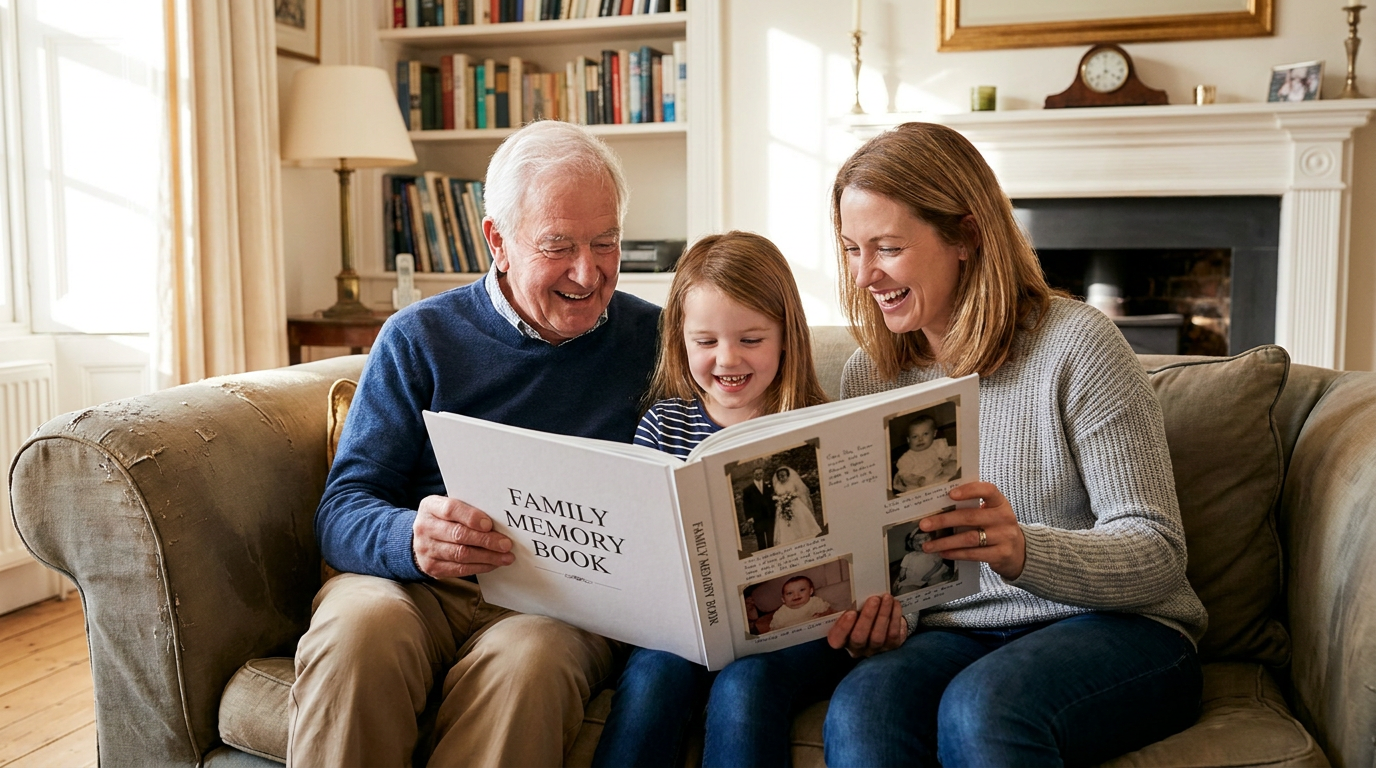
A memory book is a curated, narrated record of a person, a family, or a period of time — one that combines images with the words, voices, objects and context that explain why any of it mattered. Where a camera roll accumulates, a memory book selects and explains. That single difference is the whole discipline.
The confusion is understandable, because three different objects get used interchangeably in everyday conversation. They are not the same thing, and choosing between them deliberately will save you months.
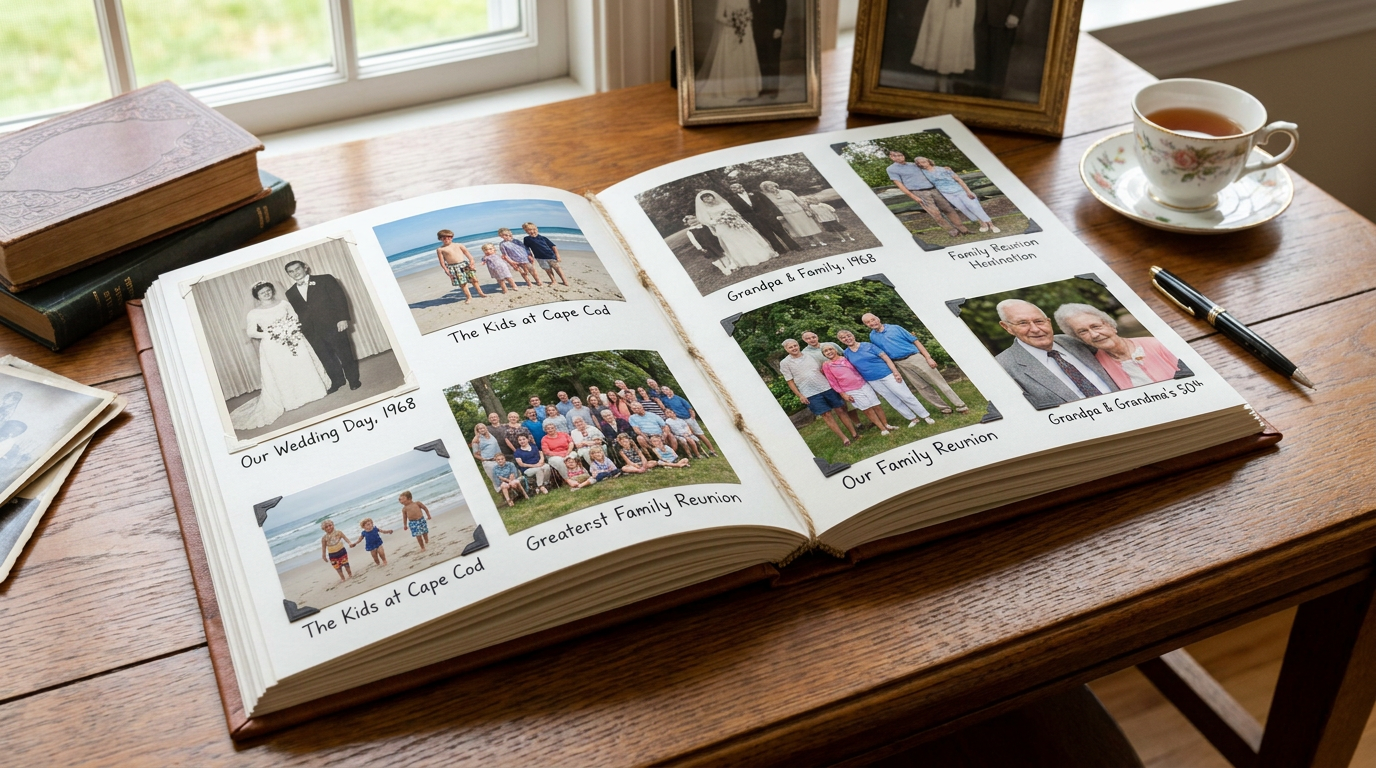
The photo album. Images arranged in sequence, usually chronological, usually behind plastic sleeves. It’s strong on visuals and almost entirely silent on meaning. It answers exactly one question: what did this look like? Effort is low, shareability is poor (it exists in one copy), and it’s best suited to people who already know the story and simply want to see it again.
The scrapbook. Images plus decorative craft — patterned paper, ticket stubs, ribbon, hand-lettering, pressed flowers. Scrapbooks are wonderful. They carry texture and personality that nothing digital replicates, and the making of them is genuinely pleasurable. But they’re typically thin on narrative, extremely difficult to duplicate, and effectively impossible to share with a cousin in another country. They answer what did this feel like aesthetically? rather than what happened?
The memory book. Images plus narrative, voice, documents and context. It answers the questions that actually survive: Who were these people? What happened? Why did it matter? It carries more effort than an album but produces something categorically more useful — a record legible to a reader who has no prior knowledge, no shared memories, and no one left to ask.
That last point is the test this entire article runs on, so let’s state it plainly and come back to it repeatedly:
Would a stranger — or your own great-grandchild — understand this without you standing next to them explaining it?
If the answer is no, you have a pile. A beautiful, beloved, carefully stored pile. But a pile.
The Variations People Are Actually Looking For
“Memory book” is an umbrella term covering several genuinely distinct projects, and knowing which one you’re making changes every decision downstream.
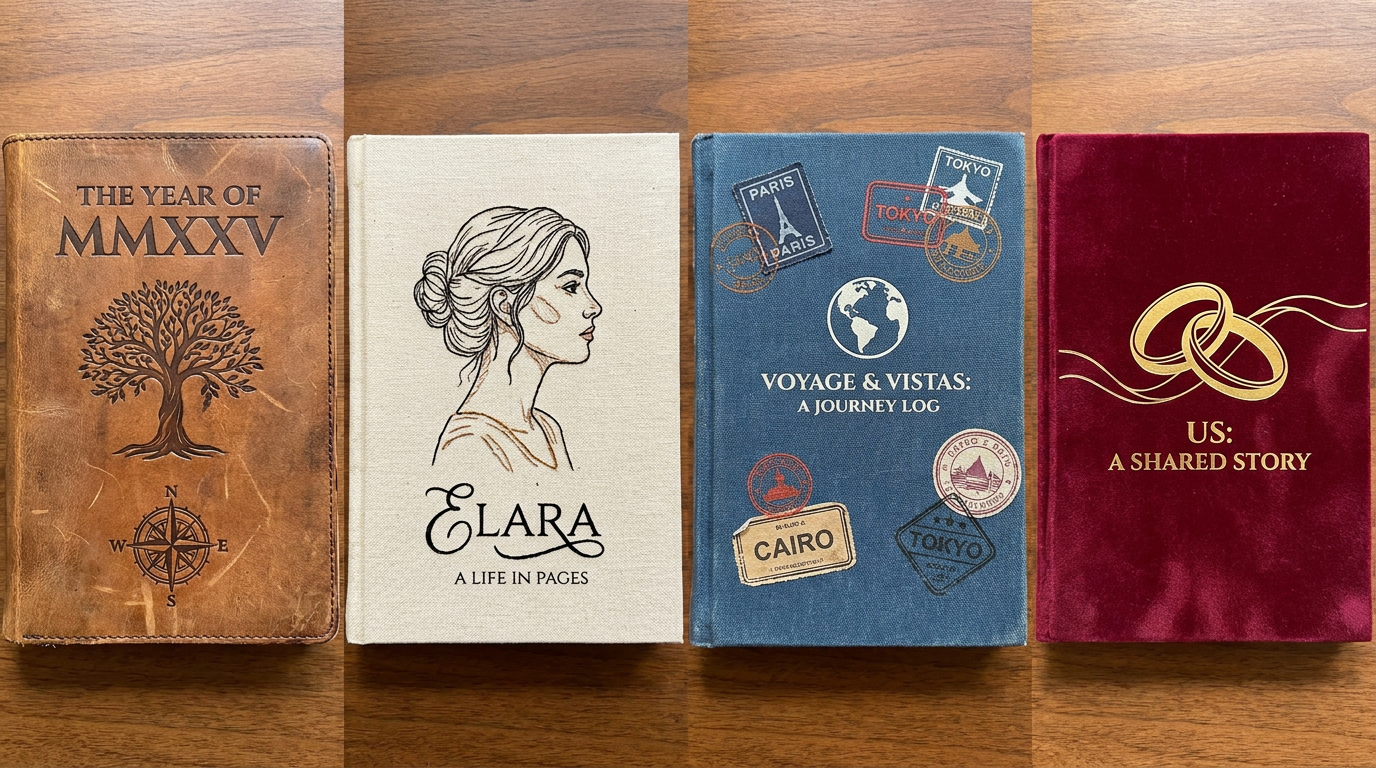
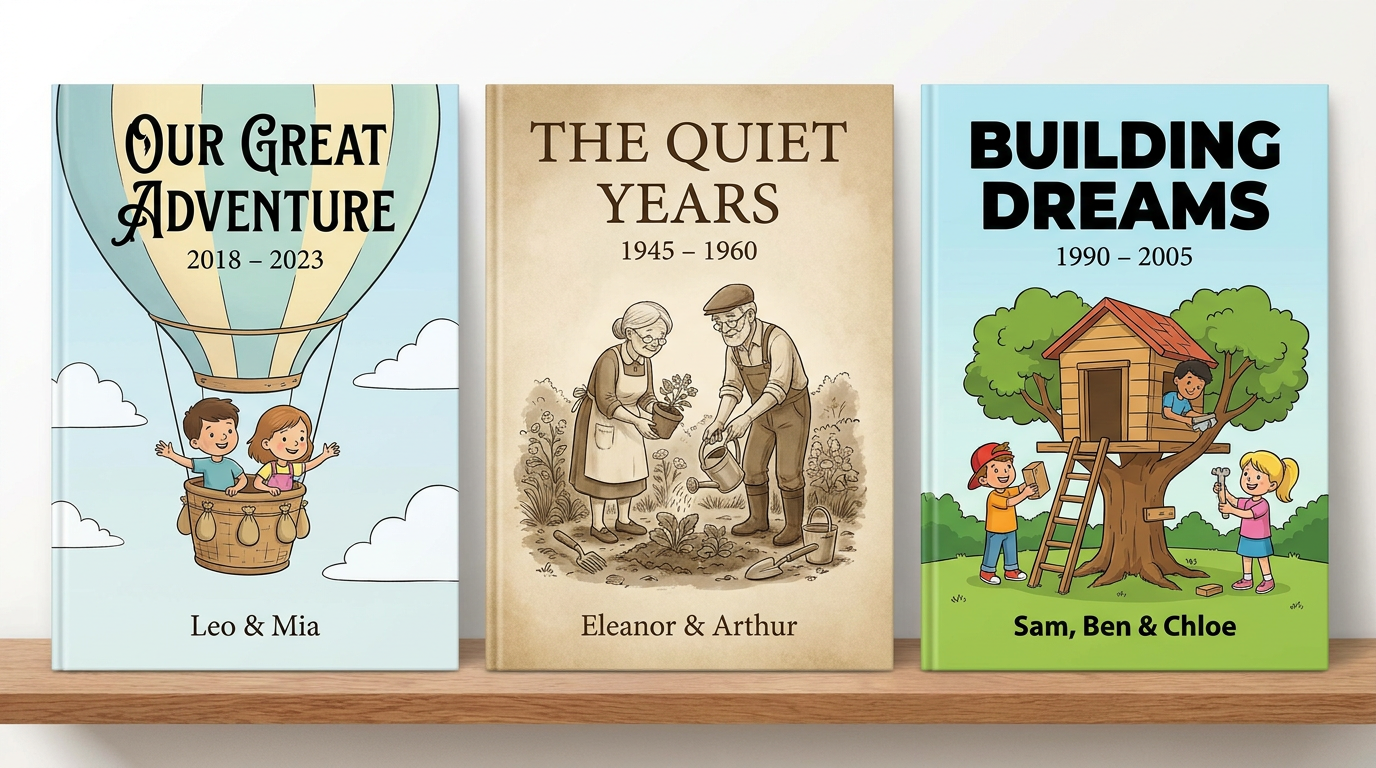
A family memory book is multi-generational — several people, often several decades, usually assembled by one person with contributions from many. A baby memory book covers the first years: milestones, firsts, the name story, the things nobody thinks to write down because they assume they’ll remember. A memory journal runs forward rather than backward — ongoing, written, closer to a diary with intent. A memorial or tribute book gathers a life after it’s ended, often assembled collaboratively by people processing the same loss from different angles. And single-event books cover one bounded thing: a wedding, an emigration, a year abroad, a house.
There’s also the school-years version, which deserves its own treatment — if that’s your project specifically, we’ve written that goes considerably deeper on that narrower scope than this page can.
a complete guide to creating a school memory book
Retrospective, Prospective, or Both
Every memory book runs in one of two directions, and most good ones run in both.
Retrospective means assembling what already exists — the loft boxes, the inherited albums, the folder of scans your aunt emailed you in 2019. ProspectiveThe retrospective approach is archaeology. The prospective approach is journalism. Archaeology is harder, slower, and often incomplete. Journalism is easier and produces better material — but only if you start.
means capturing as life happens, so that in five years you have material with full context attached rather than mysteries to solve.
In , the vocabulary for this is simple and worth learning now because it recurs throughout this guide. An individual entry — a photo with a caption, a voice recording, a scanned document, a paragraph of writing — is called a Moment. The chronological view where those Moments arrange themselves into a readable timeline is called Memory LaneOnce you know what a memory book is meant to do, the practical question arrives immediately — what actually goes inside one?
Lugelo
One reassurance before we go further, because it stops more people than any technical obstacle. You do not need to be a writer. You do not need to be a designer. You do not need to be an organised person, and the evidence suggests most people who successfully make these are not. What you need is a decision about scope and a single place to put things.
. That’s the whole structural grammar: you add Moments, and Memory Lane puts them in order.
What to Put in a Memory Book Beyond Photographs
Here’s the insight that changes how people approach this entire project: photographs record surfaces. Almost everything that makes a person recognisable lives somewhere else.
A photograph shows you a face. It doesn’t carry a voice. It doesn’t hold a phrase, a temper, a laugh, the particular way someone came down the stairs, or what the kitchen smelled like on a Sunday. Twenty years on, the face is the thing you’re least likely to have forgotten — and the voice is the thing you’d give almost anything to hear again.
So build outward from the photographs.
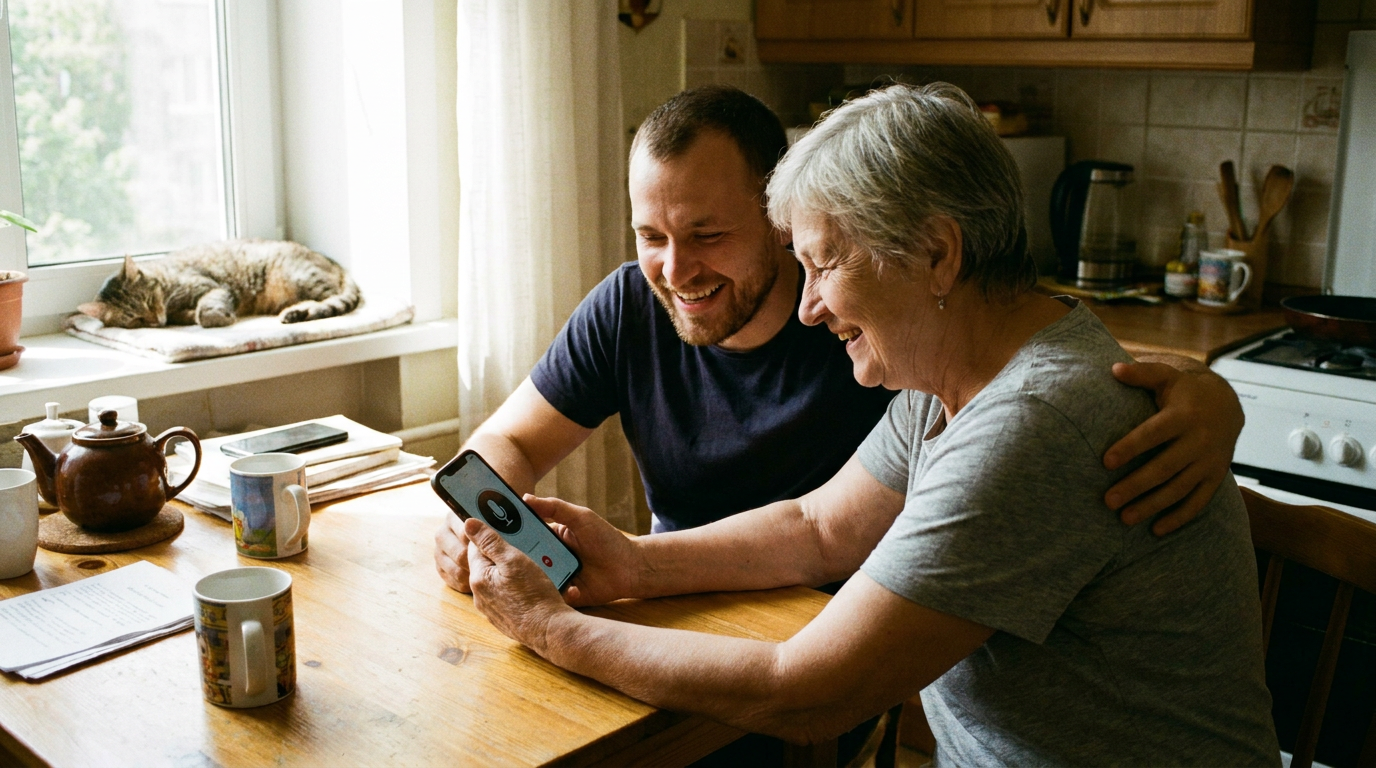
Voices. This is the category families consistently name as the most treasured thing they own, and the one they most regret not gathering. A recording of a grandparent telling a story in their own accent, at their own pace, with their own hesitations and their own laugh, is not a supplement to a photograph. It’s a different order of thing entirely. Record it before you feel ready. A two-minute voice note made badly on a kitchen table beats a perfectly planned interview that never happens, and the perfect interview is the enemy here. Lugelo Moments accept audio directly, so a voice note can be the entry — no transcription required.
“A photograph shows you a face. A voice recording gives you back a person.”
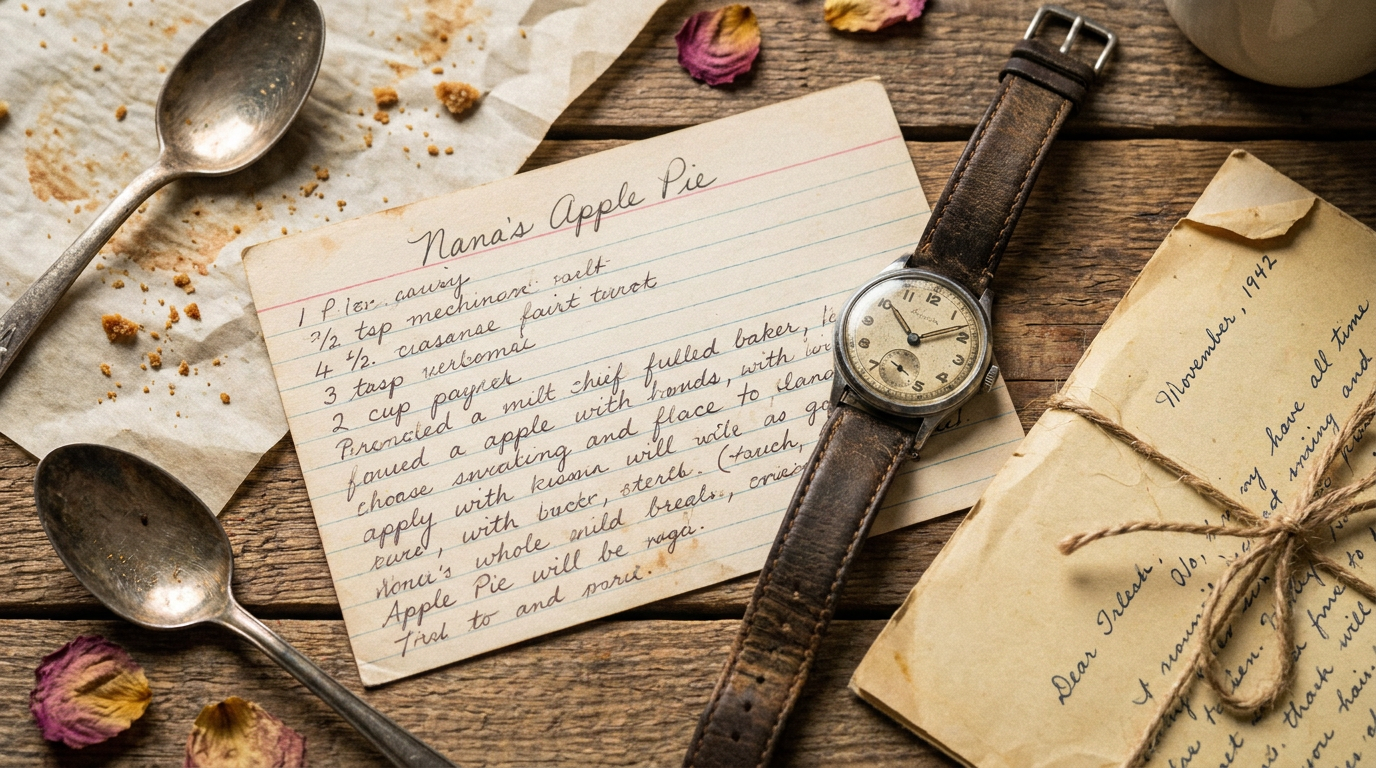
Handwriting. A shopping list. A birthday card. A note in the margin of a cookbook. Handwriting is startlingly personal — more identifiably someone than most portraits — and it is disappearing faster than any other category on this list. Photograph it or scan it. Before you handle fragile originals, it’s worth reading the : clean dry hands, support the whole item, and never reach for adhesive tape.
National Archives guidance on handling family papers
Recipes. Especially annotated ones. The splashes, the crossings-out, the “add more than it says,” the oven temperature amended twice in different pens. An unmarked recipe is instructions. A marked one is a record of someone cooking.
Documents. Immigration papers, military records, deeds, school reports, letters, telegrams, naturalisation certificates, employment cards. These anchor a family in verifiable history and give future readers something to pull on when they want to go further.
The mundane details. This is the category nobody thinks to record, because at the time it all feels too ordinary to be worth the trouble. The car they drove. The exact route of the school run. What was always in the fridge. The phrase your father used when he was annoyed. What the house sounded like at seven in the morning. These become the most precious material in the book, and they vanish completely and without warning.
Objects, photographed. A watch, a christening gown, a ticket stub, a chipped mug that nobody was allowed to throw away. Photograph the object and write down who it belonged to and why it survived. An unexplained object in a photograph is a puzzle; an explained one is a story.
Maps and places. Where people lived, in what order, and why they moved. Migration is the spine of most family histories, and the “why” is almost never recorded.
Prompts to Capture the Ordinary
If you want something you can act on tonight, answer these in writing or out loud:
- What did a completely normal Tuesday look like in 1994?
- What was always in the fridge?
- Who called the house, and at what time of day?
- What did the house sound like in the morning?
- What did people wear indoors?
- What was the argument that came back every year?
One honest counterweight: more is not automatically better. A memory book bloated with everything is just a camera roll with extra steps. Every addition should survive the stranger test — would someone who wasn’t there understand why this is here?
The Ten Things Families Wish They’d Recorded: voices · handwriting · recipes · the name story · an ordinary weekday · the house · the car · the repeated phrases · the objects and who owned them · the reasons behind the big decisions.
Building a Baby Memory Book: The First-Years Version
The baby memory bookKnowing what to gather raises an awkward question, though: most of this material isn’t actually in your possession.
One structural advantage worth using from day one: both parents can add their own Moments to the same baby journal, and so can grandparents, rather than one person silently inheriting the entire job. Two perspectives on the same first year is a better record than one — and it halves the load.
The practical approach is to capture loosely and organise later. A single running journal you actually add to beats a beautiful structured template you fall behind on by February. Add a Moment when something happens; let the timeline sort itself out.
What genuinely matters is a much shorter list than the templates suggest. The first photograph. The name story — who chose it, why, and what the alternatives were, because that gets forgotten within a decade. A handwriting sample: a note from each parent to the child, written now, in the present tense. Birth details. A recording of the parents’ voices in the first weeks, when everyone sounds exhausted and slightly amazed. First words. And the sayings — the mangled, invented words a child produces that the family repeats for the next thirty years and never writes down.
is the most common entry point into this entire subject — and the easiest to over-plan and abandon. Something about a new baby makes people buy a 200-page hardback with prompts for every week, which is precisely the design most likely to stall at week six, at which point the guilt of being behind becomes a reason not to open it at all.
Who to Involve and How to Get Family to Contribute
So the collaboration problem isn’t optional. It’s structural.
That person inherits two things simultaneously: all of the labour, and an incomplete record. Because siblings remember different years. Cousins hold photographs from the branch of the family that emigrated. An aunt has the letters. Your mother knows who the people in the 1968 photographs are, and nobody else does. The archivist has the motivation and roughly a third of the material.
In almost every family, one person becomes the default archivist. You probably know who it is in yours. There’s a reasonable chance it’s you, given you’re reading this.
Why People Don’t Contribute
It is almost never indifference, which is worth internalising before you get resentful. There are four real reasons:
They don’t know what you want. “Send me your old photos” is not a request, it’s a project. It requires the recipient to make decisions, and so they defer it.
They think their contribution isn’t good enough. The photograph is blurry. They can’t remember the exact year. They’re “not a writer.” So they send nothing, on the theory that nothing is better than something imperfect.
They don’t know how to use the tool. Particularly for older relatives, the fear of pressing the wrong button and breaking something you’ve spent months building is genuinely paralysing.
The ask is too big. An open-ended request to “help with the family history” reads as a commitment of unknown size, and people don’t accept commitments of unknown size.
The Fixes That Actually Work
Ask for one specific thing. “Do you have a photo from the 1987 holiday in Cornwall?” gets a reply within a day. “Send me your old photos” gets nothing, ever, from anyone.
Set a comically low bar and say so out loud. Tell people explicitly: one photograph with one sentence is a complete contribution. Say it in those words. It removes the fear of being judged on effort.
Accept voice notes. The relative who insists they aren’t a writer will happily talk for four minutes without pausing. Meet people in the format they’re comfortable with, and you’ll get ten times the material.
Assign by era, not by task. Whoever was there for the 1970s owns the 1970s. This converts a vague collective obligation into a defined personal one, and it flatters people by treating their memory as authoritative.
Attach a deadline to a real event. A birthday, an anniversary, a reunion, Christmas. Open-ended projects do not finish. Projects with a delivery date do.
Here’s a message you can copy and adapt right now:
“Hi — I’m putting together a memory book for Mum’s 70th in March. Could you send me one photo of her from before 1985, and one thing you remember about her from back then? Doesn’t need to be long — two lines is perfect, or just record yourself talking for a minute and send me the voice note. That’s genuinely all I need.”
How It Works in Practice
In , you create a shared journal and invite people by email or link, assigning each person a role: Viewer, Contributor, or EditorThat role distinction solves the anxiety problem directly. Contributors can add their own Moments — photos, video, audio, text — but cannot alter anyone else’s entries. Nobody can accidentally delete your work. Once an older relative understands that, the “what if I mess it up” objection disappears, and it is a far bigger barrier than most people realise.
Lugelo’s collaborative journal
.
Journals are private by default. The owner keeps owner-controlled access throughout and can revoke it at any point. And every Moment shows who added it and when, which means the finished book naturally carries multiple voices rather than flattening into a single narrator’s summary of everyone else’s lives.
If you’re dividing the work between two people specifically — two parents, two siblings — our guide on covers that workflow in more depth.
how to co-create a journal with a partner
Making a Grandparents’ Memory Book
This is the most time-sensitive version of the project and, predictably, the one people most often postpone.
The approach that works is questions, not a blank page. Nobody can respond usefully to “tell me about your life.” Almost everybody can answer: Where were you living when you were my age? What was your first job, and what did it pay? What was your mother like? What did you do on a Saturday when you were nineteen? What’s a story your parents told you about their parents?With people and material lined up, the hardest practical question arrives: where do you actually begin?
Grandparents can be added as Contributors and add Moments from their own device — or a family member can add on their behalf after a visit, which is often the more realistic arrangement.
And it’s worth saying plainly, without drama: this particular project has a deadline set by circumstance rather than by you. The people who can identify the faces in the photographs and explain why the family left in 1962 are a finite resource. That isn’t a reason for anxiety. It’s a reason to book the first session this month.
Work in short sessions. Forty minutes is plenty. Repeat visits produce dramatically better material than one marathon interview, partly because memory works associatively — the question you asked on Tuesday surfaces an answer on Friday.
Record audio rather than transcribing as you go. It’s faster, it keeps the conversation natural instead of turning it into dictation, and it preserves the voice itself, which is the point.
That last question is quietly the most valuable one on the list — it reaches back a generation further than living memory usually goes.
How to Start a Memory Book From Anything or Nothing
Two opposite paralysis states stop most memory books before the first page. Either there’s far too much material, or there’s almost none. Both feel like disqualifications. Neither is.
Start Here If You Have Too Much
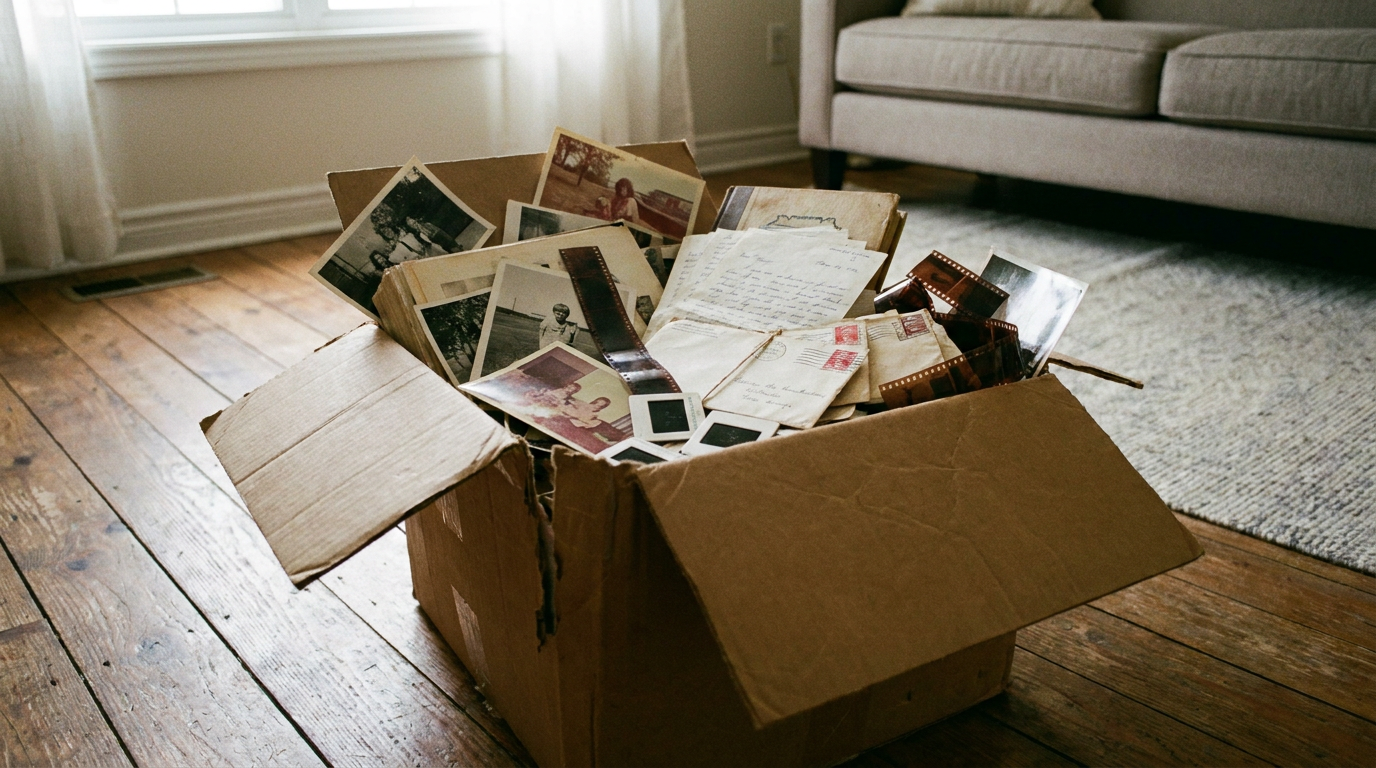
Do not start by sorting. This is the single most important instruction in the section. Sorting is where these projects die — it’s effortful, it produces no visible output, and it can be extended indefinitely, which makes it the perfect procrastination activity disguised as progress.
Start instead by choosing a scope. One person. One decade. One household. One theme. A finished book about your mother’s childhood is worth more than an unfinished book about everything since 1890, and the second one is what you’ll accidentally attempt if you don’t decide now.
Then work in passes rather than perfection:
- Pass one — gather. Get everything into one physical place. No decisions, no sorting, no reading. Just consolidation.
- Pass two — react. Go through and pull out only the items that make you feel something. Trust that instinct; it’s a better editor than any system.
- Pass three — caption. Identify and caption what you pulled. Names, approximate year, what’s happening, why it’s here.
- Ignore everything else for now. It isn’t going anywhere.
Before you handle anything fragile, get the basics right. The is plain-English, non-commercial and genuinely practical: clean dry hands, support the whole item, no adhesive tape, no rubber bands, no paper clips. Their guidance on is worth reading before you put anything back in the loft, because storage conditions do more damage than handling ever will.
storing family papers and photographsNational Archives’ guide to preserving family archives
Digitise the fragile things first. Anything brittle, fading, water-marked or stored somewhere damp goes to the front of the queue. Photographs and negatives are considerably more vulnerable than paper. The Archives also publish specific advice on and on — worth having open the first time you lift the lid on a box that’s been in a garage since 1998.
what to do about mould or insect damagescanning and digitising
And then the highest-value hour of the entire project: caption while the person who knows is still in the room. Sit with the oldest relative you have and go through photographs asking who, where, roughly when. An unidentified photograph is close to worthless three generations on. An identified one is evidence.
Start Here If You Have Almost Nothing
An empty start is a genuine advantage, and it’s worth reframing it as one immediately. You aren’t reconstructing a record from fragments with the context missing. You’re building forward, with full context available, from people who are still here to explain themselves.
Start with living memory. Interview the oldest willing relative this month. One conversation typically produces more usable material than a weekend in the loft.
Start with the present. A memory book does not have to begin in the past. Begin today — this week, this ordinary September — and let it accumulate. In five years you’ll hold something no amount of retrospective effort could ever manufacture, because it’ll have the details that only get recorded contemporaneously.
Anchor with documents. Certificates, records and public archives fix names, dates and places, and give later readers something verifiable to build on.
Beat the blank page with prompts. If the obstacle is simply not knowing what to write, Lugelo’s offers prompts and can expand rough bullet points into a readable entry — without replacing your own voice, which remains the thing that matters. Used well, it’s a way past the first sentence, not a ghostwriter.
AI Journal Assistant
The First Weekend Plan
Four hours, and you’ll be ahead of most people who ever attempt this:
- Hour one. Decide the scope and give the book a name. Write both down.
- Hour two. Gather twenty items. No sorting, no judging.
- Hour three. Caption ten of them — names, rough year, what’s happening.
- Hour four. Record one voice memory. Yours or someone else’s.
Before committing serious hours to gathering, though, it’s worth deciding what form the finished thing will actually take.
That’s it. You now have a scoped project, twenty pieces of material, ten identified items and one voice recording. That is further than the overwhelming majority of memory books ever get.
Memory Book Formats Compared: Physical, Printed and Digital
This is the section where the article either earns your trust or loses it, so let’s be genuinely even-handed. There are four realistic formats, and the right answer depends entirely on what you’re optimising for.
Physical scrapbook or album. Best for tactility, craft and the pleasure of making something with your hands. Holds audio or video? No. Shareable? Barely — it exists in exactly one copy. Main risk: that single copy. Fire, flood, damp, a house move, a well-meaning clearout. Real strengths, though, and they’re often undersold: no device required, no file formats to worry about, no account to maintain, and it’s genuinely lovely to hold. People pick up physical books. They rarely open folders.
Printed photo book. Best for producing a finished, giftable object with a definite ending. Holds audio or video? No. Shareable? Yes, at a cost per copy. Main risk: it’s fixed at the moment of printing — an error in a name is permanent-ish in the only sense that matters, and there’s limited room for text. But it sits on a shelf where people actually reach for it, which is more than can be said for most digital archives.
Digital, private and single-owner. Best for searchability, multimedia and ongoing capture. Holds audio or video? Yes. Shareable? Yes, at your discretion. Main risk: it requires active care, and people assume it doesn’t. Strengths are substantial — it holds voice, video and documents, it’s searchable, it can be copied to multiple locations, and it has no page limit.
Shared digital. Best for multi-contributor family projects across distance. Holds audio or video? Yes. Shareable? By design. Main risk: it still needs one person to own it and set expectations, or it drifts. The upside is that no single person carries the entire load, and you get multiple perspectives instead of one narrator’s summary.
Digital Is Not the Same as Durable
Here’s the honest part, and it matters more than anything else in this section.
Digital files are not self-preserving. Putting something into an app does not make it safe. The makes the point that digital materials can in some respects be harder to look after than physical ones, precisely because they depend on technology — file formats, software, hardware, accounts — to remain readable at all. A shoebox in a dry cupboard needs nothing from you for thirty years. A digital archive needs attention.
Library of Congress’s personal digital archiving programme
So three rules, and they apply regardless of which service or software you use:
- More than one copy. Always.
- In more than one place. Not two folders on the same laptop.
- Checked more than once. Periodically open old files and confirm they still open. Migrate ageing formats before they become unreadable, and favour common, well-supported ones.
The Library of Congress publishes format-specific guidance worth following for and , which is particularly relevant if voice recordings are going to be the emotional centre of your book.
digital audiodigital photographs
The Hybrid Is the Honest Recommendation
Keep a working digital record as the living archive — searchable, multimedia, shareable, easy to add to on a Tuesday evening. Then print a physical copy at milestones: a significant birthday, the end of a decade, the completion of a chapter.
Two formats. Two entirely different failure modes. One story. That’s the most defensible answer anyone can give you, and it’s what we’d actually recommend.
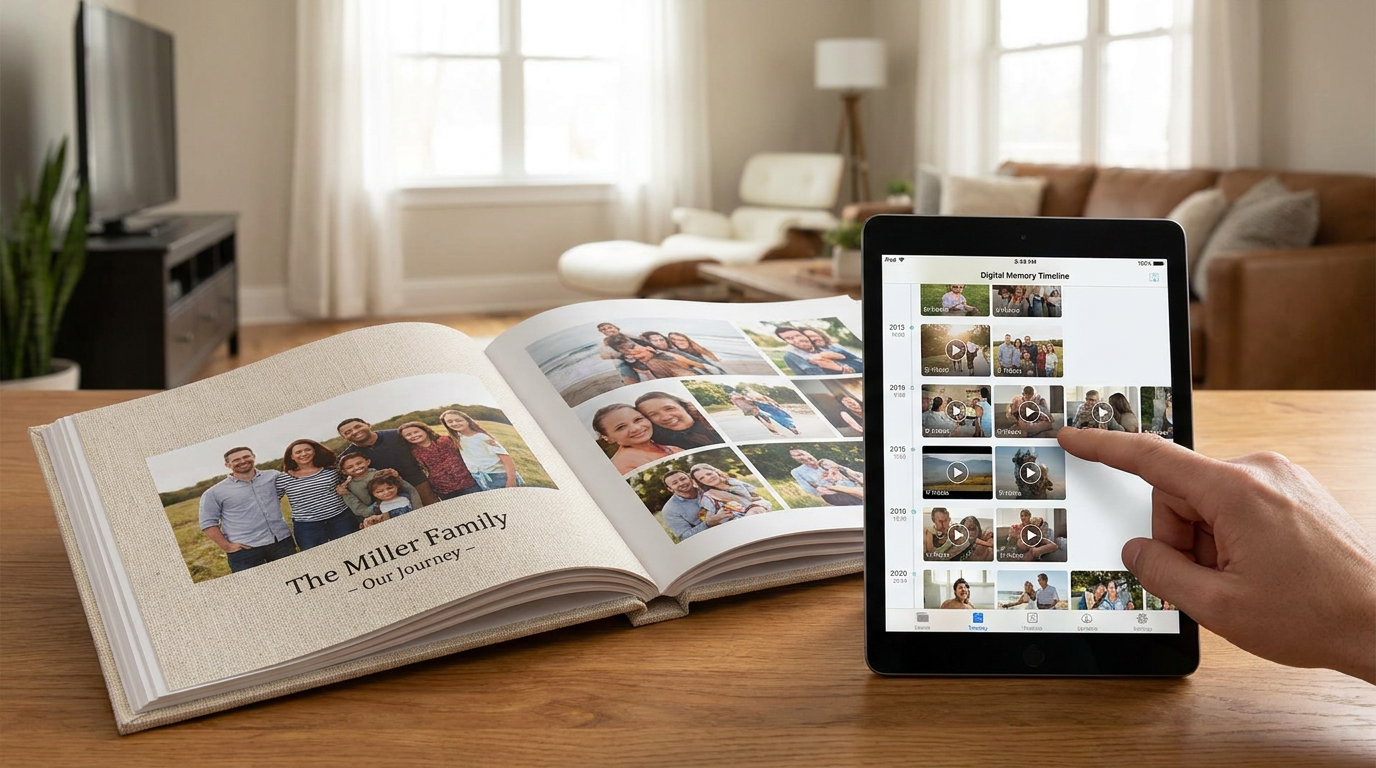
Choosing Tools for a Family Memoir Project
Rather than a shopping list, use criteria. Ask any tool you’re considering these six questions:
Does it hold audio and video, or only photos and text? If voices matter to you — and they should — this is disqualifying for a lot of options.
Can more than one person contribute, with controlled permissions? Not just shared access. Roles, so a nervous relative can add without being able to overwrite.
Can you export your material out in a standard format? This is the most overlooked criterion in the entire decision, and the one people regret ignoring. If your family’s record can’t leave, it isn’t really yours to move.
Is it private by default? The default matters more than the settings, because defaults are what most people actually live with.
Can it produce something printable at the end? A record with no exit into physical form is a record with only one failure mode.
Does it work on the devices your least tech-confident relative actually owns? The most capable tool is useless if your grandmother can’t open it.
For transparency, here’s where Lugelo sits factually against those criteria: multimedia Moments including audio and video, role-based collaboration with Viewer, Contributor and Editor permissions, eBook and PDF export, private by default with owner-controlled sharing, and availability on iOS, Android, HarmonyOS and the web. Cost is a legitimate factor in this decision too, and the With the format settled, the work becomes organisational — and this is where projects quietly collapse under admin.
pricing page
lays that out plainly.
Organising a Memory Book Without Drowning in Admin
Chronological order is the default that worksIt requires no invented logic, so you never have to explain the structure. It shows change over time, which is the thing photographs do better than any other medium. And crucially, a stranger can follow it without instruction. The visual force of seeing the same person at five, at fifteen and at fifty in sequence cannot be replicated by any thematic arrangement, however clever.
, and it’s worth understanding why before you consider alternatives.
Now the release valve, because this is where perfectionism does its damage: you do not need exact dates.
“Sometime in the mid-eighties” is a perfectly good date. So is “before they moved.” So is “she looks about seven here, so probably 1974.” Approximate placement beats indefinite postponement every single time, and perfectionism about metadata is the number one cause of abandonment in this entire category.
“An approximate date beats an indefinite delay. ‘Sometime in the eighties’ is a date.”
Four Structures That Work
Strict chronology. Everything in time order, one continuous run. Best for single-subject books and family histories.
Life stages. Childhood, school, working life, parenthood, later years. Gentler than strict chronology when dates are patchy, and it gives the book natural chapters.
One book per person. Cleaner than it sounds, and much easier to finish. Also the most giftable structure — each person’s book can go to the people who loved them.
Thematic threads across the timeline. Holidays, houses, the same photograph taken every year. These work best layered on top of a chronological spine rather than replacing it.
Let the Structure Emerge From Adding
The mechanism matters here. In Lugelo, Moments arrange themselves chronologically into , which means the structure emerges from the act of adding rather than from a separate sorting phase. You add; the timeline organises. That single design choice removes most of the administrative overhead that kills these projects, because the organising work never accumulates into a task you have to schedule.
Memory Lane
If you’d rather watch the workflow than read about it, the show the process directly.
how-to walkthroughs
Five Anti-Admin Rules
- Caption at the moment of adding. Never “I’ll do it later.” Later is where uncaptioned photographs go to become anonymous.
- Use consistent naming for people. Pick one form of each name — “Nana Ruth,” not sometimes “Ruth,” sometimes “Nan,” sometimes “Mum’s mum” — so the record stays searchable.
- Add the year even when you can’t add the day. Partial data is data.
- Batch similar work. Twenty captions in one sitting is faster than twenty captions across twenty sittings.
- Set a recurring twenty-minute slot. Sunday evening, Wednesday lunchtime, whenever. Waiting for a free weekend is waiting for something that does not arrive.
Recurring Traditions Make the Best Timelines
The single most powerful structure available in any memory book is the same thing, photographed every year. Repetition is what converts ordinary snapshots into a visible record of change — no individual photo does much, but forty of them in a row are extraordinary.
Annual family traditions are the load-bearing structure of family identity: the same table, the same dish, the same argument about the same board game, the same person falling asleep at the same point in the afternoon. They photograph consistently by their nature, which makes them ideal timeline material.
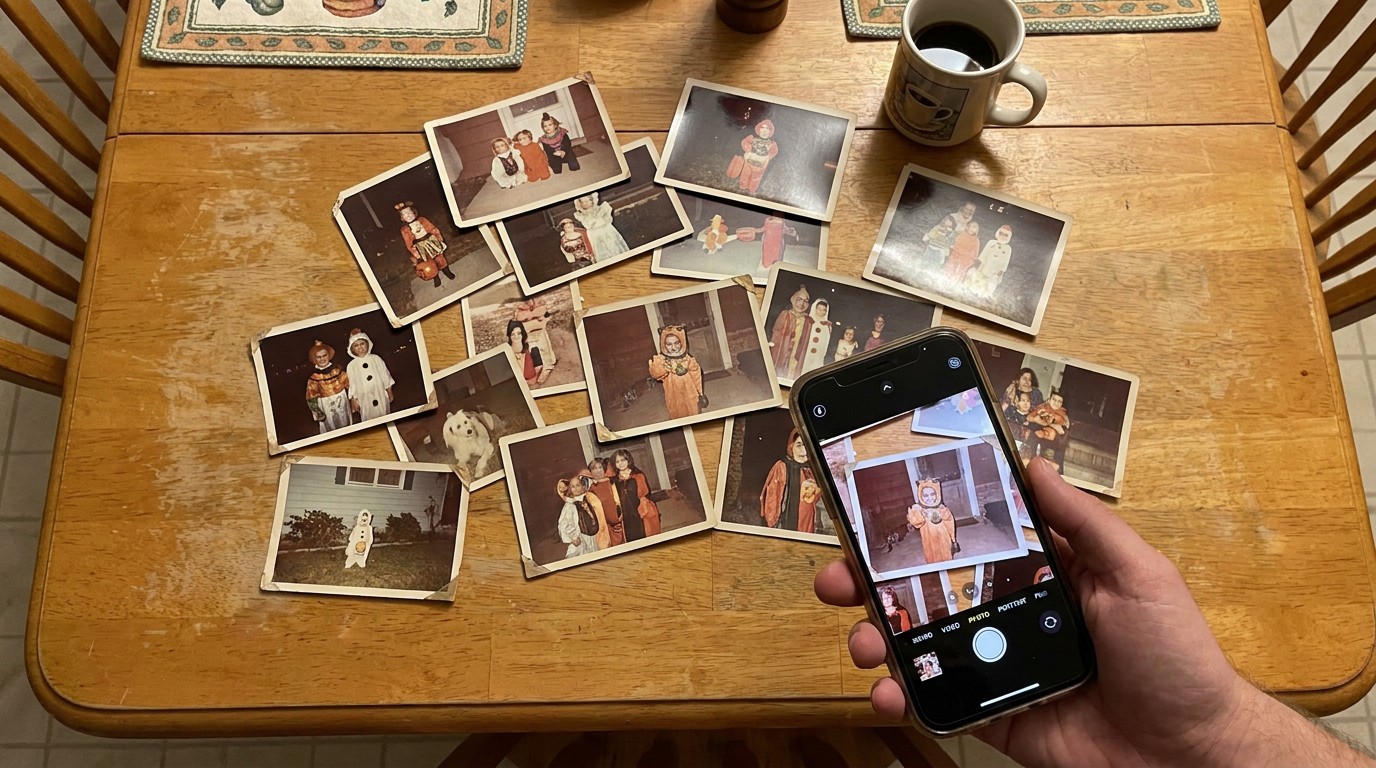
The costume timeline is the clearest example. Halloween costumes lined up year on year — the same child, October after October, at four, at nine, at fourteen — is one of the most striking sequences a family can build. Nothing demonstrates the speed of childhood more plainly, and it takes one photograph a year to produce.
Remembrance traditions translate unusually well into this format. Día de los Muertos ofrendas — photographs, favourite foods, marigolds, objects belonging to those being remembered — map naturally onto a digital memory book, where each person remembered can hold their own set of Moments, stories and recorded voices. Approached with cultural respect rather than as novelty, it’s one of the most meaningful structures in this guide, because the tradition and the medium are doing the same work.
The same-capture-every-year method is exactly what makes so effective in practice, and it scales to any repeating occasion.
an annual school year record
These annual sequences can also be gathered as a themed journal and later viewed as a VR gallery, with a 2D preview available on any device for family without a headset.
Structure solves the middle of the project. The ending is where nearly every memory book actually fails.
Finishing a Memory Book: The Completion Problem
Let’s say the quiet part directly: the hard part is not starting. It’s finishing.Starting is emotionally rewarding and requires no discipline. Finishing requires both.
Half-built memory books are among the most common objects in family homes. The album with twelve filled pages and forty empty ones. The box labelled “to sort” in handwriting from two house moves ago. The app opened twice. The scanner bought in January.
The Four Reasons They Stall
Scope creep. The project quietly expands from “Mum’s childhood” to “everything about our family since 1890.” Nobody decides this; it just happens, one reasonable addition at a time, until the project is too large to complete and too meaningful to abandon.
The perfection trap. Waiting until you have every date, every name and every photograph before you’ll let yourself call it finished. There is always one more relative to ask.
No deadline. Nothing external forces completion, so completion never happens. This is the most fixable of the four.
Solo overload. One person carrying material that belongs to eight people, doing the work of an archivist without the mandate or the hours.
How to Actually Finish
Define “done” before you start — in writing. One person. One era. Forty pages. Thirty Moments. Whatever it is, name it and write it down, because an undefined project cannot be completed by definition.
Attach it to a date. A birthday, an anniversary, a reunion, a Christmas. A memory book with a delivery date gets finished. One without a delivery date becomes a hobby, and then a guilt.
Ship version one. Finish something small and imperfect. You can always make a second, and a second is much easier than a first. This is the most important sentence in the article, so it gets its own line:
“A finished, imperfect memory book beats a perfect one you never made.”
Leave the gaps visible. “We don’t know who this is” is a legitimate entry. So is “Nobody could remember whether this was 1961 or 1962.” Honest gaps are part of the record, not a failure of it — and a future relative might close one.
The Define Done worksheet. Five lines, filled in before you start:
- Who is this about?
- Which years does it cover?
- How many entries will it contain?
- Who is it for?
- When is it due?
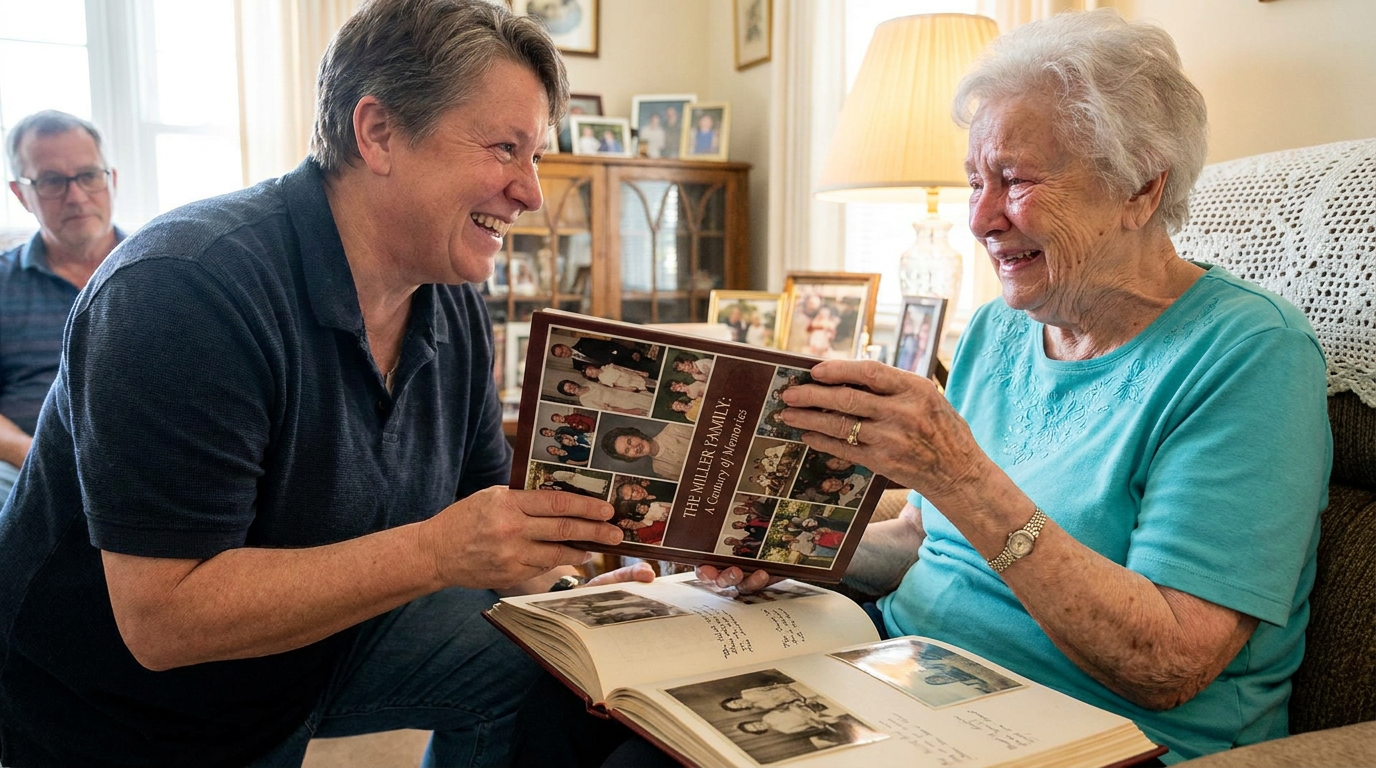
Turning a Memory Book Into a Printed Book, eBook or VR Gallery
A completed journal doesn’t have to stay on a screen. There are three outputs, and they serve different purposes.
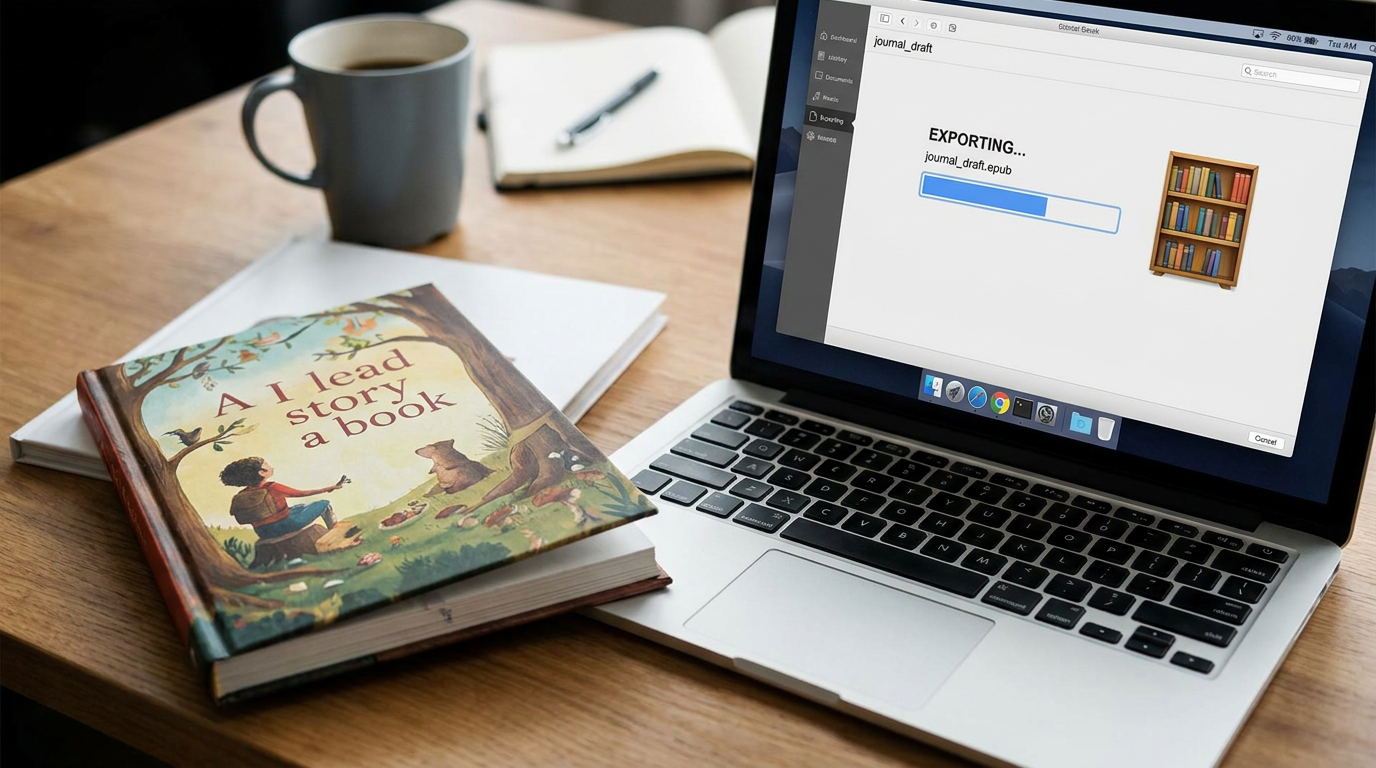
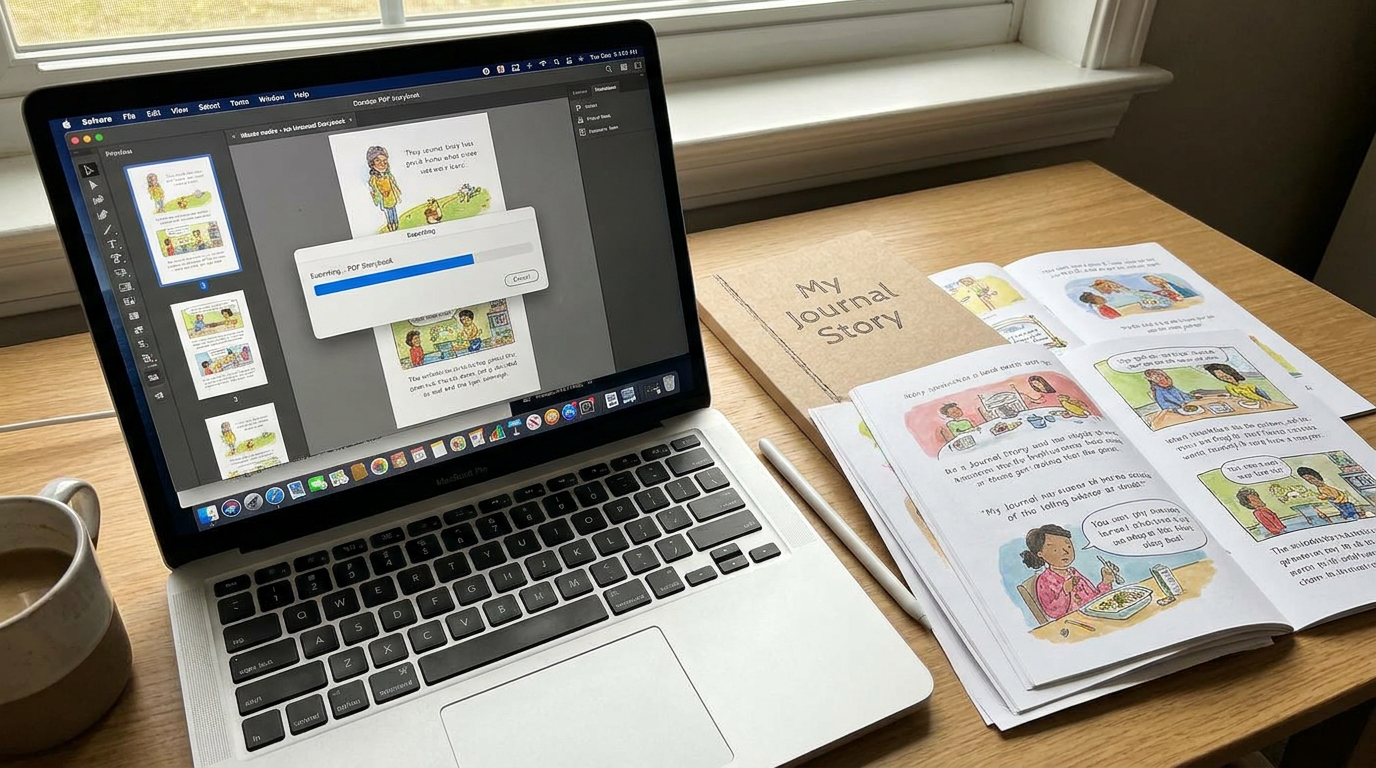
Export as an eBook or PDF-style storybook. This is what most families print, bind or gift. It’s the version that ends up on a shelf, and it’s the one that survives independently of any account or device.
View it as a Memory Lane timeline. The living version — still readable, still searchable, still open to additions when a cousin surfaces a photograph nobody had seen.
Galleries work best on Meta Quest, Apple Vision Pro, or WebXR-capable browsers, with a 2D preview available on any device so nobody is excluded for lack of hardware. Shared rooms support up to eight peopleBefore you export, do four things. Check the captions. Confirm names are spelled correctly — this is the error people regret most in print. Decide what stays private. Choose a cover image.
Without overstating it: for relatives who missed the years in question entirely, moving through a gallery of a life is a fundamentally different experience from scrolling a feed. It has scale and sequence. You can see how much there was.
, which is what makes it workable for a family spread across several countries — a grandparent in one place, grandchildren in another, walking through the same gallery at the same time.
And on control: exporting and sharing are always deliberate, owner-controlled actions. Journals remain private by default until you decide otherwise. If you’d like to see what completion actually looks like in practice, the collection is a more persuasive argument than anything we could write here.
family journal stories
Frequently Asked Questions About Memory Books
What is a memory book?
A memory book is a curated, narrated record of a person, family or period — photographs combined with stories, voices, documents and context that explain why the moments mattered. Unlike a camera roll, it’s selective and explained, built so that someone who wasn’t there can still understand what they’re looking at.
What’s the difference between a memory book and a scrapbook?
A scrapbook is primarily decorative — craft, ephemera and layout, focused on how the page looks and feels. A memory book is primarily narrative — it prioritises context, voices and documents that explain events. Scrapbooks capture texture and personality; memory books capture meaning. Many people combine both, using craft for presentation and narrative for substance.
What should I include in a family memory book?
Photographs, plus everything photographs can’t carry: voice recordings, handwriting samples, annotated recipes, official documents, and the ordinary details nobody thinks to record — the car, the weekday routine, the phrases people repeated, what was always in the fridge. Include objects too, photographed alongside a note about who owned them and why they survived.
How do I start a baby memory book?
Start with the first photograph, the name story, a handwritten note from each parent, birth details and a voice recording from the first weeks. Then keep it loose. Add moments as they happen rather than following a rigid weekly template — a running journal you actually maintain beats a structured book you fall behind on.
How long does it take to make a memory book?
A focused single-subject book — one person, one decade — is realistically a few weekends of concentrated work. A broader family archive isn’t a project with an end date; it’s a habit, best served by twenty minutes a week rather than a mythical free weekend. Scope determines timeline more than anything else.
Is it better to make a memory book digitally or on paper?
The hybrid is the honest answer. Keep a digital record as the living archive — searchable, multimedia, easy to add to and share — and print a physical copy at milestones. Digital needs active care to stay readable. Paper exists in a single vulnerable copy. Together they cover each other’s weaknesses.
How do I get relatives to contribute?
Ask for one specific thing rather than “anything you’ve got.” Set an openly low bar: one photo and one sentence is a complete contribution. Accept voice notes from people who say they aren’t writers. Assign by era so each person owns the years they lived through. And attach a deadline to a real event.
Are my memories private if I use an app?
In Lugelo, journals are private by default and sharing is owner-controlled — you decide who gets access and can revoke it at any time. Data is encrypted in transit, and there is no third-party data sharing. You can delete your account at any point, with a 30-day recovery window. Full details are on the .
Lugelo FAQs page
Can I turn a memory book into a printed book?
Yes. A completed journal can be exported as an eBook or PDF-style storybook suitable for printing or gifting. You can also view it as a Memory Lane timeline, or build it into a VR gallery that works on Meta Quest, Apple Vision Pro or WebXR-capable browsers, with a 2D preview on any device.
How do I make sure a digital memory book lasts?
Keep more than one copy, in more than one location, and check periodically that older files still open. Migrate ageing formats before they become unreadable, and prefer common, well-supported ones. The is independent, practical and free — digital records need active care, not just storage.
Library of Congress personal digital archiving guidance
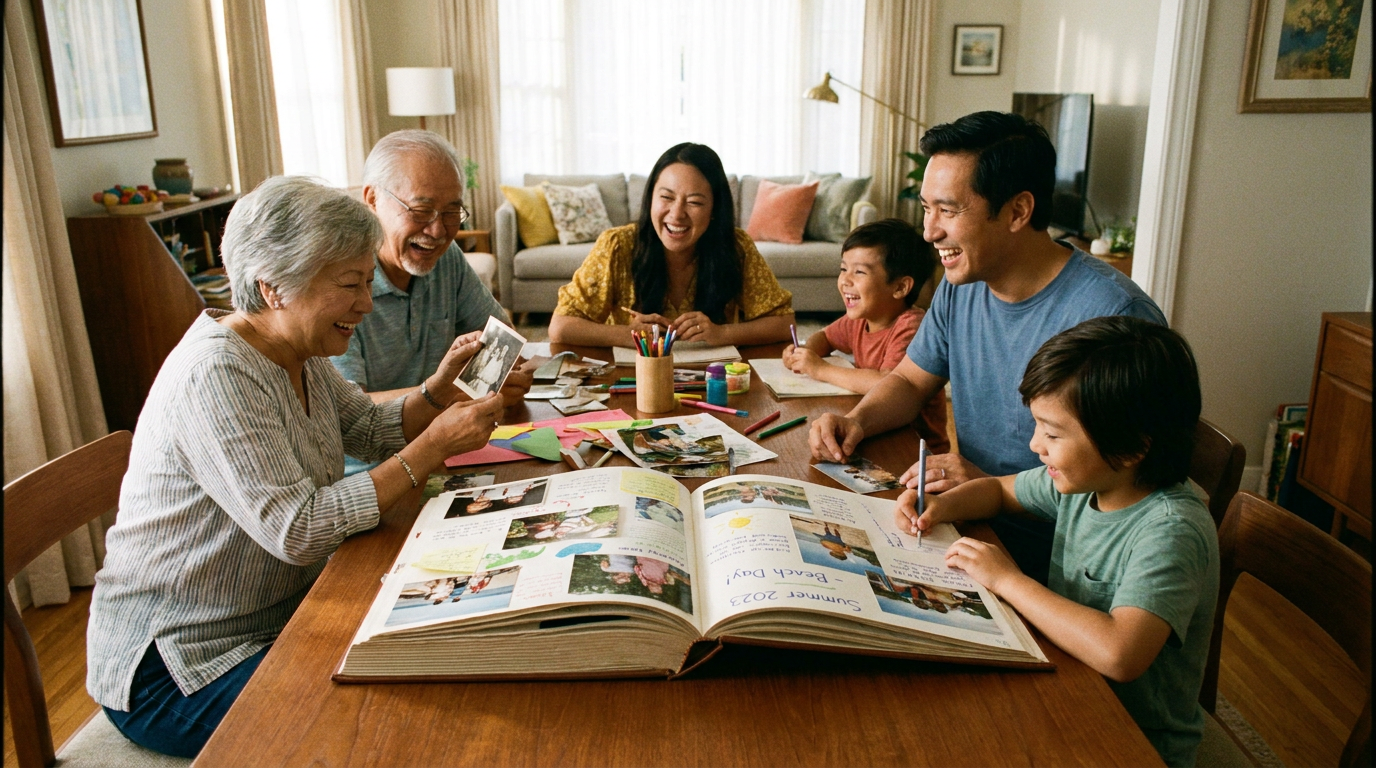
Preserving a Life, Not Just a Camera Roll
The goal was never to have more photographs. We solved that problem so thoroughly that it became a different problem. The goal is to be able to hand someone a life and have them understand it.
Go back to that Sunday evening. The phone with forty thousand images on it. The nine minutes of scrolling. The photograph you finally found, which turned out to explain nothing at all.
That’s the whole shift. A memory bookOne last piece of honesty, because this guide has tried to be honest throughout. This takes effort. Digital records need looking after — copies, checks, migration. Physical materials degrade. Nothing you do makes a memory immune to time, and anyone who tells you otherwise is selling something.
is not a bigger camera roll — it’s a record: what it is, what belongs in it beyond photographs, who should help build it, how to begin whether you’re facing fifty years of shoeboxes or an empty page, which format genuinely suits you, how to organise it without inventing a second job, and how to finish the thing rather than joining the enormous silent population of people with twelve filled pages and good intentions.
But here’s what you can do, and it’s not a small thing. You can make a life findable, understandable and shareable by the people who come after you. You can make sure the faces have names, the stories have context, and the voice still exists somewhere. That is the entire job, and it’s worth doing properly.
The urgency isn’t dramatic, but it is real. The people who can identify the faces and explain why the family left in 1962 are the resource with a deadline attached. Everything else can wait; that can’t.
So do one thing this week. Not the whole project — one thing. Record one voice. Two minutes, badly, on a kitchen table.
Journals are souvenirs of your past.
And everyone has a story worth telling.
Stop Losing the Moments That Matter
Start your family memory book on Lugelo — free, private by default, and ready for everyone you want to invite.
Get Started →
Build it together —
explore collaborative journals →
See what you can create —
Step inside your memories —
Available on iOS, Android, HarmonyOS and the web.
Because some days are too important to lose.